


How Medical Gel Pads Protect Your Body During a Procedure
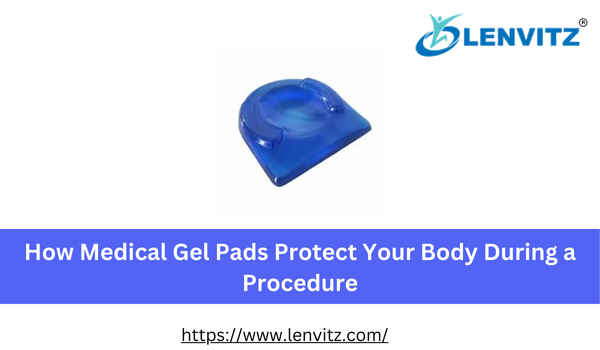
When we prepare for surgery, we often think about the surgeon’s skill or the recovery time. However, there is a silent, essential factor happening behind the scenes that ensures you wake up without unnecessary aches or nerve damage: surgical positioning. Whether you are lying on your back, side, or in a specialized medical pose, the use of supine position gel pads and other advanced supports is what keeps your body safe while you are under anesthesia.
In this guide, we will break down how high-tech tools like the lateral positioner and specialized lithotomy position gel pads are used by medical professionals to prioritize patient safety.
1. The Foundation of Care: Supine Position Gel Pads
The most common surgical stance is the "supine" position, where the patient lies flat on their back. While it sounds simple, staying perfectly still for hours on a hard operating table can put dangerous pressure on the heels, the base of the spine (sacrum), and the elbows.
Medical teams use supine position gel pads to combat this. These pads are made of a specialized viscoelastic material that mimics the feel of human tissue. By using supine position gel pads, the hospital ensures that:
-
Your weight is distributed evenly across the table.
-
Blood flow is maintained to your skin and muscles.
-
"Pressure "hot spots" are eliminated, preventing the formation of bedsores.
2. Navigating Side-Lying Procedures: The Lateral Positioner
For surgeries involving the hips, kidneys, or lungs, patients must be placed on their side. This is a precarious position because the body naturally wants to roll. To solve this, surgeons use a lateral positioner.
A lateral positioner acts as a stabilizing wedge or block that holds the torso in a perfect 90-degree angle. But stability is only half the battle; the "down-side" of the body is under significant stress. This is where lateral position gel pads become indispensable.
Why Lateral Position Gel Pads are Vital:
-
Armpit (Axilla) Protection: Lateral position gel pads prevent the nerves in your armpit from being crushed by your own body weight.
-
Bony Prominences: They provide a soft barrier between your knees and ankles to prevent bone-on-bone friction.
-
Hip Support: They cushion the hip bone that is in contact with the table, ensuring the skin remains intact.
3. Specialized Support: Lithotomy Position Gel Pads
In many gynecological, urological, or colorectal surgeries, the patient is placed in the "lithotomy" position, where the legs are elevated and supported by stirrups. This position carries a high risk of nerve injury if the legs are not cushioned correctly.
The use of lithotomy position gel pads is the gold standard for these procedures. These pads line the stirrups and leg holders to:
-
Protect the Peroneal Nerve: Preventing the "tingling" or temporary paralysis that can happen if the outer knee is pressed too hard.
-
Cushion the Calves: Ensuring that the weight of the legs doesn't restrict circulation.
-
Ensure Stability: Lithotomy position gel pads provide a non-slip surface, so the patient remains in the exact spot needed for a successful surgery.
Conclusion: Comfort Meets Clinical Safety
Whether it is the protective embrace of supine position gel pads or the precision of a lateral positioner paired with lateral position gel pads, these tools are about more than just "comfort." They are about ensuring that when you wake up from surgery, your body feels as good as the work the surgeon performed.

 English
 French
 Spanish
 Portuguese
 Deutsch
 Turkish
 Dutch
Dutch
 Italiano
 Russian
 Romaian
 Portuguese (Brazil)
 Greek
Greek