


Electric vs. Water Underfloor Heating: Pros and Cons
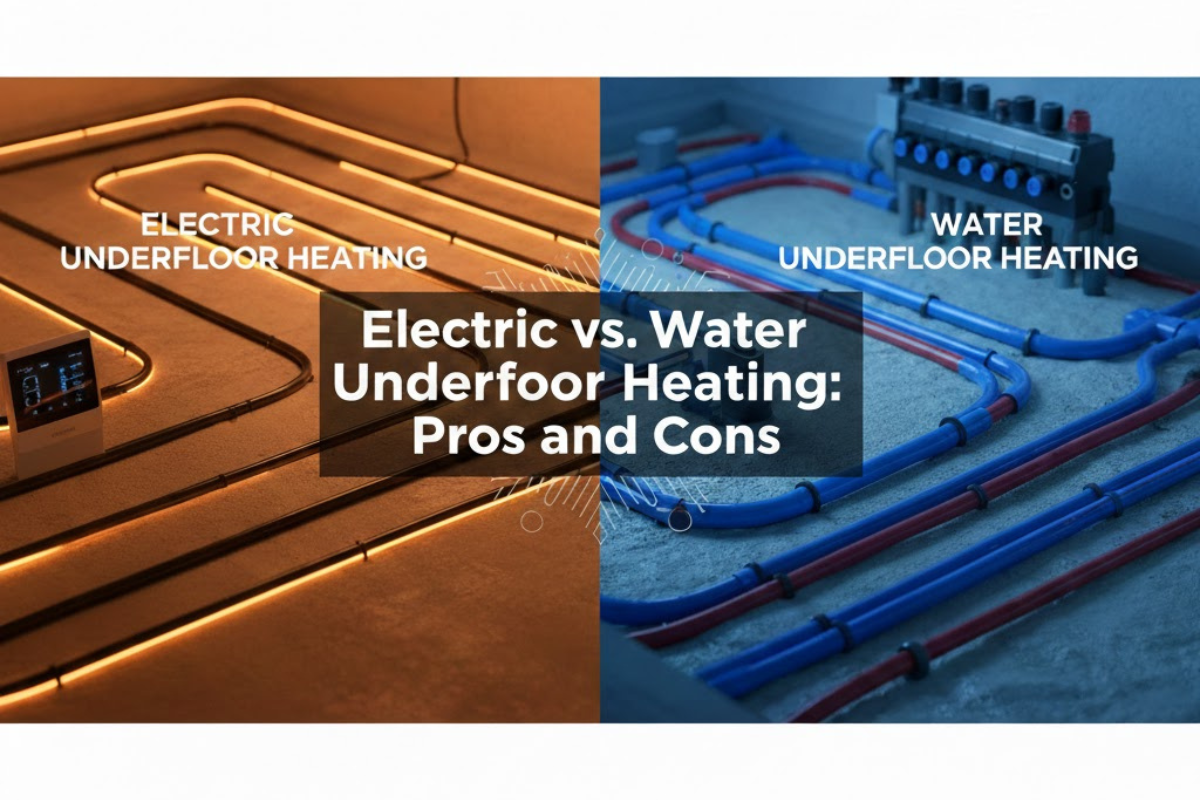
There’s something oddly comforting about warm floors. You step out of bed on a cold morning and instead of that sharp chill creeping up your legs, it’s just… warmth. Quiet warmth. A lot of homeowners start researching underfloor systems after one of those moments, wondering about the real advantages of underfloor heating, and whether electric or water underfloor heating makes more sense for their home. And honestly? The answer isn’t always straightforward.
I’ve seen people swear by electric systems in small flats. Others wouldn’t install anything but water-based underfloor heating in a family home. It depends. Budget, property size, patience level during renovations… all of it plays a role.
Let’s talk through it properly.
Electric Underfloor Heating: The Quick and Tidy Option
Electric underfloor heating (sometimes called dry underfloor heating) uses heating mats or cables installed beneath your flooring. When switched on, electricity runs through the cables and generates heat that rises evenly across the room.
Sounds simple. It kind of is.
Pros of Electric Underfloor Heating
1. Easier Installation
This is usually the big selling point. Electric systems are thinner and quicker to install. Perfect for retrofitting into bathrooms or kitchens without digging up the entire floor structure.
If you’re renovating a single room and don’t want weeks of disruption, electric underfloor heating installation feels manageable. Less mess. Less noise. Less “why did we start this project?” energy.
2. Lower Upfront Cost
The initial cost of electric underfloor heating is generally lower than water systems. Materials are cheaper. Labour is simpler.
For small areas, especially bathrooms, it often makes financial sense.
3. Ideal for Smaller Spaces
Electric systems heat up quickly. That makes them great for rooms you use occasionally. Guest bathrooms, loft conversions, home offices.
You switch it on, and within a short time, you feel it.
Cons of Electric Underfloor Heating
Now the bit people sometimes overlook.
1. Higher Running Costs
Electricity costs more than gas in many areas. Over time, the running cost of electric underfloor heating can add up, especially in larger spaces.
It’s fine for small rooms. For whole-house heating? Bills can surprise you.
2. Not Always Suitable for Large Areas
Heating an entire ground floor with electric mats can become expensive long term. Some homeowners install it everywhere… then quietly reduce usage once winter bills arrive.
It happens.
Water Underfloor Heating: The Long-Term Player
Water underfloor heating (also called wet underfloor heating) circulates warm water through pipes laid beneath the floor. The water is heated by a boiler or heat pump.
It’s more complex to install. But it’s also powerful.
Pros of Water Underfloor Heating
1. Lower Running Costs
This is where water systems shine. Once installed, they are generally cheaper to run compared to electric systems, especially if connected to an efficient boiler or air source heat pump.
If you’re heating large areas daily, water underfloor heating often makes more financial sense over time.
2. Energy Efficient Heating
Water systems operate at lower temperatures than traditional radiators while still warming the room evenly. That steady heat feels different. Softer. Less dry, maybe? Hard to describe exactly, but noticeable.
For homeowners looking at energy efficient heating solutions, wet systems are appealing.
3. Ideal for Whole-House Heating
If you’re building a new home or doing major renovations, installing water underfloor heating throughout the ground floor works beautifully. Open-plan spaces especially benefit from that even heat distribution.
No cold spots. No bulky radiators on walls either, which I personally prefer. Cleaner look.
Cons of Water Underfloor Heating
It’s not perfect.
1. Higher Installation Cost
Installation is more expensive. Pipes, manifolds, mixing valves. Labour takes longer. Floors often need to be lifted or screeded.
In older homes, this can feel like a serious project.
2. More Disruption During Installation
Retrofitting wet underfloor heating into an existing property isn’t always simple. Floor height may increase slightly. Doors might need adjusting.
It’s doable. Just not always convenient.
Electric vs Water Underfloor Heating: Which Is Cheaper?
This question comes up constantly.
Short term? Electric is cheaper to install.
Long term? Water is usually cheaper to run.
If you’re heating one small bathroom, electric underfloor heating cost stays reasonable both upfront and ongoing.
If you’re heating a 60m² open-plan living area every day during winter, water underfloor heating installation might cost more initially, but monthly energy bills tend to be lower.
There’s no universal winner. It depends how you use your space.
Underfloor Heating vs Radiators
Some people don’t even realise they’re comparing against radiators until later.
Underfloor heating provides consistent warmth from the ground up. Radiators heat the air near them first, which then circulates around the room. That’s why you sometimes feel hot near the radiator and cooler across the room.
With underfloor heating systems, the warmth spreads evenly. No bulky metal panels on the wall either. Furniture placement becomes easier.
Still, radiators are quicker to respond in some cases. And repairs are usually simpler.
Trade-offs. Always trade-offs.
Maintenance and Lifespan
Electric systems require very little maintenance. There are no moving parts, no pipes carrying water. If installed correctly, they can last decades.
Water underfloor heating systems also last a long time, though occasional checks on the manifold and pump are sensible. Pipes themselves are durable. Leaks are rare, though admittedly that’s a worry some homeowners have in the back of their mind.
I’ve met people who were anxious about hidden pipes beneath their floors. Understandable. Even though problems are uncommon.
Flooring Compatibility
Both systems work well with tile and stone floors. Those materials conduct heat beautifully.
Laminate and engineered wood can also work, though you need to check thickness guidelines. Carpet is possible too, but thick underlay reduces heat transfer.
It’s one of those details people forget until the very end.
So… Which One Should You Choose?
If you’re renovating a single bathroom or small kitchen and want quick installation with minimal disruption, electric underfloor heating is practical and straightforward.
If you’re building new, extending, or planning whole-house heating, water underfloor heating often wins for efficiency and long-term cost savings.
Some homes even use both. Electric upstairs. Water downstairs. That mix actually works quite well.
I suppose it comes down to how long you plan to stay in the property. Short-term living? Electric can make sense. Long-term family home? Water might be worth the extra effort upfront.
Warm floors do change how a house feels. It’s subtle. Hard to explain until you live with it.
And once you get used to it, cold tiles feel a bit dramatic.

 English
 Arabic
 French
 Spanish
 Portuguese
 Deutsch
 Dutch
Dutch
 Italiano
 Russian
 Romaian
 Portuguese (Brazil)
 Greek
Greek