


HDPE Pipe Manufacturing Plant Cost 2026: Machinery Requirements and Investment Opportunities
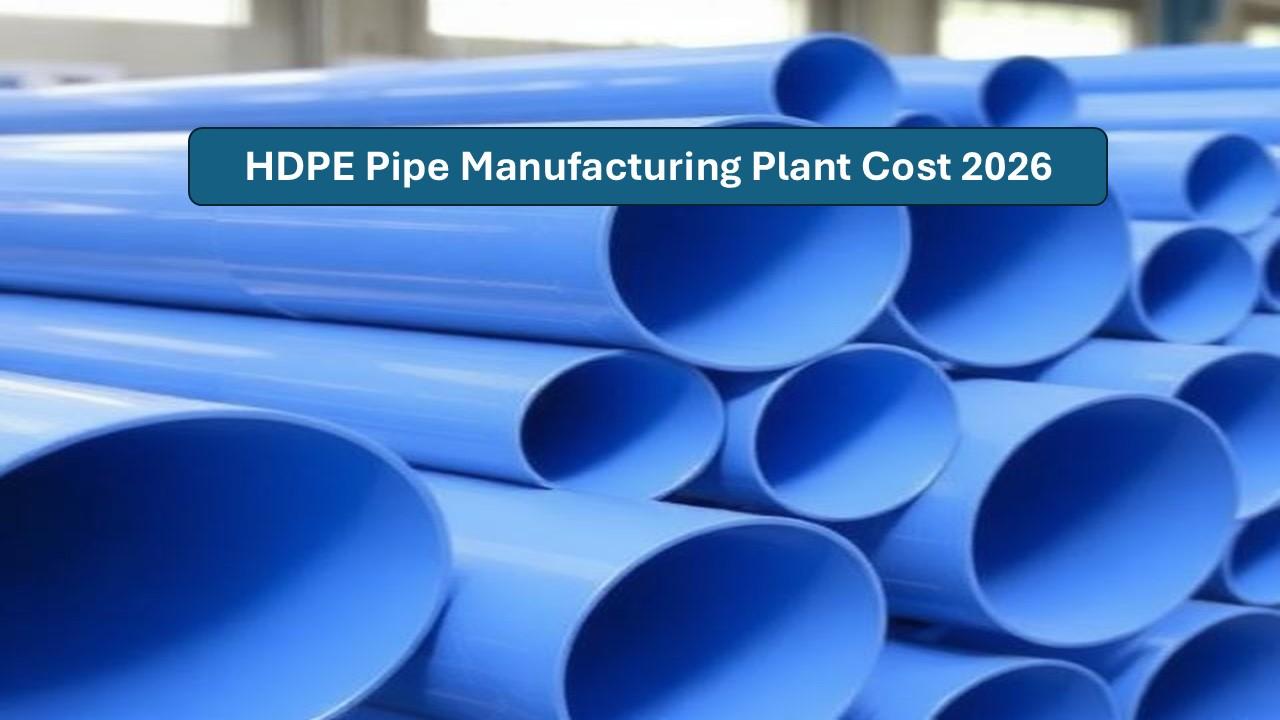
The HDPE Pipe Manufacturing Plant 2026 by IMARC Group provides a comprehensive feasibility analysis and investment guide for setting up a manufacturing facility producing high-density polyethylene (HDPE) pipes. HDPE pipes are thermoplastic piping systems made from polyethylene resin with a high strength-to-density ratio. They offer exceptional corrosion resistance, chemical inertness, flexibility, and durability, making them ideal for various applications including potable water distribution, sewerage and drainage systems, gas pipelines, agricultural irrigation networks, and industrial fluid transfer.
IMARC’s feasibility report covers critical aspects of plant setup — from market overview and process flow to machinery requirements, raw material and utility needs, operating cost structure, and financial forecasts. By combining market dynamics with practical technical and economic insights, this report equips investors and entrepreneurs with the data needed to make informed decisions about entering the HDPE pipe manufacturing industry.
Market Overview and Growth Potential
According to IMARC Group estimates, the global HDPE pipe market was valued at USD 22.0 Billion in 2025 and is expected to reach approximately USD 30.9 Billion by 2034, exhibiting a CAGR of 3.88% from 2026 to 2034. This growth is driven by rising investments in water supply and sanitation infrastructure, expanding agricultural irrigation networks, and the increasing replacement of conventional metal and concrete pipes with corrosion-resistant HDPE systems.
HDPE pipes combine lightweight design with high mechanical strength and resistance to environmental stress, which ensures low maintenance and long service life — often exceeding 50 years. Such attributes are increasingly preferred in urban infrastructure development, industrial projects, and rural water management programs, reinforcing long-term demand across sectors.
Plant Capacity and Production Scale
The IMARC report highlights that a typical HDPE pipe manufacturing facility can be designed with an annual production capacity ranging between 20,000–100,000 metric tons (MT). This range allows manufacturers to achieve economies of scale while maintaining operational flexibility to cater to various market segments and adjust to demand fluctuations.
Production generally involves polymer compounding (optional), extrusion, vacuum calibration, cooling, cutting, inspection, and quality assurance checks. Modern extrusion technologies and automation systems help streamline production, enhance quality consistency, and reduce labor intensity.
Request for a Sample Report: https://www.imarcgroup.com/hdpe-pipe-manufacturing-plant-project-report/requestsample
Financial Viability and Profitability Analysis
The financial analysis section of the IMARC report indicates that HDPE pipe manufacturing offers healthy profitability potential. The profitability metrics are based on cost structures, pricing trends, and demand outlooks included in the feasibility modeling:
• Gross Profit Margin: 20–30%
• Net Profit Margin: 8–15%
These margins reflect the value addition from converting polymer resin into finished piping products and the stable demand driven by infrastructure, agriculture, industrial, and municipal sectors. The report also includes detailed financial projections, including capital recovery, break-even analysis, return on investment (ROI), net present value (NPV), and long-term sustainability assessments, offering investors a comprehensive view of expected returns under realistic assumptions.
Operating Cost Structure
Operating costs are a major consideration in any manufacturing venture. According to IMARC:
• Raw Materials: 75–85% of operating expenditure (OpEx)
• Utilities: 5–10% of OpEx
The principal raw material is HDPE resin granules, which significantly influence overall production costs. Bulk procurement, long-term supply contracts, and strategic sourcing of resin can help stabilize costs and improve operating profitability.
Utilities represent energy and power required for extrusion lines, vacuum calibration tanks, cooling systems, compressed air, and other ancillary units — essential components of continuous production processes.
Other operating expenses, such as labor, packaging, maintenance, logistics, and environmental compliance, are also accounted for in the full cost model but generally represent a smaller share compared to raw materials and utilities.
Capital Investment Requirements
The IMARC report outlines the key capital investments necessary to establish an HDPE pipe manufacturing plant:
• Land Acquisition and Site Development: Securing suitable land with access to raw materials, transport networks, and utilities.
• Civil Infrastructure: Construction of production halls, finished goods storage, quality control laboratories, offices, and utility installations.
• Machinery and Equipment: This includes HDPE resin silos, material loaders, single or twin-screw extruders, pipe dies, vacuum calibration tanks, cooling troughs, haul-off units, cutting machines, and printing/marking systems.
• Utilities and Support Systems: Electrical installations, water supply lines, compressed air systems, safety equipment, and environmental monitoring components.
While the detailed public summary does not publish exact monetary CapEx figures, the full report provides a comprehensive breakdown that investors can use for budgeting and financial planning.
Major Applications and Market Segments
HDPE pipes have a broad range of applications across infrastructure and industrial sectors, including:
• Water and Sewer Systems: Potable water distribution, wastewater transport, and drainage solutions.
• Gas Distribution: Low-pressure natural and industrial gas pipelines.
• Construction and Infrastructure: Underground utilities, conduit systems, and building services.
• Agricultural Irrigation: Field irrigation networks and water management systems.
• Industrial Fluid Handling: Transporting chemicals, slurry, and process fluids in manufacturing facilities.
These diverse applications underpin stable consumption and expand the addressable market for HDPE pipe manufacturers.
Why Invest in HDPE Pipe Manufacturing?
There are several compelling reasons to invest in HDPE pipe manufacturing:
Infrastructure Demand Growth
Increased government spending on water supply, sanitation programs, and urban infrastructure projects drives continuous demand for corrosion-resistant piping solutions.
Agricultural Modernization
Expansion of irrigation systems and agricultural modernization initiatives increases HDPE pipe usage across rural economies.
Replacement of Conventional Materials
HDPE’s durability, flexibility, and leak-proof jointing methods make it a preferred alternative to metal and concrete pipes, supporting market penetration.
Sustainability Alignment
HDPE pipes are recyclable and energy-efficient to produce, aligning with global sustainability and ESG (Environmental, Social, and Governance) goals.
Profitability Potential
With healthy gross and net profit margins and stable demand across multiple sectors, HDPE pipe manufacturing offers attractive returns for investors.
Overall, these factors position HDPE pipe manufacturing as a resilient and scalable investment opportunity with relevance across public infrastructure, industrial, and agricultural markets.
Ask Analyst for Customization: https://www.imarcgroup.com/request?type=report&id=7699&flag=C
Industry Leadership and Competitive Landscape
The IMARC report identifies leading global manufacturers in the HDPE pipe space that serve infrastructure, gas, industrial, and agricultural segments. Notable players include:
• JM Eagle
• Aliaxis Group
• WL Plastics
• Prinsco
• China Lesso Group
These companies set industry standards in quality, production capacity, and technological adoption — useful benchmarks for new entrants and investors considering market entry or expansion.
Conclusion
The HDPE Pipe Manufacturing Plant Project Report 2026 provides a robust, data-driven roadmap for establishing a manufacturing facility producing high-density polyethylene pipes. With a projected annual capacity of 20,000–100,000 MT, healthy profitability margins (gross 20–30%, net 8–15%), and a cost structure dominated by raw materials and utilities, HDPE pipe manufacturing stands as a compelling industrial investment. Supported by steady market growth, diverse applications, and strong infrastructure demand, this sector presents sustainable long-term prospects for investors and industrial developers seeking value in modern infrastructure supply chains.
How IMARC Can Help?
IMARC Group is a global management consulting firm that helps the world's most ambitious changemakers to create a lasting impact. The company provide a comprehensive suite of market entry and expansion services. IMARC offerings include thorough market assessment, feasibility studies, company incorporation assistance, factory setup support, regulatory approvals and licensing navigation, branding, marketing and sales strategies, competitive landscape and benchmarking analyses, pricing and cost research, and procurement research.
Services:
- Plant Setup
- Factoring Auditing
- Regulatory Approvals, and Licensing
- Company Incorporation
- Incubation Services
- Recruitment Services
- Marketing and Sales
Contact Us:
IMARC Group
134 N 4th St. Brooklyn, NY 11249, USA
Email: sales@imarcgroup.com
Tel No:(D) +91 120 433 0800
United States: +1-201971-6302

 English
 Arabic
 French
 Spanish
 Deutsch
 Turkish
 Dutch
Dutch
 Italiano
 Russian
 Romaian
 Portuguese (Brazil)
 Greek
Greek