


Unlocking Efficiency in Metal Joining: A Comprehensive Guide to Projection Welders
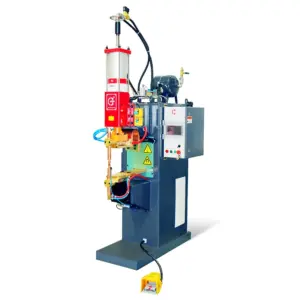
In modern manufacturing, precision, speed, and reliability are non-negotiable. For OEMs, automation integrators, and production engineers, selecting the right welding solution can make the difference between consistent output and costly downtime. One such high-performance solution is the projection welder a versatile and efficient tool for joining metals in complex assemblies. In this guide, we’ll explore how projection welders work, their industrial applications, advantages, and best practices, positioning Heron Welder as a trusted provider of advanced welding technologies.
What is a Projection Welder?
A projection welder is a type of resistance welding machine that joins metals using localized electrical resistance and pressure. Unlike standard spot welding, projection welding focuses current and pressure at pre-formed raised points, called projections, on one or both workpieces. These projections concentrate heat precisely where the weld is needed, enabling reliable and repeatable metal joining.
Key Components of a Projection Welding System
-
Electrodes: Conduct the welding current and apply mechanical pressure. Heron offers custom-designed electrodes tailored for specific materials and production rates.
-
Transformer or MFDC Power Source: Delivers precise electrical current. Modern machines may use Medium Frequency Direct Current (MFDC) for energy-efficient welding.
-
Control Unit: Monitors parameters like current, pressure, and time to ensure consistent weld quality.
-
Workholding Fixtures: Secure parts in position, which is critical for automation and high-volume production lines.
How Projection Welding Works
The process begins with positioning the workpieces so that the projections align with the base metal. When the machine activates:
-
Current flows through the electrodes, passing through the projection points.
-
Resistance at the projections generates localized heat.
-
Metal melts at the projections, forming a nugget.
-
Pressure is maintained until the weld solidifies, ensuring a strong bond.
This method allows multiple welds simultaneously, dramatically reducing cycle times compared to individual spot welds.
Industrial Applications of Projection Welders
Projection welding is ideal for industries that require high-volume, precise metal joining, including:
-
Automotive manufacturing: Attaching brackets, nuts, or fasteners to body panels.
-
Electrical and electronics: Welding terminals, connectors, and busbars.
-
Appliances and HVAC: Joining sheet metal components in air conditioning units, ovens, and refrigerators.
-
Construction and heavy machinery: Fabricating frames, supports, and structural assemblies.
Heron Welder machines are particularly valued for their ability to integrate seamlessly into automated production lines, increasing throughput without compromising quality.
Advantages of Using Projection Welders
-
Consistent Weld Quality: Pre-defined projections guarantee uniform weld nuggets.
-
Reduced Electrode Wear: Since current concentrates at projections, electrode surfaces remain largely intact, extending lifespan.
-
High-Speed Production: Capable of welding multiple points simultaneously, significantly increasing cycle rates.
-
Material Versatility: Effective on a range of metals, including stainless steel, aluminum, and high-strength steel alloys.
-
Automation-Friendly: Easily integrated into robotic systems or conveyor-based assembly lines, making them ideal for modern manufacturing facilities.
By choosing Heron’s projection welders, manufacturers benefit from advanced MFDC control systems, precision electrode design, and full technical support, ensuring peak performance and minimal downtime.
Projection Welding vs. Spot Welding: What’s the Difference?
| Feature | Projection Welding | Spot Welding |
|---|---|---|
| Heat Concentration | Localized at projections | Distributed over electrode contact area |
| Electrode Wear | Lower | Higher |
| Multi-Point Capability | Yes, multiple projections per cycle | Typically one weld at a time |
| Weld Accuracy | High | Moderate |
| Ideal Use | Brackets, nuts, complex assemblies | Sheet-to-sheet joins |
For manufacturers aiming for high-volume, automated production, projection welding offers superior precision and efficiency, making it a preferred choice in OEM and industrial applications.
Best Practices for Projection Welding
-
Design Projections Correctly: Ensure projections are appropriately sized for material thickness and welding current.
-
Maintain Electrodes: Regular inspection and reshaping prevent inconsistent welds.
-
Optimize Welding Parameters: Adjust current, pressure, and time for the specific material combination.
-
Integrate Automation: Use fixtures and robotic arms for repeatable positioning and higher throughput.
-
Monitor Quality: Employ real-time welding data monitoring to detect anomalies early.
Heron provides consultation and customization services to help manufacturers implement these best practices, ensuring optimal performance for every production line.
FAQs About Projection Welders
Q1: Can projection welding be used on aluminum?
Yes. With proper current settings and electrode design, projection welding works effectively on aluminum and aluminum alloys, offering strong and clean welds.
Q2: How does projection welding improve production efficiency?
By welding multiple projections in a single cycle and reducing electrode wear, production time is significantly shortened compared to traditional spot welding.
Q3: Is projection welding suitable for automated lines?
Absolutely. Projection welders integrate seamlessly with robotic systems, conveyors, and automated assembly lines, ensuring consistent quality at high volumes.
Q4: What maintenance is required for a projection welder?
Routine checks on electrodes, alignment, and power delivery systems are essential. Heron provides full maintenance guidelines and support for long-term reliability.
Q5: Can Heron customize projection welders for specific applications?
Yes. Heron specializes in tailored solutions, from electrode design to control systems and integration with automated production lines.
Why Choose Heron for Projection Welding Solutions?
Heron Welder is a global leader in industrial welding technologies, offering resistance welding machines, clinching systems, self-pierce riveting, and automated production solutions. With decades of experience serving OEMs, factory engineers, and automation integrators, Heron combines technical expertise with practical solutions to maximize productivity, reliability, and safety.
From custom electrode design to turnkey automation solutions, Heron ensures every projection welding system meets exact production requirements.
Take Your Production to the Next Level
Optimizing metal joining in your manufacturing facility begins with choosing the right equipment. With Heron’s advanced projection welders, your production line can achieve higher throughput, better weld quality, and reduced operating costs.
Request a quote today or consult with Heron experts to design a customized welding and automation solution tailored to your facility’s needs. Your next-generation metal-joining process starts here.

 English
 Arabic
 French
 Spanish
 Portuguese
 Deutsch
 Turkish
 Dutch
Dutch
 Italiano
 Romaian
 Portuguese (Brazil)
 Greek
Greek