


Common Challenges in Piping Estimation and How to Avoid Them
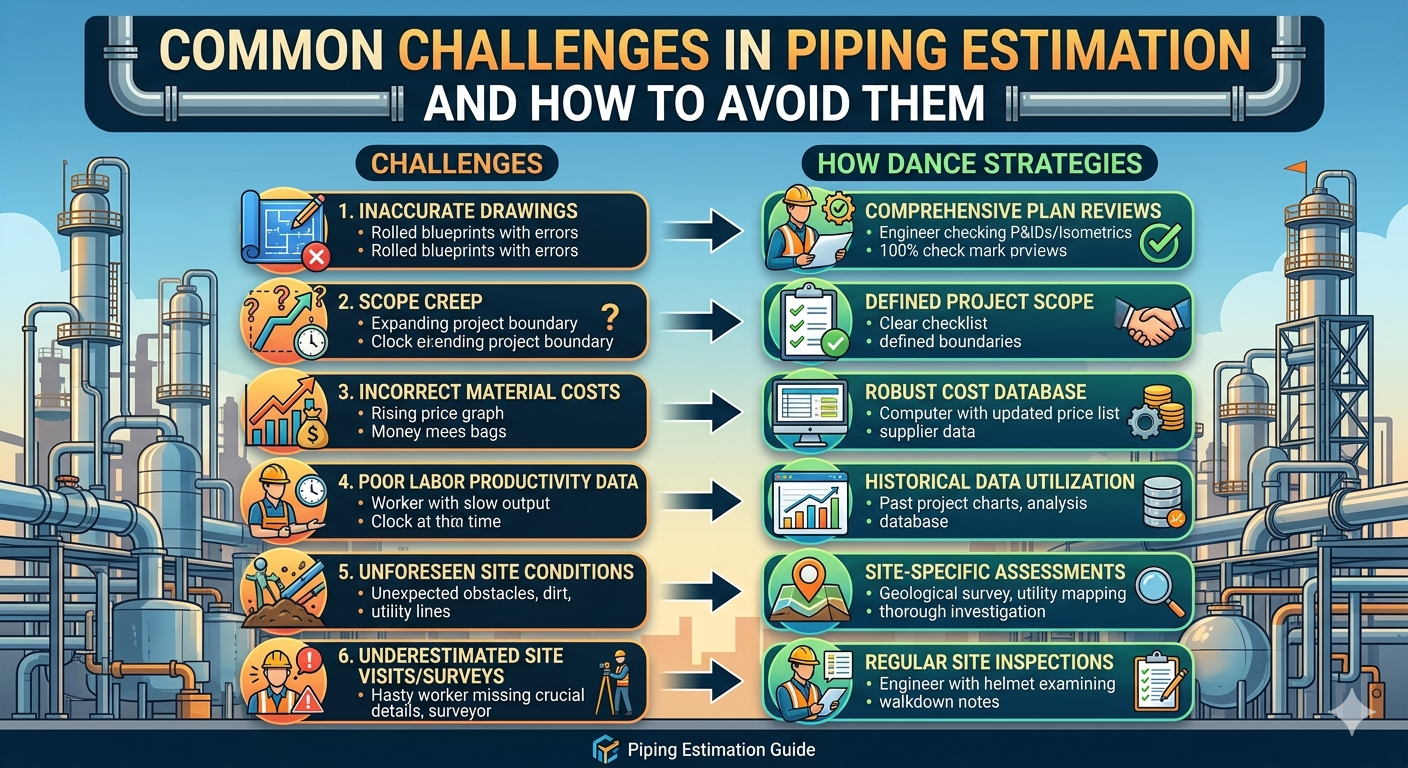
Accurate cost estimation is one of the most critical aspects of any construction or industrial project. In sectors such as oil and gas, manufacturing plants, HVAC systems, and commercial construction, piping systems play a vital role in ensuring efficient operations. However, estimating piping costs can be a complex task that requires technical expertise, precise calculations, and a deep understanding of materials and project requirements.Many contractors and project managers face various challenges during the estimation process. Errors in calculations, incomplete drawings, and inaccurate material takeoffs can lead to budget overruns and project delays. This is why many companies rely on professional Piping Estimating Services to ensure accurate cost projections and better project planning.In this article, we will explore the common challenges in piping estimation and how to avoid them, helping contractors, engineers, and project planners improve the accuracy and efficiency of their estimates.
Understanding the Importance of Piping Estimation
Before discussing the challenges, it is important to understand why piping estimation is so essential. Piping systems involve a wide range of components such as pipes, fittings, valves, flanges, insulation materials, and supports. Each of these components must be accurately calculated and priced during the estimation process.
A well-prepared estimate helps contractors.
-
Prepare competitive bids
-
Manage project budgets effectively
-
Reduce material waste
-
Improve resource planning
-
Avoid unexpected project costs
However, achieving accurate estimates requires careful attention to several technical details.
Common Challenges in Piping Estimation
Incomplete or Unclear Project Drawings
One of the most common problems in piping estimation is working with incomplete or unclear project drawings. Sometimes design documents lack important details such as pipe sizes, routing paths, connection points, or material specifications.Without complete information, estimators may need to make assumptions, which can lead to inaccurate calculations and budget discrepancies.
How to Avoid This Challenge
To prevent this issue, estimators should carefully review all project drawings and documentation before starting the estimation process. If important details are missing, it is important to communicate with architects, engineers, or project managers to clarify the information.Using professional Piping Estimating Services can also help because experienced estimators know how to analyze drawings and identify missing data early in the process.
Complex Piping Layouts
Modern construction and industrial facilities often involve highly complex piping systems. These systems may include multiple pipe networks, different diameters, and complicated routing paths.Complex layouts make it difficult to accurately calculate pipe lengths, fittings, and connection points. Even small miscalculations can lead to significant cost differences in large projects.
How to Avoid This Challenge
Using digital estimation tools and specialized software can significantly improve accuracy when dealing with complex piping layouts. These tools allow estimators to measure pipe lengths directly from drawings and reduce manual calculation errors.Additionally, creating detailed takeoff reports helps ensure that every component is included in the estimate.
Incorrect Material Quantities
Material takeoff is one of the most critical steps in piping estimation. If the quantities of pipes, fittings, valves, or flanges are miscalculated, the entire project budget can be affected.Underestimating materials can lead to shortages during construction, while overestimating materials can increase project costs unnecessarily.
How to Avoid This Challenge
A systematic takeoff process should always be followed. Estimators should carefully count every component and double-check measurements before finalizing the estimate.Using digital takeoff tools can also help improve accuracy by automating quantity calculations and reducing human error.
Lack of Knowledge About Material Costs
Piping systems involve various materials such as steel, copper, PVC, stainless steel, and specialty alloys. Each material type has different price ranges that can fluctuate depending on market conditions.Estimators who are not familiar with current market prices may produce inaccurate cost estimates.
How to Avoid This Challenge
Staying updated with current material pricing is essential. Estimators should regularly check supplier prices and maintain a database of updated material costs.Working with professional estimators who specialize in Piping Estimating Services ensures that cost estimates are based on accurate and current pricing information.
Ignoring Labor Costs
Many estimators focus heavily on material costs but underestimate labor requirements. However, installing piping systems often requires skilled labor, welding, cutting, testing, and insulation work.Ignoring labor costs can lead to serious budgeting problems during construction.
How to Avoid This Challenge
Labor costs should be calculated based on.
-
Pipe size and complexity
-
Installation difficulty
-
Project timeline
-
Workforce availability
Estimators should also consider regional labor rates and productivity factors when preparing their estimates.
Overlooking Small Components
Piping systems include many small components that are easy to overlook, such as clamps, hangers, gaskets, bolts, and supports. Although these items may seem minor, they can significantly impact the total project cost when used in large quantities.
How to Avoid This Challenge
A detailed checklist should always be used during the estimation process. This ensures that every component, including small accessories, is included in the material takeoff.Comprehensive estimation practices help prevent unexpected costs during project execution.
Changes in Project Scope
Construction projects often experience design modifications during the planning or construction phase. Changes in pipe routing, system capacity, or materials can affect the original estimate.If these changes are not properly updated in the estimate, the project budget may become inaccurate.
How to Avoid This Challenge
Maintaining flexibility in the estimation process is essential. Estimators should track design revisions and update cost estimates accordingly.Using digital estimation systems allows quick updates when project scope changes occur.
Lack of Standardized Estimation Processes
Some contractors rely on manual estimation methods or inconsistent procedures. This lack of standardization increases the risk of calculation errors and missing information.Different estimators may use different methods, leading to inconsistencies in project estimates.
How to Avoid This Challenge
Companies should establish standardized estimation procedures and guidelines. These may include.
-
Structured material takeoff processes
-
Standard labor cost formulas
-
Updated pricing databases
-
Quality review procedures
Standardization improves accuracy and consistency across all projects.
Poor Communication Between Teams
Piping estimation often involves coordination between multiple teams, including engineers, project managers, and contractors. Poor communication can lead to misunderstandings about project requirements.For example, design changes may not be communicated to the estimator, leading to outdated cost calculations.
How to Avoid This Challenge
Clear communication channels should be established between all project stakeholders. Regular meetings and documentation updates help ensure that everyone is working with the same project information.Collaborative workflows improve the accuracy and efficiency of the estimation process.
Tight Project Deadlines
Construction projects often require fast bid submissions, which can put pressure on estimators to complete their work quickly. Tight deadlines increase the risk of calculation errors and incomplete estimates.
How to Avoid This Challenge
Time management and proper planning are essential for accurate estimation. Estimators should allocate enough time for reviewing drawings, performing takeoffs, and verifying cost calculations.Many contractors also rely on professional estimating providers such as SMA MEP Estimate to handle complex estimates efficiently while maintaining high accuracy.
Best Practices for Accurate Piping Estimation
To overcome common challenges in piping estimation, contractors and estimators should follow several best practices.
-
Carefully review project drawings and specifications
-
Use digital estimation and takeoff software
-
Maintain updated material price databases
-
Include both material and labor costs in estimates
-
Implement standardized estimation procedures
-
Communicate regularly with project stakeholders
-
Double-check all calculations before finalizing bids
These practices help ensure accurate estimates and reduce the risk of project cost overruns.
Conclusion
Piping estimation is a complex process that requires technical knowledge, attention to detail, and careful planning. Challenges such as incomplete drawings, inaccurate material quantities, labor cost miscalculations, and project scope changes can significantly affect project budgets and timelines.By understanding these common challenges and implementing effective solutions, contractors and estimators can improve the accuracy of their estimates and deliver more successful projects.Professional Piping Estimating Services play an important role in helping construction companies manage complex piping projects with greater confidence. With the right expertise, tools, and processes in place, accurate piping estimation becomes a powerful tool for winning bids, controlling costs, and ensuring smooth project execution.

 Arabic
 French
 Spanish
 Portuguese
 Deutsch
 Turkish
 Dutch
Dutch
 Italiano
 Russian
 Romaian
 Portuguese (Brazil)
 Greek
Greek