


What Is Full Mouth Reconstruction? Complete Guide for Patients
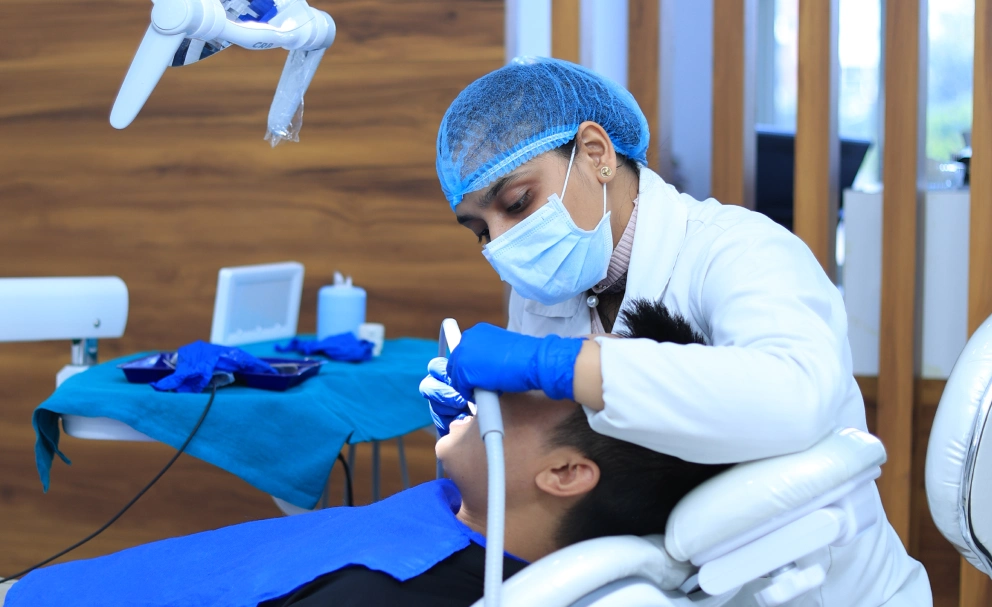
If your dentist has recently mentioned full mouth reconstruction, or if you have been researching solutions for extensive dental damage and wondering whether a comprehensive treatment approach is right for you, this guide is written specifically for you. As I have researched, one of the biggest obstacles that prevents patients from pursuing the dental care they genuinely need is simply not understanding what the treatment involves — what it covers, how long it takes, what it feels like, and what the outcome actually looks like in real life.
Full mouth reconstruction is one of the most powerful and transformative treatment pathways available in modern dentistry. It is not a single procedure, and it is not reserved only for extreme cases. It is a carefully planned, expertly coordinated combination of dental treatments that rebuilds the health, function, structure, and appearance of the entire mouth — delivering results that routine dental care simply cannot achieve when the level of damage or complexity involved goes beyond what isolated treatments can adequately resolve.
This complete guide covers everything a patient needs to know before taking their first step toward a fully restored smile.
Defining Full Mouth Reconstruction in Simple Terms
Full mouth reconstruction — also called full mouth rehabilitation or full mouth restoration — refers to a comprehensive dental treatment plan that addresses all the dental problems present in a patient's mouth simultaneously and systematically. Rather than treating one tooth at a time or addressing individual problems as they arise, full mouth reconstructive dentistry takes a panoramic view of the entire oral system and creates a master treatment plan that resolves every issue in a logical, coordinated sequence.
As per my knowledge, the key distinction between full mouth reconstruction and routine dental treatment is not just the number of procedures involved — it is the level of planning, coordination, and clinical vision required to deliver results that are stable, functional, beautiful, and genuinely long-lasting. A qualified full mouth rehabilitation dentist brings together specialist skills from multiple dental disciplines — restorative, surgical, cosmetic, periodontal, and often orthodontic — and applies them in a unified, patient-centered framework that addresses the complete oral picture rather than just its individual components.
Who Actually Needs Full Mouth Reconstruction
As per market research, patients who pursue full mouth dental treatment in New Chandigarh typically present with one or more of several common clinical scenarios that have progressed beyond what conventional, individual treatments can adequately address.
The first and most common scenario involves widespread tooth decay that has affected most or all of the teeth simultaneously. This situation often develops when dental care has been delayed for years due to cost, fear, or limited access to quality treatment. By the time the patient seeks help, multiple teeth require root canals, crowns, extractions, and implants — and a coordinated reconstruction plan becomes the only pathway to a stable, lasting outcome.
The second scenario involves significant tooth loss from any combination of causes — decay, gum disease, trauma, or congenital absence. Missing teeth create a cascading series of problems that affect the entire oral system — neighboring teeth drift and tilt, the bite destabilizes, the jawbone shrinks at the extraction sites, and facial contours begin to change over time. Full mouth reconstruction addresses all of these consequences together rather than treating each one in isolation.
The third scenario involves chronic bruxism — habitual teeth grinding and clenching, often occurring during sleep — that has progressively worn down tooth surfaces, destabilized the bite, and caused chronic jaw pain, headaches, and sensitivity across the entire mouth. As I have researched, bruxism cases require particularly thoughtful reconstruction planning because restoring the teeth without simultaneously correcting the bite and providing protective measures against future grinding produces results that simply will not survive.
The Diagnostic Process — Where Every Reconstruction Begins
Every successful full mouth restoration in Chandigarh begins with a thorough, comprehensive diagnostic process that goes far beyond what a standard dental checkup covers. This diagnostic stage is the foundation upon which the entire treatment plan is built — and the quality of the diagnosis directly determines the quality and longevity of the final outcome.
During the diagnostic consultation, the full mouth rehabilitation dentist examines every tooth individually for decay, fracture, wear, and restorability. The gum tissue and supporting bone are assessed for disease, recession, and bone loss. The bite is analyzed in detail — how the upper and lower teeth meet in every jaw movement — to identify imbalances that must be corrected as part of the reconstruction. The jaw joints are evaluated for signs of dysfunction, pain, or limited movement.
This examination uses digital full-mouth X-rays, intraoral photographs, study models or digital scans of the teeth, and in complex cases three-dimensional cone beam imaging that reveals the bone architecture in precise detail. All of this diagnostic information feeds directly into a personalized treatment plan that the dentist presents and discusses with the patient before any procedure begins. As per market research, patients who receive this level of diagnostic thoroughness and pre-treatment transparency consistently report better treatment experiences and higher final satisfaction than those whose treatment begins without this foundation.
Understanding the Treatment Sequence
Full mouth reconstruction follows a logical clinical sequence that prioritizes disease elimination before restoration, and structural stability before cosmetic finishing. This sequence is not arbitrary — it reflects the fundamental principle that beautiful restorations placed in a diseased or unstable environment will not succeed regardless of their technical quality.
Treatment begins with the elimination of active disease. This means professional deep cleaning and gum therapy to resolve periodontal disease, root canal treatments to save infected but restorable teeth, and extractions of teeth that cannot be saved. By the end of this first phase, the patient has a clean, disease-free oral environment and healthy gum tissue — the essential starting point for all subsequent reconstruction work.
The second phase focuses on structural restoration and foundation building. For patients who have lost teeth, full mouth implant restoration forms the cornerstone of this phase. Titanium implant posts are placed surgically into the jawbone at precisely planned positions, where they integrate with the surrounding bone over a healing period of three to six months. As per my knowledge, dental implants are universally regarded as the gold standard for tooth replacement because they replicate both the visible crown and the invisible root, stimulating the jawbone and preventing the bone shrinkage that always follows tooth loss when the root is not replaced.
During the integration period, the patient wears comfortable, functional provisional restorations that maintain appearance and allow normal eating and speaking. This period also allows the dental team to begin evaluating the new bite and making refinements before the final restorations are fabricated.
The Role of Orthodontic Treatment in Full Mouth Reconstruction
As I have researched, orthodontic treatment plays an important and often underappreciated role in many full mouth reconstruction cases. Misaligned teeth do not just create cosmetic concerns — they distribute chewing forces unevenly across the dentition, accelerate wear on specific teeth, create areas where plaque accumulates and decay develops more easily, and place excess strain on the jaw joints over time. Correcting alignment as part of the overall reconstruction creates a more stable, balanced, and maintainable final result.
Braces and aligners in Chandigarh offer patients two distinct orthodontic pathways. Traditional fixed braces remain the most effective solution for complex cases involving significant crowding, large spacing corrections, or bite problems requiring precise, multi-directional tooth movement over an extended period. A braces specialist in Chandigarh plans every stage of this movement using detailed diagnostic records and applies careful adjustments at each appointment to maintain steady, predictable progress throughout treatment.
For patients whose misalignment is mild to moderate, or for those who want to maintain a discreet appearance during orthodontic correction, clear aligners in Chandigarh deliver impressive results through a series of custom-made transparent plastic trays. As per market research, invisible braces in Chandigarh have transformed orthodontic treatment for adult patients particularly — combining meaningful clinical correction with the aesthetic and practical freedom that fixed appliances cannot provide. Patients remove the trays for eating and oral hygiene, which simplifies daily routines and protects gum health throughout treatment.
Braces and aligners treatment in Chandigarh integrated within a full mouth reconstruction plan requires careful coordination between the orthodontic specialist and the restorative dental team. The sequence in which orthodontics occurs — whether before or after implant placement and crown preparation — depends entirely on the specific clinical requirements of each individual case. Braces and aligners in New Chandigarh delivered within a comprehensive clinic that handles both orthodontic and restorative care under one roof eliminates the coordination gaps that can arise when patients see separate providers for different aspects of their treatment.
Provisional Restorations and the Trial Smile Phase
Before committing to final, permanent restorations, experienced clinics place high-quality provisional crowns, bridges, and implant-supported teeth that allow the patient and dental team to evaluate the new bite and smile in real-life conditions over several weeks to months. As per my knowledge, this trial phase is one of the most valuable steps in the entire reconstruction process — and one that distinguishes truly comprehensive, patient-centered care from more routine approaches.
Living with provisional restorations reveals critical information about how the reconstructed bite distributes chewing forces, whether the jaw joints remain comfortable and strain-free, how the smile proportions and shade appear in everyday social settings, and whether any refinements are needed before the permanent work is finalized. Every adjustment made during this phase is far easier and more cost-effective to implement than modifying permanent ceramic restorations — making the provisional phase both clinically essential and financially wise for the patient.
Final Restorations and the Transformation Moment
Once implants have integrated, orthodontic treatment is complete, the bite has been confirmed through provisional evaluation, and all refinements have been made, treatment reaches its most rewarding stage — the placement of the permanent final restorations. Custom-fabricated ceramic or zirconia crowns, bridges, and implant-supported prosthetics are fitted with precision, adjusted for perfect bite harmony, and polished to a natural, lifelike finish that makes the restorations virtually indistinguishable from natural teeth.
As per market research, this appointment consistently produces the most emotionally significant moments of the entire treatment journey. Patients see their complete, restored smile for the first time — and the transformation in their confidence, their expression, and their engagement with the world around them is both immediate and genuinely life-changing.
Long Term Care and Protecting Your Investment
The final chapter of full mouth reconstruction is not a clinical procedure — it is a lifelong commitment to caring for the results achieved. Consistent daily oral hygiene, professional checkups and cleanings every three to six months, and the use of any protective appliances recommended by the dental team work together to preserve the restorations and maintain the health of the surrounding tissues for decades.
As I have researched, patients who maintain this routine diligently enjoy the results of their full mouth reconstruction for a lifetime — eating freely, smiling confidently, and living without the limitations that dental damage so often quietly imposes. The investment made in rebuilding a healthy, functional, and beautiful smile is one that pays dividends every single day for the rest of a patient's life.

 Arabic
 French
 Spanish
 Portuguese
 Deutsch
 Turkish
 Dutch
Dutch
 Italiano
 Russian
 Romaian
 Portuguese (Brazil)
 Greek
Greek