


What Changes After Implementing a Custom ERP System?
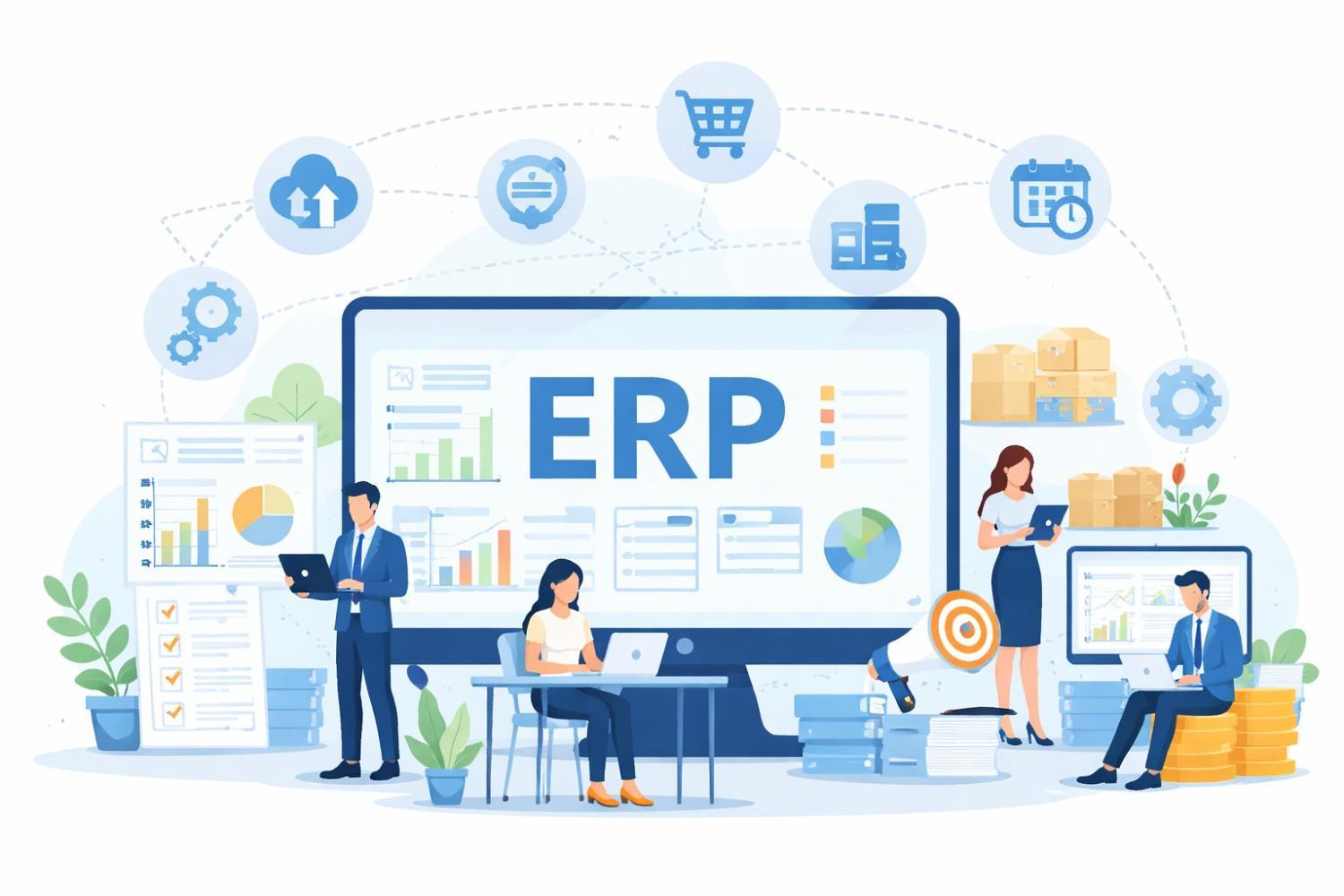
Spreadsheets multiply, emails pile up, and somewhere in the chaos, the latest version of a report goes missing again. That’s usually the moment businesses start thinking about ERP—and not just any ERP, but one tailored to how things actually work. Once a custom system goes live, the shift feels less like a software upgrade and more like switching from guesswork to clarity. Processes begin to align, data starts behaving, and teams breathe a little easier. So, what really changes after implementation? Quite a lot—and some of it shows up faster than expected.
Centralized Data — No More Digital Treasure Hunts
Data scattered across tools has a funny way of turning simple questions into full-blown investigations. After implementing a custom ERP, everything lives in one place—clean, structured, and accessible. No more digging through folders or asking five people for the same file with five different answers. Teams begin to trust the numbers because they finally come from a single source of truth. It’s a subtle shift, but a powerful one. And once data stops hiding, something interesting happens next—decisions start getting sharper.
Smarter Decision-Making (Finally, Data You Can Trust)
When data becomes reliable, decision-making stops feeling like a gamble. Real-time dashboards and accurate reports replace outdated spreadsheets and gut instincts. Leadership teams gain visibility into what’s actually happening—not what happened last week. A skilled ERP software developer ensures these insights are not just available, but actionable. Suddenly, forecasting feels less like prediction and more like planning. And while better decisions are a win on their own, they also expose something else—inefficiencies that were hiding in plain sight.
Streamlined Business Processes (Goodbye Bottlenecks)
Manual workflows often carry invisible delays—approvals stuck in inboxes, tasks waiting for follow-ups, and processes that depend too much on memory. A custom ERP system replaces these with automated, clearly defined flows. One client once admitted their invoice approvals took longer than their sales cycle (yes, really). After automation, that bottleneck disappeared almost overnight. Tasks move forward without constant nudging, and accountability becomes built-in rather than enforced. Efficiency improves quietly but consistently—and that ripple effect reaches every department.
Improved Team Collaboration (Less Email, More Action)
Departments working in silos often create more friction than progress. Sales promises something inventory can’t deliver, or finance waits on updates that never arrive. With ERP, everyone operates within the same ecosystem. Information flows naturally, updates happen in real time, and collaboration feels less like coordination and more like alignment. Fewer emails, fewer misunderstandings, and far fewer “just checking in” messages. And as communication improves, teams start noticing something else—work gets done faster without feeling rushed.
Increased Productivity Across Departments
Productivity doesn’t always come from working harder—sometimes it comes from removing unnecessary work altogether. ERP systems automate repetitive tasks, reduce manual data entry, and eliminate duplication. Teams shift focus from routine operations to meaningful contributions. Those hours once spent on copy-paste tasks (we’ve all been there) now go toward strategy and improvement. The result isn’t just faster output—it’s better output. And as productivity rises, errors—those silent productivity killers—begin to fade into the background.
Reduction in Errors and Operational Risks
Human error thrives in manual processes—misplaced entries, incorrect calculations, and overlooked steps. ERP systems introduce consistency through automation and validation checks. Data flows seamlessly between modules, reducing the chances of duplication or discrepancy. Audit trails provide clarity, making compliance less stressful and more manageable. Many businesses realize, often a bit too late, how avoidable their earlier erp migration mistakes were. Fortunately, once the system stabilizes, those risks shrink significantly, replaced by processes that are both reliable and repeatable.
Scalability That Actually Supports Growth
Growth often exposes the limitations of disconnected systems. What worked for a small team starts breaking under increased demand. A custom ERP, however, grows alongside the business. New modules, users, and workflows can be added without disrupting existing operations. Unlike rigid off-the-shelf solutions, flexibility remains intact. A reliable ERP software development company ensures the system is built with future needs in mind—not just current challenges. As a result, scaling feels less like a struggle and more like a natural progression.
Enhanced Customer Experience
Customer expectations don’t wait for internal processes to catch up. Delayed responses, incorrect orders, and lack of visibility can quickly damage trust. ERP systems improve this by connecting front-end interactions with back-end operations. Orders process faster, updates are accurate, and customer data is always accessible. Service teams respond with confidence instead of hesitation. The experience becomes smoother, more predictable, and—most importantly—more reliable. And when customers notice consistency, loyalty tends to follow without much persuasion.
Greater Visibility and Control for Management
Managing a business without real-time insights is a bit like driving with a foggy windshield. ERP systems clear that view. Leaders gain access to live data, performance metrics, and operational insights—all from a single dashboard. Monitoring KPIs becomes straightforward, and identifying issues happens before they escalate. Control doesn’t mean micromanagement; it means informed oversight. With better visibility, strategy becomes proactive rather than reactive. And that shift, though subtle, often separates growing businesses from those simply trying to keep up.
Initial Challenges (Because Nothing Worthwhile Is Instant)
No transformation comes without a few growing pains. The first days after ERP implementation often involve learning curves, minor confusion, and the occasional “where did that button go?” moment. Teams need time to adapt, and processes need time to stabilize. Resistance to change isn’t unusual either—it’s human nature, after all. However, with proper training and support, these challenges fade quickly. What feels unfamiliar at first soon becomes second nature. And once that transition happens, the benefits begin to outweigh the initial discomfort.
Long-Term ROI and Business Transformation
ERP systems don’t just fix immediate problems—they reshape how businesses operate over time. Cost savings emerge through efficiency, productivity improves through automation, and decision-making strengthens through reliable data. The return on investment becomes evident not in a single metric, but across the entire organization. What started as a software implementation evolves into a digital transformation. Businesses become more agile, more responsive, and better equipped for future challenges. And in the long run, that transformation proves far more valuable than the system itself.
Conclusion
Change after ERP implementation rarely arrives all at once—it builds gradually, then suddenly feels undeniable. Processes become smoother, decisions sharper, and operations more connected. What once required effort now happens almost instinctively. A custom ERP system doesn’t just organize business functions; it redefines how they interact. And while the journey may start with solving operational challenges, it often ends with something bigger—a business that finally works the way it was always meant to (efficiently, intelligently, and with far fewer spreadsheet-induced headaches.
FAQs
1. What are the biggest benefits of a custom ERP system?
Custom ERP systems offer centralized data management, streamlined workflows, improved decision-making, and scalability. They align closely with business processes, making operations more efficient and adaptable.
2. How long does it take to see results after ERP implementation?
Initial improvements can appear within weeks, but measurable long-term results typically take 3–6 months as teams adapt and processes stabilize.
3. What are common ERP migration mistakes?
Common issues include poor planning, inadequate training, ignoring data quality, and underestimating change management requirements.
4. Why choose a custom ERP over off-the-shelf solutions?
Custom ERP systems are tailored to specific business needs, offering greater flexibility, scalability, and long-term value compared to generic solutions.
5. How to choose the right ERP software development company?
Look for experience, industry expertise, strong communication, and post-implementation support to ensure a successful ERP journey.

 Arabic
 French
 Spanish
 Portuguese
 Deutsch
 Turkish
 Dutch
Dutch
 Italiano
 Russian
 Romaian
 Portuguese (Brazil)
 Greek
Greek