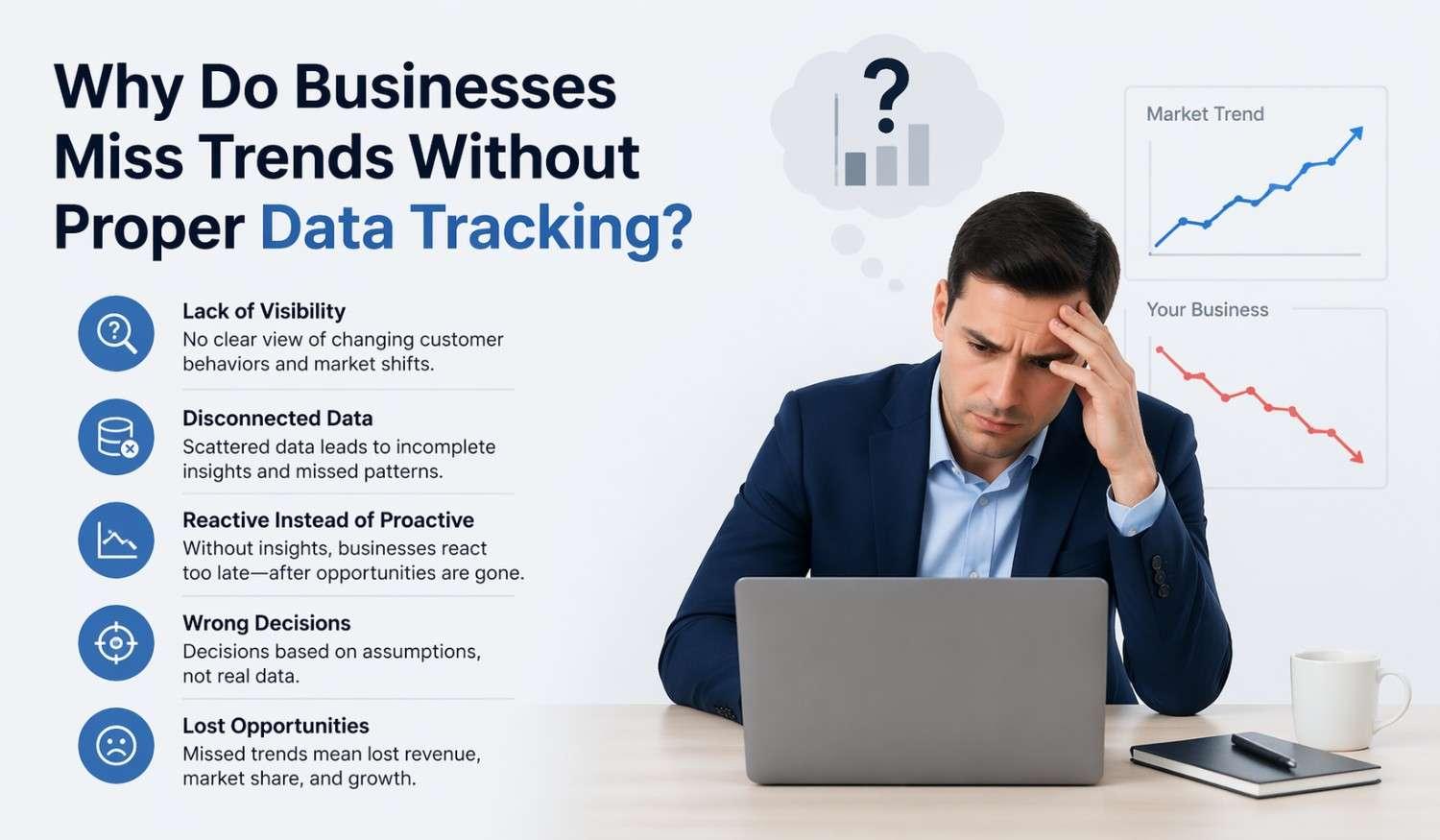
Businesses often pride themselves on instinct—those “we just know our customers” moments which sound impressive in meetings but age poorly in reality. Markets, however, rarely wait for intuition to catch up. Without proper data tracking, patterns remain hidden, opportunities slip by, and competitors quietly move ahead. The problem isn’t a lack of information—it’s the absence of structured visibility. Emerging web scraping trends highlight how quickly actionable insights can be uncovered when data flows correctly. And yet, many organizations still operate in partial blindness a risky way to navigate a fast-moving digital economy.
The Illusion of “We Know Our Market”
Confidence can be comforting—especially when built on years of experience—but it often masks blind spots. Many businesses assume they understand their audience based on past success, overlooking subtle behavioral shifts. Static reports reinforce this illusion, presenting a snapshot instead of a moving picture. A familiar scenario plays out: a product performs well historically, so expectations remain high—until sales quietly dip. By the time the discrepancy becomes obvious, the underlying trend has already matured. Assumptions, while convenient, rarely outperform data-backed clarity (and the market tends to prove that quickly).
Data Silos: The Silent Trend Killers
Organizations frequently operate in fragmented ecosystems where departments guard their own datasets (sometimes unintentionally, sometimes by habit). Marketing tracks engagement, sales monitors conversions, and operations focus on delivery—yet rarely do these insights merge into a cohesive narrative. The result is a puzzle with missing pieces. Trends that span multiple touchpoints go unnoticed because no single team sees the full picture. It’s less about lack of data and more about lack of connection. Without integration, valuable signals remain scattered—like clues in separate rooms, never forming a complete story.
Delayed Data = Missed Opportunities
Timing is everything—especially when it comes to identifying trends. Businesses relying on delayed reporting often find themselves reacting to yesterday’s insights. Monthly or quarterly reports may look polished, but they arrive too late to influence fast-moving decisions. By the time a trend is recognized, competitors have already capitalized on it (and moved on to the next). This lag creates a reactive culture rather than a proactive one. Real-time or near-real-time tracking, on the other hand, transforms data into a strategic asset—allowing decisions to align with what’s happening now, not what happened before.
Ignoring External Data Sources
Internal metrics tell part of the story—but never the whole narrative. Market trends are shaped by competitors, customer sentiment, pricing shifts, and broader industry signals. Businesses that rely solely on internal data risk developing a narrow perspective (a bit like judging the weather by looking out a single window). Integrating external insights provides context and depth. This is where a web scraping company becomes valuable, helping gather relevant data beyond organizational boundaries. Without this broader lens, businesses may interpret trends incorrectly—or miss them entirely.
Lack of Predictive Thinking
Historical data is useful—but only to a point. Many organizations focus heavily on what has already happened, rather than what might happen next. This backward-looking approach limits the ability to anticipate changes. Trends don’t just appear suddenly; they evolve over time, leaving subtle indicators along the way. Predictive analytics helps identify these early signals, enabling businesses to act before trends peak. Without it, decision-making becomes reactive, guided by hindsight instead of foresight (which, as experience shows, is rarely the winning strategy in competitive markets).
Poor Data Quality (Garbage In, Garbage Out)
Even the most advanced analytics tools cannot compensate for flawed data. Inconsistent entries, outdated records, and duplicate information create noise that distorts insights. Decisions based on unreliable data often lead to misguided strategies (and avoidable setbacks). Maintaining data quality requires ongoing attention—cleaning, validation, and standardization. Without these practices, trends may appear where none exist, or worse, real opportunities may be overlooked. Accuracy forms the foundation of meaningful analysis; without it, data becomes less of an asset and more of a liability.
Not Leveraging Automation and AI
Manual data tracking processes struggle to keep pace with the scale and speed of modern business environments. Human effort alone cannot efficiently analyze vast datasets or detect subtle patterns. Automation and AI bridge this gap, processing information quickly and consistently. Current web scraping trends demonstrate how technology can gather and structure large volumes of external data with minimal delay. Businesses that embrace these tools gain a significant advantage—transforming raw data into actionable insights. Those that don’t often remain stuck in time-consuming workflows (and slower decision cycles).
Failure to Ask the Right Questions
Tracking data is only effective when aligned with meaningful objectives. Many businesses fall into the trap of focusing on vanity metrics—numbers that look impressive but offer little strategic value. Website traffic, social media likes, and impressions may indicate activity, but not necessarily impact. The real challenge lies in identifying metrics that drive decisions, such as conversion rates, customer retention, or revenue growth. Asking the right questions shapes the entire data strategy. Without clarity, even well-collected data can lead to confusion rather than insight.
Real-World Observation
Consider a mid-sized retail business that noticed steady website traffic growth over several months (a seemingly positive sign). However, conversions began to decline—a detail initially overlooked due to fragmented tracking systems. By the time the issue surfaced, competitors had already adapted to shifting customer preferences. A deeper analysis revealed changes in pricing expectations and product demand patterns. The lesson was clear: surface-level metrics can be misleading without comprehensive tracking. Trends rarely announce themselves loudly—they reveal their presence through subtle, interconnected signals.
How Proper Data Tracking Changes the Game
When data tracking is structured and comprehensive, businesses gain clarity that extends beyond surface-level observations. Real-time insights enable faster decision-making, while integrated datasets provide a holistic view of operations and market dynamics. Trends become easier to identify, interpret, and act upon. Instead of reacting to changes, organizations can anticipate them. This shift transforms data from a passive resource into a strategic advantage. Proper tracking doesn’t just improve visibility—it enhances agility, allowing businesses to adapt confidently in an ever-changing environment.
Best Practices for Effective Data Tracking
Successful data tracking begins with centralization—bringing all relevant information into a unified system. Real-time dashboards improve visibility, while integration with external sources adds valuable context. Automation reduces manual effort and increases accuracy, and regular audits ensure data quality remains high. Equally important is aligning metrics with business goals, ensuring that insights drive meaningful actions. A structured approach turns data into a reliable guide for decision-making. Without these practices, even large volumes of data can remain underutilized and ineffective.
Conclusion
Businesses rarely miss trends because of a lack of data—more often, they miss them because the data isn’t properly tracked, connected, or understood. The signals are there, embedded in customer behavior, market shifts, and competitive activity. Recognizing these signals requires more than intuition; it demands structure, clarity, and the right tools. As markets continue to evolve, the ability to track and interpret data effectively becomes a defining factor in long-term success. After all, the market is always sending messages—the difference lies in whether those messages are actually heard.
FAQs
1. Why do businesses miss trends without proper data tracking?
Businesses miss trends because data is often fragmented, delayed, or incomplete. Without a unified system, insights remain hidden, making it difficult to identify patterns or changes in real time.
2. How does proper data tracking improve decision-making?
Accurate and timely data allows businesses to make informed decisions based on current market conditions, reducing reliance on assumptions and outdated information.
3. What role does external data play in trend analysis?
External data provides context by highlighting competitor activity, market shifts, and customer preferences beyond internal operations, leading to more comprehensive insights.
4. Can automation help in identifying trends faster?
Yes, automation processes large datasets quickly and consistently, enabling businesses to detect patterns and respond to trends more efficiently.
5. What is the biggest mistake businesses make in data tracking?
One common mistake is focusing on irrelevant metrics instead of actionable insights, which leads to poor decision-making and missed opportunities.




 Arabic
 French
 Spanish
 Portuguese
 Deutsch
 Turkish
 Dutch
Dutch
 Italiano
 Russian
 Romaian
 Portuguese (Brazil)
 Greek
Greek