


Types of Piles: How to Identify Each Type and When to See a Doctor
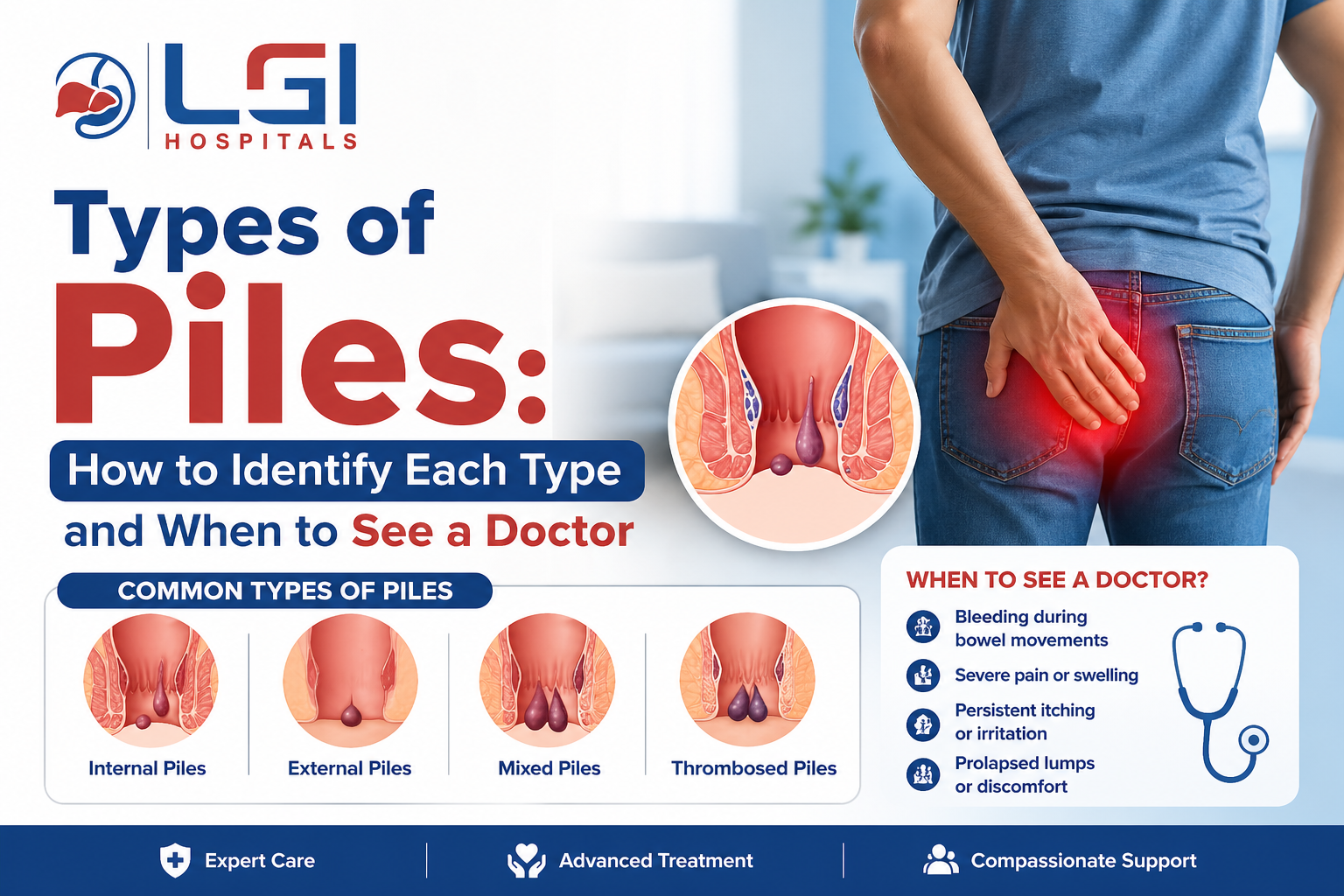
Piles, also known as hemorrhoids, are one of the most common digestive health issues, yet many people delay treatment due to lack of awareness or hesitation.
The problem is not just the condition itself, but the delay in identifying the types of piles and understanding when medical attention is necessary.
Early diagnosis can make treatment simpler, less painful, and more effective. This guide will help you understand the different types of piles, their symptoms, and the right time to consult a doctor.
What Are Piles
Piles are swollen veins in the lower rectum or anus. They develop due to increased pressure in these veins, often caused by factors such as constipation, prolonged sitting, or straining during bowel movements.
While piles can affect anyone, they are more common in adults with sedentary lifestyles or irregular dietary habits.
Types of Piles
Understanding the types of piles is essential because symptoms and treatment approaches vary depending on the type.
Internal Piles
Internal piles develop inside the rectum and are usually not visible from outside.
Common Signs
-
Painless bleeding during bowel movements
-
Bright red blood in stool
-
Mild discomfort
Internal piles are often categorized into stages based on severity, ranging from mild swelling to prolapsing piles that come out during bowel movements.
External Piles
External piles form under the skin around the anus and are more noticeable.
Common Signs
-
Pain or discomfort while sitting
-
Swelling around the anal area
-
Itching or irritation
-
Occasional bleeding
External piles can become more painful if a blood clot forms, leading to a condition known as thrombosed piles.
Thrombosed Piles
This is a more severe form of external piles where a blood clot develops inside the swollen vein.
Common Signs
-
Severe pain
-
Hard lump near the anus
-
Swelling and inflammation
This condition often requires immediate medical attention to relieve pain and prevent complications.
How to Identify Which Type You Have
Many people are unsure about the types of piles they may be experiencing.
Quick Identification Guide
-
Bleeding without pain usually indicates internal piles
-
Pain, swelling, and itching around the anus suggest external piles
-
Severe pain with a hard lump may indicate thrombosed piles
However, self-diagnosis is not always accurate. A proper medical evaluation is essential for correct identification.
If you are experiencing symptoms, it is best to book a consultation with a specialist for accurate diagnosis rather than relying on guesswork.
LGI Hospitals provides expert evaluation to identify the exact type and severity of the condition.
Causes of Piles
Several factors contribute to the development of piles.
Common Causes
-
Chronic constipation
-
Straining during bowel movements
-
Sitting for long periods
-
Low-fiber diet
-
Obesity
-
Pregnancy
Understanding these causes can help in both prevention and treatment.
When Should You See a Doctor
Many people try home remedies first, which may provide temporary relief but do not address the root cause.
You Should Consult a Doctor If
-
Bleeding persists for more than a few days
-
Pain becomes severe
-
There is noticeable swelling or lumps
-
Symptoms do not improve with home remedies
-
Bowel habits change significantly
Delaying treatment can lead to worsening symptoms and more complex procedures later.
You can consult experienced doctors for piles treatment and early care to prevent complications.
LGI Hospitals focuses on early diagnosis, which plays a key role in effective treatment.
Treatment Options for Different Types of Piles
Treatment depends on the type and severity of piles.
Non-Surgical Treatments
-
Dietary changes to include more fiber
-
Increased water intake
-
Medications to reduce swelling and discomfort
-
Lifestyle modifications
Minimally Invasive Procedures
-
Rubber band ligation
-
Injection therapy
-
Infrared coagulation
Surgical Treatment
In severe cases, surgery may be required to remove the piles.
Hospitals like LGI Hospitals offer a complete range of treatment options, ensuring that patients receive the most suitable care based on their condition.
Why Early Treatment Matters
Ignoring piles can lead to complications such as:
-
Increased pain and discomfort
-
Persistent bleeding
-
Infection
-
Reduced quality of life
Early treatment not only reduces symptoms but also prevents the condition from progressing.
If you are unsure about your symptoms, you can schedule a medical consultation for proper diagnosis and treatment to get clarity and timely care.
Preventing Piles
Prevention is always better than treatment. Simple lifestyle changes can significantly reduce the risk.
Tips for Prevention
-
Eat a high-fiber diet
-
Stay hydrated
-
Avoid prolonged sitting
-
Exercise regularly
-
Do not ignore the urge to pass stool
These habits help maintain digestive health and reduce pressure on rectal veins.
Why Choose LGI Hospitals for Piles Treatment
When it comes to treating the types of piles, choosing the right healthcare provider is crucial.
LGI Hospitals offers:
-
Experienced gastro specialists
-
Advanced diagnostic facilities
-
Personalized treatment plans
-
Focus on patient comfort and recovery
LGI Hospitals ensures that patients receive accurate diagnosis and effective treatment without unnecessary delays.
FAQs
What are the main types of piles
The main types of piles are internal piles, external piles, and thrombosed piles. Each type has different symptoms and requires specific treatment approaches.
How do I know which type of piles I have
You can identify piles based on symptoms like bleeding, pain, or swelling, but a proper medical diagnosis is necessary for accurate identification.
Are all types of piles painful
No, internal piles are usually painless, while external and thrombosed piles can cause significant pain and discomfort.
When should I see a doctor for piles
You should see a doctor if you experience persistent bleeding, severe pain, swelling, or if symptoms do not improve with home remedies.
Final Thoughts
Understanding the types of piles is the first step toward effective treatment. Each type presents different symptoms and requires a tailored approach.
Ignoring the condition can lead to complications, but timely medical care can make treatment simple and effective.
LGI Hospitals provides expert care, accurate diagnosis, and advanced treatment options to help patients recover comfortably.
If you are experiencing symptoms, taking action early can make all the difference in your recovery journey.

 English
 Arabic
 French
 Spanish
 Deutsch
 Turkish
 Dutch
Dutch
 Italiano
 Russian
 Romaian
 Portuguese (Brazil)
 Greek
Greek