


How Dust Reduces Cooling Performance in Modern Data Centers
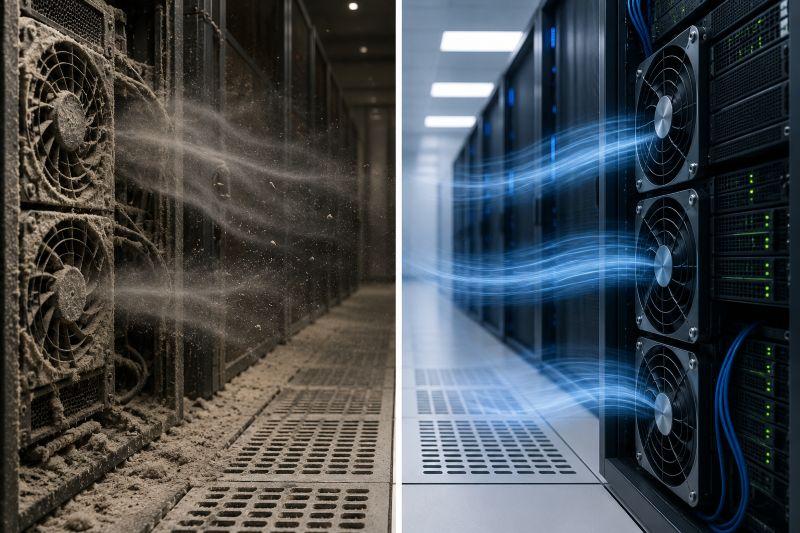
Modern data centers are designed for speed, uptime, and continuous performance. Yet one of the most overlooked threats to operational efficiency is something deceptively simple: dust. Even a thin layer of airborne particles can disrupt airflow, reduce cooling performance, increase energy costs, and shorten the lifespan of mission-critical equipment.
As digital infrastructure expands across industries, data center managers are paying closer attention to environmental cleanliness. Effective facility maintenance is no longer just about appearance. It directly impacts energy efficiency, sustainability, and equipment reliability. This is where green commercial cleaning strategies have become an important part of modern data center operations.
For companies managing high-performance facilities, proactive cleaning and contamination control can mean the difference between stable performance and costly downtime.
Why Cooling Efficiency Matters in Data Centers
Data centers generate massive amounts of heat. Servers, storage devices, networking equipment, and power systems operate continuously, often in tightly packed configurations. Without proper cooling, internal temperatures rise rapidly and create conditions that threaten hardware integrity.
Cooling systems are responsible for maintaining safe operating temperatures. When cooling efficiency declines, facilities experience:
- Higher electricity consumption
- Increased strain on HVAC systems
- Reduced server performance
- Greater risk of equipment failure
- Unexpected outages
- Increased maintenance expenses
According to industry estimates, cooling can account for nearly 40% of a data center’s total energy usage. Even minor airflow disruptions can create measurable operational inefficiencies.
How Dust Builds Up in Data Centers
Dust enters facilities through several sources, including:
- Outdoor air infiltration
- Employee foot traffic
- Construction activities
- Packaging materials
- Poorly maintained HVAC systems
- Ceiling and floor contaminants
Although many modern facilities use filtration systems, no environment is completely immune to airborne particles. Dust accumulation happens gradually and often goes unnoticed until performance issues emerge.
Common Types of Data Center Contaminants
Dust in data centers is not limited to ordinary dirt. Facilities may contain:
- Fine particulate matter
- Textile fibers
- Pollen
- Metal particles
- Skin cells
- Soot
- Industrial pollutants
These particles settle on equipment surfaces, vents, raised floors, cable trays, and cooling infrastructure.
The Direct Connection Between Dust and Cooling Efficiency
Dust interferes with cooling systems in several ways. As contaminants accumulate, airflow becomes restricted and thermal management systems work harder to maintain target temperatures.
Blocked Airflow Paths
Data centers depend on controlled airflow patterns to remove heat efficiently. Dust buildup on vents, perforated floor tiles, and server intakes restricts circulation.
When airflow decreases:
- Hot spots develop
- Cooling units become less effective
- Equipment temperatures rise unevenly
- Fans operate at higher speeds
Over time, this imbalance reduces the overall efficiency of the cooling infrastructure.
Contaminated Air Filters
HVAC and CRAC (Computer Room Air Conditioning) systems rely on filters to capture airborne particles. Excessive dust accumulation clogs filters more quickly and limits airflow capacity.
Dirty filters force cooling systems to consume more energy while delivering reduced performance. Facilities may experience:
- Increased power usage
- More frequent maintenance cycles
- Higher utility costs
- Reduced equipment lifespan
Reduced Heat Transfer Efficiency
Dust acts as an insulating layer on electronic components and cooling coils. This prevents heat from dissipating effectively.
Even microscopic layers of contamination can raise component temperatures enough to impact system stability. In high-density server environments, small temperature increases can compound rapidly.
Increased Fan Strain
Servers contain internal cooling fans designed to maintain safe operating conditions. Dust-covered components force these fans to work harder and longer.
This results in:
- Greater energy consumption
- Increased wear and tear
- Louder equipment operation
- Higher risk of fan failure
As fan performance declines, thermal stress increases across the entire system.
Real-World Example: Dust Impact in a High-Density Facility
A regional colocation provider in the southwestern United States experienced recurring temperature spikes in one of its server rooms despite recent HVAC upgrades. Initial inspections focused on cooling equipment performance, but the underlying issue was contamination buildup beneath the raised floor system.
Dust accumulation had restricted airflow through perforated tiles and contaminated air intake systems. After implementing a detailed contamination control plan and a scheduled green commercial cleaning program, the facility reported:
- Improved airflow consistency
- Lower average operating temperatures
- Reduced HVAC workload
- Noticeable reductions in energy consumption
The facility also experienced fewer thermal alerts during peak usage periods.
This example highlights how contamination control directly supports operational performance in mission-critical environments.
The Hidden Financial Costs of Dust Accumulation
Dust-related cooling inefficiencies can create significant long-term expenses.
Higher Energy Bills
Cooling systems operating under strain consume more electricity. Even modest airflow restrictions can increase energy demand substantially over time.
Facilities aiming for scalable growth and sustainable operations often prioritize contamination control because it supports lower Power Usage Effectiveness (PUE) metrics.
Hardware Damage and Replacement Costs
Heat is one of the leading causes of hardware degradation. Persistent overheating shortens the lifespan of:
- Servers
- Power supplies
- Storage systems
- Networking hardware
Replacing enterprise equipment can be extremely expensive, especially during unplanned downtime events.
Downtime Risks
Data center downtime can cost thousands of dollars per minute depending on the organization and service level requirements.
Dust-related failures may trigger:
- Thermal shutdowns
- System instability
- Connectivity disruptions
- Emergency maintenance events
Reliable contamination management reduces these operational risks.
Best Practices for Dust Control in Data Centers
Maintaining a clean data center requires more than occasional vacuuming. Industry-leading facilities use structured cleaning and environmental management protocols.
H2: Implement Scheduled Cleaning Programs
Routine maintenance is essential for preventing contamination buildup.
Professional cleaning schedules should address:
- Raised floors
- Subfloor cavities
- Air vents
- Cable trays
- Server exteriors
- Cooling equipment
- Ceiling spaces
Trusted maintenance providers understand how to clean sensitive environments without introducing static discharge or damaging equipment.
Use HEPA Filtration Systems
High-efficiency particulate air (HEPA) filtration systems capture fine airborne contaminants that ordinary filters may miss.
HEPA-equipped cleaning tools help maintain air quality while minimizing particle redistribution.
Maintain HVAC Systems Regularly
Cooling systems should undergo regular inspection and maintenance to ensure optimal performance.
This includes:
- Replacing filters
- Cleaning coils
- Monitoring airflow
- Inspecting ductwork
- Verifying humidity control
Reliable HVAC maintenance improves both cooling efficiency and indoor air quality.
Control Humidity Levels
Humidity plays an important role in contamination management.
Low humidity increases static electricity risks, while excessive humidity may encourage corrosion or microbial growth. Maintaining balanced environmental conditions supports equipment protection and stable operations.
Limit Contamination Sources
Facilities can reduce dust introduction through:
- Controlled access policies
- Anti-static flooring systems
- Proper sealing methods
- Cleanroom-style entry protocols
- Reduced cardboard storage
Preventative measures help maintain cleaner operating environments over time.
The Role of Green Commercial Cleaning in Data Centers
Sustainability has become a growing priority for data center operators. Many organizations now seek environmentally responsible maintenance solutions that support operational efficiency without introducing harmful chemicals.
Green commercial cleaning services focus on:
- Low-toxicity cleaning agents
- HEPA-filtered equipment
- Reduced chemical residues
- Improved indoor air quality
- Sustainable cleaning practices
For sensitive technology environments, these methods provide effective contamination control while minimizing environmental impact.
Professional cleaning teams with experience in mission-critical facilities understand the importance of precision, safety, and compliance. They use specialized procedures that protect both equipment performance and employee health.
Why Professional Expertise Matters
Data center cleaning requires specialized knowledge. Improper cleaning methods can create additional risks, including static discharge, accidental equipment damage, and airborne particle redistribution.
Well-experienced cleaning professionals follow proven protocols tailored to sensitive environments. This includes:
- Anti-static procedures
- Contamination containment methods
- Equipment-safe cleaning materials
- Detailed environmental assessments
Top-rated maintenance providers also help organizations develop long-term cleanliness strategies that align with operational goals and sustainability standards.
Emerging Trends in Data Center Environmental Management
As data centers become more advanced, facility maintenance strategies continue evolving.
Innovative trends include:
AI-Based Environmental Monitoring
Smart sensors now track particulate levels, airflow conditions, and thermal performance in real time. These systems help identify contamination issues before they escalate.
Energy-Efficient Cooling Designs
Cutting-edge cooling technologies such as liquid cooling and hot aisle containment require even stricter contamination control standards.
Sustainability-Focused Operations
More organizations are integrating green commercial cleaning into broader ESG and sustainability initiatives.
Reducing contamination-related energy waste supports both environmental goals and operational efficiency.
Conclusion
Dust may seem like a minor issue, but its impact on data center cooling efficiency is significant. Contamination disrupts airflow, increases energy consumption, strains cooling infrastructure, and raises the risk of equipment failure.
In high-performance environments where uptime and efficiency matter, proactive contamination control is essential. Routine maintenance, HVAC optimization, and professional green commercial cleaning services all contribute to better cooling performance and long-term operational reliability. Companies such as Prestige Building Maintenance of Nevada, LLC help businesses maintain cleaner, safer, and more energy-efficient facilities through reliable and industry-leading commercial cleaning solutions.
As data centers continue growing in scale and complexity, facility cleanliness will remain a critical component of energy efficiency, sustainability, and infrastructure protection. Organizations that invest in trusted environmental maintenance services from experienced providers like Prestige Building Maintenance of Nevada, LLC are better positioned to support scalable and high-performance operations in the future.

 English
 French
 Spanish
 Portuguese
 Deutsch
 Turkish
 Dutch
 Italiano
 Russian
 Romaian
 Portuguese (Brazil)
 Greek