


Billing for Mental Health Therapists in the USA: A Practical Guide to Maximizing Reimbursements and Reducing Claim Denials
Introduction
Mental health professionals across the USA are experiencing an increasing demand for therapy and behavioral health services. While this growth creates more opportunities to serve patients, it also brings administrative challenges that can significantly impact practice revenue. One of the most complex areas is billing for mental health therapists.
Unlike many other healthcare specialties, mental health billing involves unique coding requirements, frequent payer policy updates, authorization rules, and documentation standards. Even a small mistake can lead to delayed payments, denied claims, or compliance concerns.
Whether you operate as an independent therapist, group practice owner, psychologist, counselor, or behavioral health provider, understanding the fundamentals of mental health billing is essential for maintaining a healthy revenue cycle and ensuring long-term practice success.
This guide explores the key aspects of mental health billing, common challenges, billing best practices, and how specialized support can help therapists focus more on patient care and less on administrative burdens.
Understanding Mental Health Billing
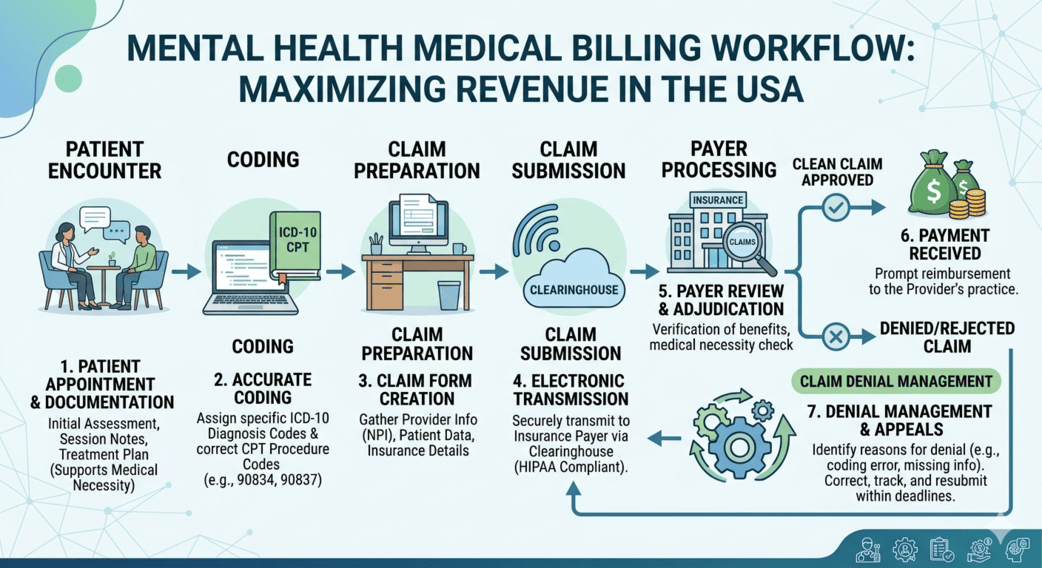
Mental health billing refers to the process of submitting claims to insurance companies and government payers for behavioral health services provided to patients. The process includes documenting services, assigning accurate CPT and ICD-10 codes, verifying insurance coverage, submitting claims, tracking reimbursements, and resolving denials.
Because behavioral health services often involve varying session lengths, treatment plans, telehealth services, and ongoing therapy, billing requirements can be more nuanced than many providers expect.
Effective mental health medical billing ensures:
- Accurate reimbursement for services rendered
- Reduced claim denials
- Improved cash flow
- Regulatory compliance
- Better patient satisfaction
For therapists, efficient billing isn't just about collecting payments—it's about maintaining a sustainable practice.
Why Billing for Mental Health Therapists Can Be Challenging
Many therapists enter the profession to help patients, not to navigate insurance regulations. Unfortunately, insurance billing has become increasingly complex.
Common challenges include:
Frequent Coding Updates
Insurance companies regularly update coding and documentation requirements. Therapists must stay current to avoid claim rejections.
Prior Authorization Requirements
Many behavioral health services require pre-authorizations before treatment begins. Missing authorization can result in unpaid claims.
Documentation Compliance
Incomplete treatment notes or insufficient clinical documentation can trigger audits and denials.
Telehealth Billing Rules
Virtual therapy has become more common, but reimbursement rules vary among payers and states.
Credentialing Delays
Without proper enrollment and credentialing, providers may be unable to bill insurance carriers successfully.
These challenges explain why many providers seek professional mental health billing services to streamline operations.
The Importance of Accurate Coding in Mental Health Billing
Coding serves as the foundation of every insurance claim. Accurate coding helps demonstrate medical necessity and supports reimbursement requests.
Common behavioral health codes may include:
Psychotherapy Services
- Individual psychotherapy sessions
- Family therapy sessions
- Group therapy services
- Crisis intervention services
Evaluation Services
- Psychiatric diagnostic evaluations
- Behavioral assessments
- Psychological testing services
Errors in coding often lead to:
- Claim denials
- Payment delays
- Underpayments
- Compliance risks
This is why many practices utilize professional medical coding services that specialize in behavioral health and psychotherapy coding requirements.
How Third Party Billing for Mental Health Services Improves Efficiency
Managing billing internally can consume valuable time and resources. As practices grow, administrative responsibilities often become overwhelming.
Third party billing for mental health services allows providers to outsource billing tasks to experienced professionals who understand payer requirements and industry regulations.
Benefits include:
Faster Claim Submission
Dedicated billing teams can submit claims quickly and accurately.
Reduced Administrative Burden
Therapists spend less time on paperwork and more time treating patients.
Improved Collections
Professional billing teams actively follow up on unpaid claims.
Better Denial Management
Billing experts identify root causes of denials and implement corrective actions.
Enhanced Revenue Visibility
Providers receive detailed reporting and financial insights.
Many successful therapy practices now rely on specialized billing partners to improve financial performance while maintaining clinical focus.
What to Look for in the Best Mental Health Billing Services
Not all billing providers offer the same level of expertise. Selecting the right partner requires careful evaluation.
When searching for the best mental health billing services, consider the following:
Industry Experience
Choose a company with extensive behavioral health billing knowledge.
Insurance Expertise
The billing team should understand commercial, Medicare, Medicaid, and managed care payer requirements.
Technology Integration
Compatibility with your EHR and practice management software is important.
Reporting Capabilities
Transparent financial reporting supports better business decisions.
Compliance Knowledge
The billing provider should remain current on healthcare regulations and payer policy updates.
A billing partner that understands therapist workflows can significantly improve reimbursement outcomes.
The Growing Demand for Mental Health Billing Services in California
California remains one of the largest behavioral healthcare markets in the country. The state's diverse patient population and extensive insurance networks create unique billing complexities.
As a result, many providers seek specialized mental health billing services in California to navigate:
- State-specific payer requirements
- Medi-Cal regulations
- Telehealth reimbursement guidelines
- Managed care billing rules
- Behavioral health compliance standards
California practices often benefit from billing professionals who understand both state and federal regulations affecting mental health reimbursement.
Why Mental Health Billing and Credentialing Services Matter
Billing success begins long before the first claim is submitted.
Credentialing ensures providers are enrolled and approved with insurance networks. Without proper credentialing, claims may be rejected regardless of service quality.
Comprehensive mental health billing and credentialing services help providers:
- Complete payer enrollment applications
- Maintain credentialing records
- Monitor renewal deadlines
- Prevent enrollment lapses
- Expand participation with insurance networks
Credentialing serves as a critical first step in establishing a reliable revenue cycle.
The Role of a Mental Health Billing Consultant
Many practices encounter recurring reimbursement issues but struggle to identify the root cause.
A mental health billing consultant can provide expert guidance by evaluating:
- Revenue cycle performance
- Denial trends
- Coding accuracy
- Workflow inefficiencies
- Compliance concerns
Consultants often uncover hidden revenue opportunities and recommend operational improvements that increase profitability.
For growing practices, periodic billing assessments can provide valuable insights and long-term financial benefits.
Best Practices for Behavioral and Mental Health Billing Services
Successful behavioral and mental health billing services rely on consistent processes and proactive management.
Verify Insurance Before Every Visit
Coverage changes frequently. Eligibility verification helps prevent billing surprises.
Maintain Detailed Documentation
Treatment notes should support medical necessity and payer requirements.
Submit Claims Promptly
Timely filing deadlines vary by payer and should never be overlooked.
Monitor Denials Regularly
Tracking denial patterns helps identify recurring issues.
Conduct Internal Audits
Periodic reviews improve coding accuracy and compliance.
Stay Updated on Policy Changes
Behavioral health reimbursement guidelines continue to evolve.
Implementing these best practices can significantly improve collections and reduce administrative headaches.
How Revenue Cycle Management Supports Mental Health Practices
Effective revenue cycle management services encompass every financial stage of patient care—from scheduling appointments to collecting final payments.
For mental health providers, revenue cycle management helps:
- Improve cash flow
- Reduce accounts receivable
- Increase reimbursement accuracy
- Minimize billing errors
- Strengthen financial reporting
A well-managed revenue cycle creates financial stability and allows therapists to focus on delivering quality care.
The Value of Integrated Medical Billing and Coding Services
Billing and coding work best when managed together. Disconnected processes often lead to claim errors and reimbursement delays.
Integrated medical billing and coding services provide:
- Greater claim accuracy
- Faster reimbursements
- Reduced denial rates
- Better compliance oversight
- Improved operational efficiency
For behavioral health practices, this integrated approach helps ensure every service is accurately documented, coded, and reimbursed.
Supporting Growth Through Professional Billing Solutions
As mental health practices expand, administrative responsibilities grow alongside patient volume.
Professional medical billing services can support growth by:
- Managing increasing claim volumes
- Handling payer communications
- Improving collection rates
- Reducing staff workload
- Enhancing financial transparency
Similarly, specialized medical coding services help ensure accurate documentation and coding compliance across all patient encounters.
When combined with credentialing services and revenue cycle management services, practices can create a strong operational foundation that supports sustainable growth.
How 247 Medical Billing Services Helps Mental Health Providers
Many behavioral health organizations seek experienced billing support to navigate the complexities of insurance reimbursement.
247 Medical Billing Services works with healthcare providers to streamline billing workflows, strengthen revenue cycle performance, and improve claim accuracy. By combining medical billing services, medical coding services, medical billing and coding services, revenue cycle management services, and credentialing services, practices can reduce administrative burdens while maintaining compliance and financial stability.
For therapists and behavioral health providers, having access to specialized billing expertise can make a significant difference in overall practice performance.
Conclusion
The landscape of billing for mental health therapists continues to evolve as insurance regulations, coding requirements, and reimbursement models become increasingly complex. Practices that prioritize accurate documentation, proper coding, credentialing, and proactive revenue management are better positioned for long-term success.
Whether through internal resources, a mental health billing consultant, or specialized third party billing for mental health services, investing in effective billing processes can improve cash flow, reduce denials, and enhance operational efficiency.
As the demand for behavioral healthcare grows across the USA, providers who adopt strategic billing solutions will be better equipped to focus on what matters most—delivering exceptional patient care.
Frequently Asked Questions
1. What is billing for mental health therapists?
Billing for mental health therapists involves submitting insurance claims for psychotherapy, counseling, behavioral health, and related mental health services while ensuring compliance with payer guidelines and coding requirements.
2. Why do therapists use third party billing for mental health services?
Third-party billing companies help reduce administrative workload, improve claim accuracy, manage denials, and increase reimbursement efficiency.
3. What are mental health billing and credentialing services?
These services combine insurance enrollment, provider credentialing, claim submission, payment posting, denial management, and revenue cycle support to optimize practice revenue.
4. How can a mental health billing consultant help a practice?
A consultant evaluates billing performance, identifies revenue leakage, recommends workflow improvements, and helps resolve recurring reimbursement challenges.
5. Why is accurate coding important in mental health medical billing?
Accurate coding supports medical necessity, prevents claim denials, ensures compliance, and improves reimbursement outcomes.
6. What should providers look for in the best mental health billing services?
Providers should evaluate industry expertise, compliance knowledge, reporting capabilities, payer experience, technology integration, and overall revenue cycle management support.

 Arabic
 French
 Spanish
 Portuguese
 Deutsch
 Turkish
 Dutch
Dutch
 Italiano
 Russian
 Romaian
 Portuguese (Brazil)
 Greek
Greek