


How Smart Monitoring Improves Animal Reproductive Health
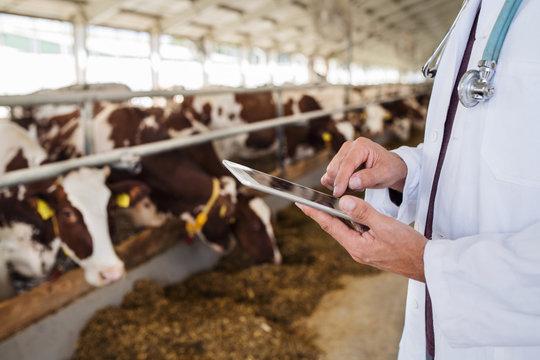
Efficient reproductive management is essential for maintaining healthy livestock, improving breeding success, and supporting sustainable animal production. Advances in monitoring technologies now enable veterinarians, breeders, and livestock producers to identify fertility issues earlier, optimize breeding cycles, and make informed management decisions. As precision livestock farming continues to evolve, reproductive health monitoring has become an important component of modern animal care.
Digital technologies, wearable sensors, imaging systems, and artificial intelligence are transforming how reproductive performance is assessed across livestock and companion animals. A recent analysis of advanced livestock fertility monitoring solutions highlights how technology adoption is helping improve breeding efficiency while supporting better herd management and long-term productivity.
According to MarkNtel Advisors, the Global Animal Reproductive Health Monitoring Market is projected to grow at a CAGR of 6.71% during 2026–2032. The report attributes this expansion to the increasing demand for animal-derived products, wider adoption of AI-powered monitoring tools, and growing investments in precision livestock management. These developments are encouraging producers to shift from reactive breeding practices toward proactive reproductive health monitoring.
Why Reproductive Health Monitoring Matters
Successful breeding programs depend on accurate identification of estrus cycles, timely insemination, and early detection of reproductive disorders. Traditional observation methods often require extensive labor and may miss subtle behavioral changes. Modern monitoring systems automate much of this process by continuously collecting physiological and behavioral data, allowing farmers to intervene at the optimal time.
Improved reproductive efficiency offers multiple benefits, including healthier offspring, reduced breeding costs, shorter calving intervals, and enhanced overall farm profitability. These advantages are particularly valuable for commercial livestock operations where reproductive performance directly influences production outcomes.
Technology Driving Better Breeding Decisions
Several innovations are reshaping reproductive health management across the livestock sector. Wearable activity trackers, temperature sensors, ultrasound imaging devices, hormone testing kits, and cloud-based software platforms provide continuous insights into animal fertility. Artificial intelligence further strengthens these systems by identifying behavioral patterns that may indicate estrus or reproductive abnormalities.
Rather than relying solely on manual observation, producers can use predictive analytics to determine the most appropriate breeding window. This approach improves conception rates while reducing unnecessary interventions and minimizing stress on animals.
The Growing Role of Artificial Intelligence
Artificial intelligence has become one of the most significant developments in precision livestock farming. By processing data collected from sensors, cameras, and monitoring devices, AI algorithms can recognize changes in movement, feeding behavior, body temperature, and other biological indicators associated with reproductive cycles.
Researchers continue to demonstrate how computer vision and machine learning improve livestock monitoring by enabling more accurate behavioral analysis and decision support for farmers. These technologies are expected to become increasingly accessible as digital farming solutions mature.
Livestock Continues to Lead Adoption
Commercial livestock operations remain the primary users of reproductive health monitoring technologies. Dairy farms, cattle ranches, swine facilities, and sheep breeding operations benefit from continuous reproductive tracking because fertility directly impacts production efficiency and operational profitability.
Companion animal healthcare is also adopting advanced reproductive diagnostics, particularly among specialized breeding facilities and veterinary clinics. As veterinary medicine becomes increasingly technology-driven, reproductive monitoring tools are expected to become more widely available across different animal categories.
Challenges That Remain
Despite technological progress, implementation can still present challenges. Advanced monitoring equipment, software platforms, and connected sensors often require considerable investment. Smaller farms may also face difficulties related to infrastructure, digital connectivity, staff training, and ongoing maintenance.
Integrating new monitoring systems with existing farm management practices requires careful planning. However, as technology costs gradually decline and digital agriculture expands, adoption is likely to become more practical for a broader range of livestock producers.
Looking Ahead
The future of animal reproductive health monitoring will be shaped by continued advances in artificial intelligence, connected devices, predictive analytics, and precision farming technologies. These innovations are expected to support more accurate breeding decisions, improve animal welfare, and strengthen food production systems while helping producers manage resources more efficiently.
As reproductive monitoring becomes increasingly data-driven, veterinarians and livestock managers will have access to deeper insights that support healthier animals, improved reproductive outcomes, and more sustainable agricultural operations. The continued evolution of digital livestock management reflects a broader shift toward evidence-based decision-making across the global animal health sector.

 Arabic
 French
 Spanish
 Portuguese
 Deutsch
 Turkish
 Dutch
Dutch
 Italiano
 Russian
 Romaian
 Portuguese (Brazil)
 Greek
Greek