


Complete Guide to Premium Overhead Power Transmission Using aac cable
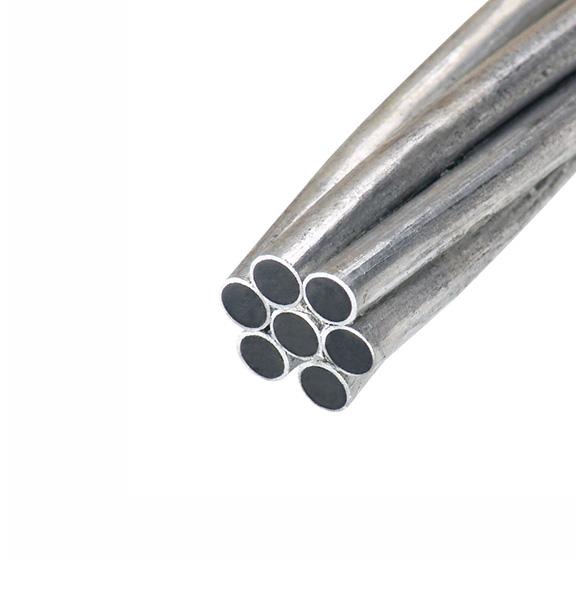
The expansion and modernization of global electrical grids require high-grade transmission media that can reliably handle immense amounts of electrical energy across varying topographies. As urban centers grow and rural electrification projects expand, the demand for reliable overhead conductors continues to surge. Modern power networks demand materials that offer optimal electrical conductivity combined with structural longevity. Within this landscape, the aac cable stands out as an essential engineering solution for contemporary power distribution systems. These specialized lines form the backbone of numerous overhead networks, providing an efficient pathway for electrical current to travel from generation sources to localized distribution hubs.
At its core, an aac cable is manufactured entirely from high-purity electrical-grade aluminum strands, typically maintaining a minimum aluminum purity of 99.7 percent. Unlike composite or reinforced conductors that integrate steel cores, the pure aluminum composition of an aac cable ensures that the entire cross-sectional area contributes directly to carrying electrical current. This uniform metallic structure eliminates internal galvanic reactions that can occur between dissimilar metals, thereby safeguarding the integrity of the line over prolonged operational periods. The manufacturing process involves concentric stranding of aluminum wires around a central core wire, creating a balanced, flexible, and robust conductor capable of withstanding external mechanical forces encountered during installation and daily service.
The physical composition of an aac cable grants it remarkable performance characteristics tailored for specific geographical and structural requirements. Because aluminum is inherently lightweight compared to copper or steel-reinforced alternatives, stringing and pulling an aac cable across support structures becomes significantly more manageable. Engineers and project planners often select an aac cable for urban distribution grids, coastal environments, and short-to-medium span projects where support poles are positioned relatively close together. In coastal zones or regions exposed to high atmospheric salinity and industrial pollutants, the absence of a steel core in an aac cable prevents rust formation and subsequent structural degradation, ensuring long-term operational stability without premature maintenance interventions.
Deploying power infrastructure requires careful consideration of electrical resistance, thermal performance, and economic viability. An aac cable excels in minimizing energy losses due to its high conductivity-to-weight ratio, allowing utilities to optimize power flow across regional grids. The reduction in electrical resistance translates directly into minimized voltage drop over targeted distribution distances, ensuring that end-users receive stable and consistent voltage levels. Furthermore, the material simplicity and widespread availability of raw aluminum make an aac cable a financially prudent choice for large-scale utility deployments, allowing governments and private enterprises to maximize infrastructure budgets without compromising technical standards.
The manufacturing standards governing an aac cable are rigorous, aligning with international benchmarks such as ASTM, IEC, BS, and DIN specifications. Quality-focused production plants utilize advanced continuous casting and rolling techniques, followed by precision wire drawing and stranding machinery, to ensure every meter of an aac cable meets strict dimensional tolerances and mechanical breaking load requirements. Strict quality control protocols—including stringent electrical resistivity testing, elongation measurements, and surface finish inspections—guarantee that the final product performs flawlessly under heavy electrical loads and fluctuating environmental temperatures.
In urban and suburban electrification projects, space optimization and aesthetic integration are critical considerations. Utility companies frequently rely on an aac cable to route power through densely populated metropolitan areas where spans are short and electrical demand is high. The clean metallic finish, uniform stranding, and reliable current-carrying capacity of an aac cable make it a preferred choice for municipal power grids, street lighting circuits, and secondary distribution networks. Because these conductors impose minimal deadweight on utility poles and cross-arms, infrastructure planners can design leaner, more cost-effective support systems without sacrificing grid reliability.
Environmental adaptability remains a defining attribute of an aac cable across diverse global climates. Whether deployed in humid tropical regions, temperate zones, or corrosive industrial environments, the natural oxide film that forms on the surface of an aac cable provides an effective protective barrier against atmospheric oxidation. This natural passivation process ensures that the underlying aluminum structure remains uncompromised even when exposed to persistent moisture and airborne chemical agents, thereby extending the service life of the electrical grid.
Maintenance personnel and grid operators appreciate the handling ease associated with an aac cable during routine repairs, line upgrades, and network expansions. The flexibility inherent in the concentric stranding pattern allows field technicians to bend, splice, and secure an aac cable using standard utility hardware and compression fittings. This operational versatility reduces downtime during grid modifications and ensures that power restoration or new service integration proceeds smoothly and efficiently.
As global energy demand continues to evolve toward smarter, more efficient distribution architectures, the foundational role of reliable overhead conductors remains irreplaceable. The integration of aac cable solutions within regional transmission grids underscores a commitment to balancing high electrical efficiency with long-term structural durability. By utilizing high-purity aluminum materials and adhering to strict manufacturing protocols, producers deliver a versatile product that meets the rigorous demands of modern electrical engineering.
Final Thoughts
The sustained reliance on an aac cable within modern electrical distribution networks highlights its enduring value as a dependable, highly conductive, and structurally sound medium for power transmission. Through precise metallurgical composition, strict adherence to international manufacturing standards, and proven adaptability across diverse environments, an aac cable continues to serve as an indispensable component for utilities and electrical contractors worldwide. Investing in high-grade aluminum conductors ensures that power grids remain resilient, economically viable, and fully capable of supporting future energy requirements.

 English
 Arabic
 French
 Portuguese
 Deutsch
 Turkish
 Dutch
 Italiano
 Russian
 Romaian
 Portuguese (Brazil)
 Greek