


MCP Server: Complete Guide to AI Platforms, APIs, Databases and Data Sources
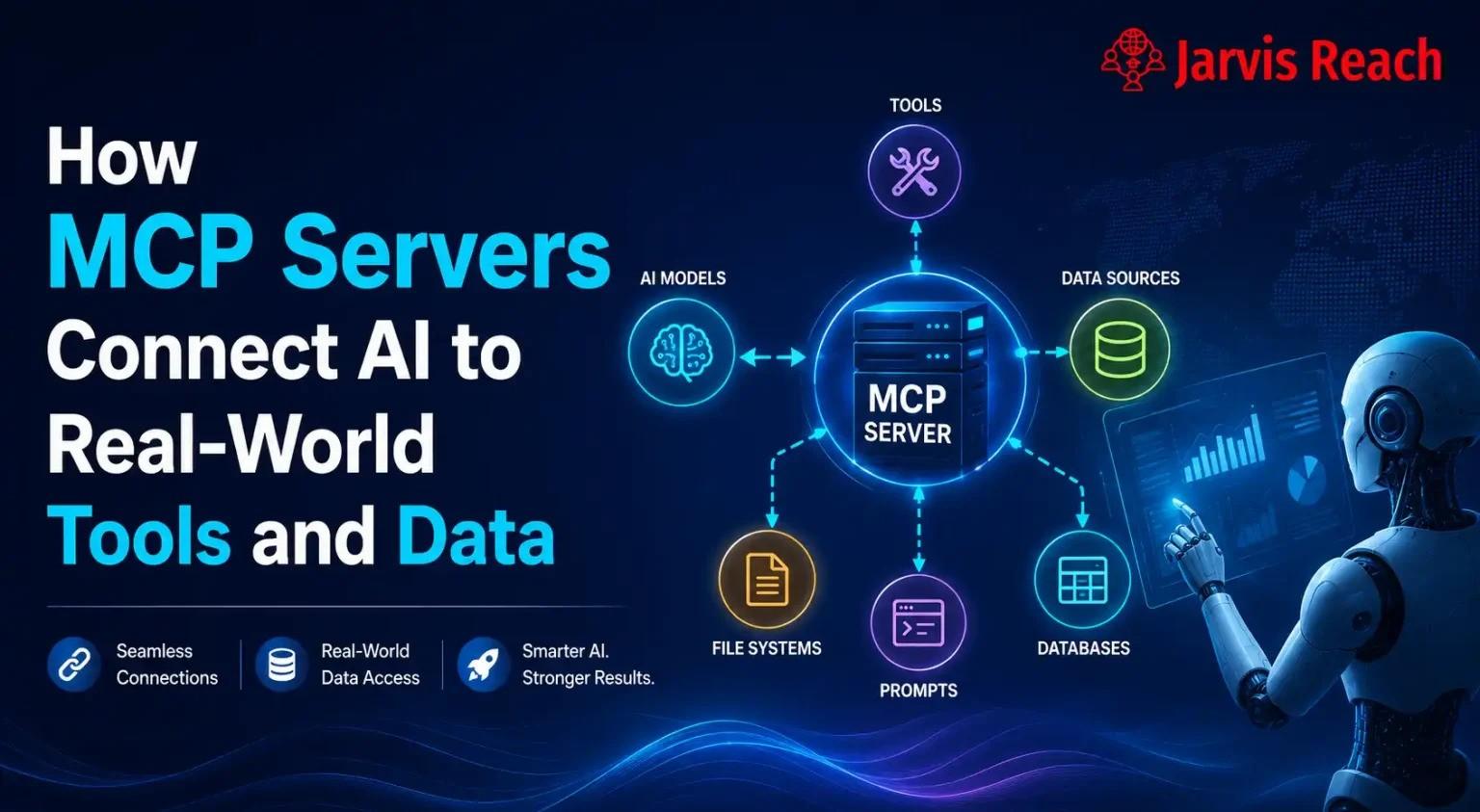
An MCP Server provides a standardized way for AI applications to connect with external tools, information, and services. It can help an AI platform work with APIs, enterprise data, SQL databases, file systems, and other approved data sources through a structured connection with an MCP Client.
The Model Context Protocol continues to evolve, and the latest July 2026 specification introduced a stateless protocol core designed to improve reliability and scalability for MCP deployments.
What Is an MCP Server?
An MCP Server is a program that exposes capabilities that an AI application can discover and use. These capabilities can include tools, resources, and prompts.
In a typical architecture:
AI Platform → MCP Client → MCP Server → External Data or Tools
This structure allows AI applications to interact with external systems without requiring every application to build an entirely separate integration.
What Is an MCP Client?
An MCP Client manages communication between an AI application and an MCP Server.
For example, an AI application might use different MCP Servers for:
- SQL databases
- File systems
- Business APIs
- Enterprise documentation
- Customer information
- Development tools
Each server can provide capabilities appropriate to its particular system.
MCP Server and APIs
An API allows applications to communicate with external software. An MCP Server can use existing APIs as part of its backend and expose selected capabilities to compatible AI applications.
This means MCP does not simply replace APIs. Instead, it can provide a standardized AI-oriented layer for interacting with services that already have APIs.
Connecting Enterprise Data
Businesses often store information across many systems. An MCP Server can provide controlled access to approved enterprise data.
Possible sources include:
- CRM systems
- Internal databases
- Business applications
- Documentation
- Cloud storage
- Data warehouses
This can allow AI applications to retrieve relevant information while organizations maintain control over permissions and access.
MCP Server and SQL Databases
An MCP Server can connect AI applications with SQL databases when the appropriate tools and permissions are configured.
For example, an AI assistant could potentially retrieve approved sales information and summarize it for a user.
Common applications include:
- Sales reporting
- Inventory analysis
- Customer information
- Business analytics
- Operational reporting
Database access should always follow least-privilege principles.
Data Sources and Resources
MCP can expose different data sources as resources that an AI application can use as context.
These resources might come from files, databases, documentation, or external services.
This is useful when an AI application needs information from an organization's systems instead of relying only on information already available in the conversation.
Prompt Templates
Prompt templates can provide reusable instructions for recurring AI tasks.
For example, a business could create structured prompts for:
- Summarizing reports
- Reviewing documents
- Analyzing customer feedback
- Creating business summaries
- Processing internal documentation
Reusable prompts can make repeated workflows more consistent.
Stateful and Stateless MCP
The terms stateful and stateless describe how information about an interaction is maintained.
The latest MCP specification, released on July 28, 2026, moved the protocol core toward a stateless request/response model, removing the protocol-level session and handshake used in earlier versions.
Importantly, this does not prevent an application from maintaining its own state. If a workflow needs continuing context, that state can be handled explicitly by the application or tools.
File Systems and MCP Server
An MCP Server can provide controlled access to file systems.
Depending on the implementation, AI applications may be able to work with approved files for tasks such as:
- Finding documents
- Reading information
- Searching project files
- Organizing content
- Retrieving relevant resources
File permissions should be carefully restricted so that an AI application cannot access information it does not need.
Authentication and Authorization
Authentication verifies the identity of a user or application, while authorization determines what that identity is allowed to access.
Both are important when an MCP Server connects to enterprise systems.
Security measures can include:
- Access tokens
- OAuth
- API credentials
- Permission controls
- Service accounts
- Least-privilege access
The current MCP specification also includes authorization hardening changes and updates around OAuth-related security.
MCP Server Backends
The backend is the system behind the MCP Server that provides the requested information or capability.
A backend might include:
- An API
- SQL database
- File system
- SaaS application
- Enterprise platform
- Internal business service
The MCP Server can expose selected capabilities from these systems to an AI application.
Why MCP Server Is Useful for AI Platforms
AI applications increasingly need access to information and tools outside the model itself.
For example, an AI model may need to:
- Search company documentation
- Query an approved database
- Retrieve a file
- Call an external API
- Use a business tool
MCP provides a standardized protocol for connecting AI applications with external systems and tools. The MCP ecosystem is also expanding with extensions and capabilities designed for richer AI workflows.
Benefits of MCP Server
Standardized Integration
MCP provides a common approach for AI applications to communicate with external capabilities.
Flexible Data Access
AI systems can work with approved data sources without putting all information directly into the model.
Reusable Tools
A server can expose tools that compatible clients can discover and use.
Enterprise Connectivity
Organizations can connect AI applications with selected business systems and enterprise data.
Scalable Architecture
The latest stateless protocol core is designed to make MCP deployments easier to scale across ordinary HTTP infrastructure.
Common MCP Server Use Cases
Enterprise AI Assistants
Companies can connect AI assistants with approved internal information.
Database Analysis
AI applications can retrieve and analyze selected SQL data.
Document Management
AI systems can work with approved files and documentation.
Business Automation
MCP can connect AI applications with tools and APIs used in business workflows.
Developer Productivity
Development teams can connect AI applications with project resources, documentation, and other development tools.
MCP Server Best Practices
When implementing an MCP Server, developers should:
- Use least-privilege permissions.
- Protect API keys and authentication credentials.
- Validate tool inputs.
- Monitor important activity.
- Restrict access to sensitive data.
- Keep dependencies and SDKs updated.
- Clearly describe available tools and resources.
Security should be considered from the beginning rather than added after deployment.
Frequently Asked Questions
What is an MCP Server?
An MCP Server is a program that provides tools, resources, and other capabilities to compatible AI applications through the Model Context Protocol.
What is an MCP Client?
An MCP Client manages communication between an AI application and an MCP Server.
Can an MCP Server connect to SQL databases?
Yes. An MCP implementation can expose approved SQL database capabilities to an AI application.
Can MCP work with APIs?
Yes. MCP Servers can provide AI applications with capabilities backed by existing APIs.
What are prompt templates?
Prompt templates are reusable instructions that can support consistent AI workflows.
Can MCP Server access file systems?
Yes, suitable implementations can expose controlled file-system resources or tools.
Is MCP useful for enterprise AI?
Yes. MCP can provide a standardized way for AI applications to interact with approved enterprise data, tools, APIs, and other resources.
Conclusion
An MCP Server helps AI applications connect with external capabilities such as APIs, enterprise data, SQL databases, file systems, and other data sources. The combination of an MCP Client, server, authentication, backend systems, resources, and tools can create flexible AI workflows.
With the July 2026 MCP specification introducing a stateless protocol core and additional scalability and authorization improvements, MCP is continuing to develop as an important infrastructure layer for connected AI applications.

 Arabic
 French
 Spanish
 Portuguese
 Deutsch
 Turkish
 Dutch
Dutch
 Italiano
 Russian
 Romaian
 Portuguese (Brazil)
 Greek
Greek