


How AI X-Ray Baggage Scanners Are Transforming Airport Security
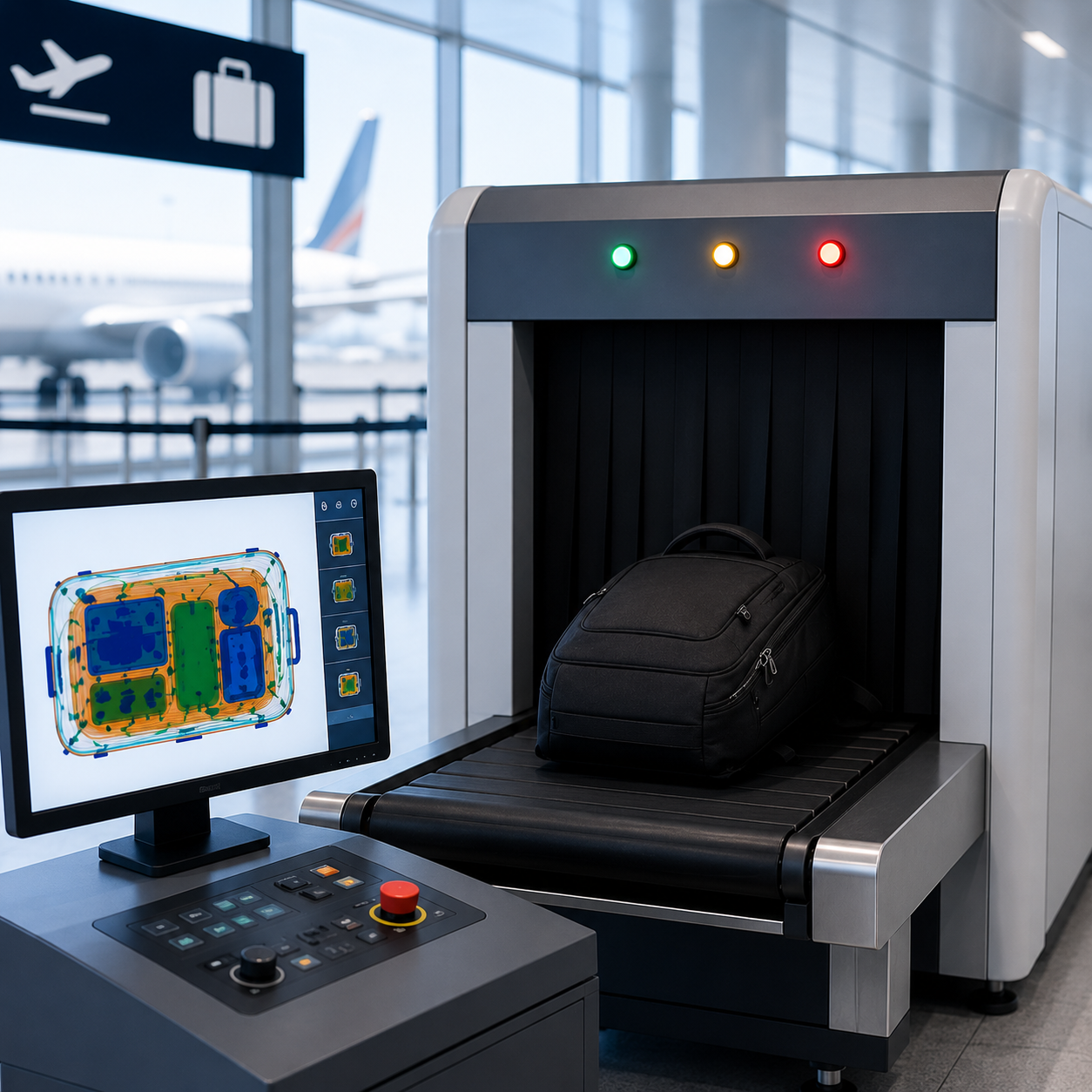
Airport X-Ray Baggage Scanners are evolving quickly as passenger volumes rise and security teams look for smarter ways to keep checkpoints moving without compromising thoroughness. Growing traffic, tighter security requirements, and the limits of manual image interpretation are pushing airports toward AI-assisted screening that supports operators rather than replacing them. Intelligent screening helps teams review images faster, spot patterns more consistently, and manage high-volume checkpoints with less strain on any single operator — a question many procurement teams researching X-ray baggage Scanner manufacturers in India are already asking. This article looks at how AI-assisted baggage screening works, the benefits it brings, and what airport authorities should weigh before adopting it.
Why Airport Security Needs Smarter Screening
Every day, modern airports manage massive numbers of passengers and baggage, frequently within short time frames, and security concerns have become more diverse and difficult to recognize with a cursory scan. Manual picture interpretation places a significant strain on operators, particularly during peak hours, and long shifts can impair attention and consistency even for well-trained employees.
Airports require technology that assists security officers while not delaying passenger circulation, as well as technologies that improve speed and consistency in tandem, rather than exchanging one for another.
What Is AI-Powered X-Ray Baggage Screening?
Conventional X-ray baggage screening generates an interior image of a bag's contents, which an operator manually evaluates. AI overlays a layer of automated analysis on top of the image, utilising computer vision to identify forms, densities, and patterns that may require additional attention. Machine learning algorithms, trained on massive amounts of X-ray imagery, assist the system in recognising things that resemble established threat categories and highlighting them for the operator to analyse.
It's critical to understand what this technology is and isn't. AI serves as decision assistance, allowing operators to work thru photos more rapidly, but it does not replace the expertise of professional security officers.
How AI X-Ray Baggage Screening Works
The screening process follows a clear, sequential workflow:
- Step 1: Baggage Enters the Scanner – Bags move at a controlled rate via a conveyor system into a shielded tunnel, allowing the imaging system enough time to acquire a clear scan.
- Step 2: X-Ray Image Generation – X-ray beams flow thru the bag and are detected, resulting in an internal image depending on how materials absorb or scatter radiation.
- Step 3: Image Processing – The image is enhanced for clarity, with colour coding and material separation applied to help operators discern organic compounds from metals.
- Step 4: AI Analysis – Computer vision examines the produced image for shapes, patterns, and material properties that may deserve further investigation.
- Step 5: Threat Identification – The system highlights any area that matches a previously learned pattern, usually with a marker or bounding box, drawing the operator's attention to that part of the image.
- Step 6: Operator Review – A skilled security professional evaluates the AI-assisted information alongside the entire image before making the final screening decision.
How AI Is Transforming Airport Security
AI-assisted screening is changing the way checkpoints operate in a variety of practical ways. Automated image analysis indicates areas of interest almost immediately after a scan is completed, resulting in faster threat identification. At the same time, improved image analysis helps recognise complicated or partially disguised objects that would be easy to miss during a rapid manual assessment.
Reduced operator burden frees up focus from repetitive picture inspection, and AI-based decision assistance achieves more consistent screening outcomes by applying the same standards regardless of shift length or checkpoint volume. Better passenger flow is a natural byproduct of faster, more consistent screening during peak periods, and real-time alerts provide operators with immediate visibility into flagged photos rather than requiring a full human scan of each result.
AI vs Traditional Baggage Screening
| Factor | Traditional Screening | AI-Assisted Screening |
|---|---|---|
| Image Analysis | Primarily operator-driven | AI-assisted |
| Threat Recognition | Manual interpretation | Automated assistance + operator review |
| Operator Workload | Higher | Potentially reduced |
| Image Processing | Conventional | AI-enhanced |
| Decision Support | Limited | Intelligent alerts and analysis |
| Scalability | More dependent on personnel | Greater automation potential |
Both approaches use the same fundamental X-ray imaging principles, and neither eliminates the necessity for qualified operators. The difference is the amount of analytical help such operators receive.
Key AI Technologies Used in Airport Security
AI-assisted screening systems integrate a variety of technologies. The analytical backbone consists of artificial intelligence and machine learning, which improve pattern recognition as the system processes more scanned images over time. Computer Vision and Pattern Recognition enable the system to understand the shapes and structures in an image. At the same time, Automatic Threat Recognition (ATR) uses that interpretation to highlight things that match established threat categories.
Image Enhancement and Material Classification improve clarity and aid in distinguishing between substances, while Dual-Energy Imaging collects more specific material composition data than a single-energy scan. Intelligent Alert Systems connect these components, presenting marked areas to operators in real time.
Benefits for Airport Authorities
For airport authorities, the practical advantage of AI-assisted screening includes increased screening efficiency, better utilization of security staff, and faster image interpretation during peak times. It enables high-volume checkpoints with improved operational consistency, greater scalability as passenger volumes increase, and a more future-ready security system overall. As with any screening technology, the actual results are determined by the specific system, training data, and how well it is integrated into existing systems.
Where AI-Powered Screening Can Be Used
AI-assisted screening is used in many areas of airport operations, including passenger security checkpoints, checked baggage screening, staff entrances, cargo and package screening, VIP and restricted-area entries, and larger airport logistical areas. Each of these environments has unique throughput and risk issues; therefore, scanner setup should be chosen based on the location's individual operational requirements rather than a one-size-fits-all solution.'
What Airports Should Consider Before Adopting AI Screening
Before implementing AI-assisted screening, airport authorities should consider passenger and baggage volume, as well as tunnel size and throughput requirements, as these influence whether an X-ray baggage scanner can manage actual checkpoint demand. Detection capabilities, image quality, and AI functionality are just as important as how well the system integrates with existing security infrastructure— and beyond the equipment, operator training, maintenance support, software updates, radiation safety, regulatory compliance, scalability, and total cost of ownership all influence how the investment performs over time.
The Role of Krystalvision
Krystalvision operates in this market as a provider of advanced security screening technologies, with a focus on product reliability and engineering experience to support its AI-enabled solutions. When considering vendors, airports should consider customer service, maintenance, and technical assistance, as well as how future-ready a given solution is likely to be as screening requirements grow – the type of continuing technical support that is important far beyond the initial installation.
Future of AI in Airport Security
Looking ahead, airport security is expected to see more powerful computer vision, improved automatic threat recognition, and predictive maintenance that detects equipment flaws before they create downtime. Remote monitoring and cloud-connected systems are also becoming more common, allowing security teams to manage multiple checkpoints more efficiently. Broader integration into airport security ecosystems points to more intelligent decision-support tools and greater automation, rather than the removal of trained personnel from the process. The future of airport security lies in increased collaboration between AI technology and security teams, not in human replacement.
Frequently Asked Questions
Q: How does AI improve airport baggage screening?
Answer: AI analyses X-ray pictures using computer vision to find features and patterns that may require further examination, and then highlights those regions for the operator. This speeds up image interpretation and allows operators to direct their attention where it is most valuable.
Q: Can AI detect threats inside airport baggage?
Answer: AI can help identify and highlight things that resemble recognised threat patterns, but it is not a final decision-maker. Trained operators will continue to evaluate flagged photographs and make decisions on next steps.
Q: What is the difference between AI and traditional baggage screening?
Answer: Traditional screening is entirely based on manual picture interpretation, but AI-assisted screening includes automatic analysis that identifies potentially problematic areas. Both use the same underlying X-ray imaging technology; AI provides additional decision help.
Q: Are AI-powered baggage scanners safe?
Answer: When properly installed, maintained, and operated in accordance with national radiation safety requirements, these systems are safe for use in public places. Safety depends on regulatory compliance and good equipment maintenance rather than on the existence of AI itself.
Q: Does AI replace airport security operators?
Answer: No, AI is intended to help skilled operators understand images more efficiently, not to replace human decision-making. Final screening choices are still the prerogative of qualified security professionals.
Q: What types of threats can AI-assisted baggage screening help identify?
Answer: AI-assisted systems can use learnt patterns to highlight items like guns and other potentially banned or worrying objects. They are not intended to guarantee detection of every possible threat, which is why qualified operator evaluation is vital.
Q: What should airports consider before purchasing an AI baggage screening system?
Answer: Throughput needs, tunnel size, detection capabilities, and system integration into existing infrastructure are all important considerations. Maintenance support, operator training, radiation safety compliance, and scalability are all critical for long-term performance.
Q: What is the future of AI in airport security?
Answer: Expect enhanced computer vision, improved automatic threat detection, and predictive maintenance to save downtime. Remote monitoring and cloud-connected technology are going to play an increasingly important part in how security teams operate checkpoints in many locations.
Conclusion
AI-powered baggage screening is assisting airports in transitioning to faster, smarter, and more consistent security checks. These techniques, which include automated image analysis and real-time alerts, provide security professionals with practical tools for managing increasing passenger loads without losing thoroughness.
The technology works best as a supplement to skilled workers rather than a replacement for them. That collaborative paradigm is likely to shape how an AI X-ray baggage scanner fits into airport operations in the future. Krystalvision continues to focus on developing dependable, future-ready screening technologies for airports and other high-security areas; readers looking for choices for their own checkpoints are encouraged to learn more.

 English
 Arabic
 French
 Spanish
 Portuguese
 Deutsch
 Turkish
 Dutch
 Italiano
 Romaian
 Portuguese (Brazil)
 Greek