


How Barcode Technology Helps Businesses Improve Supply Chain Efficiency
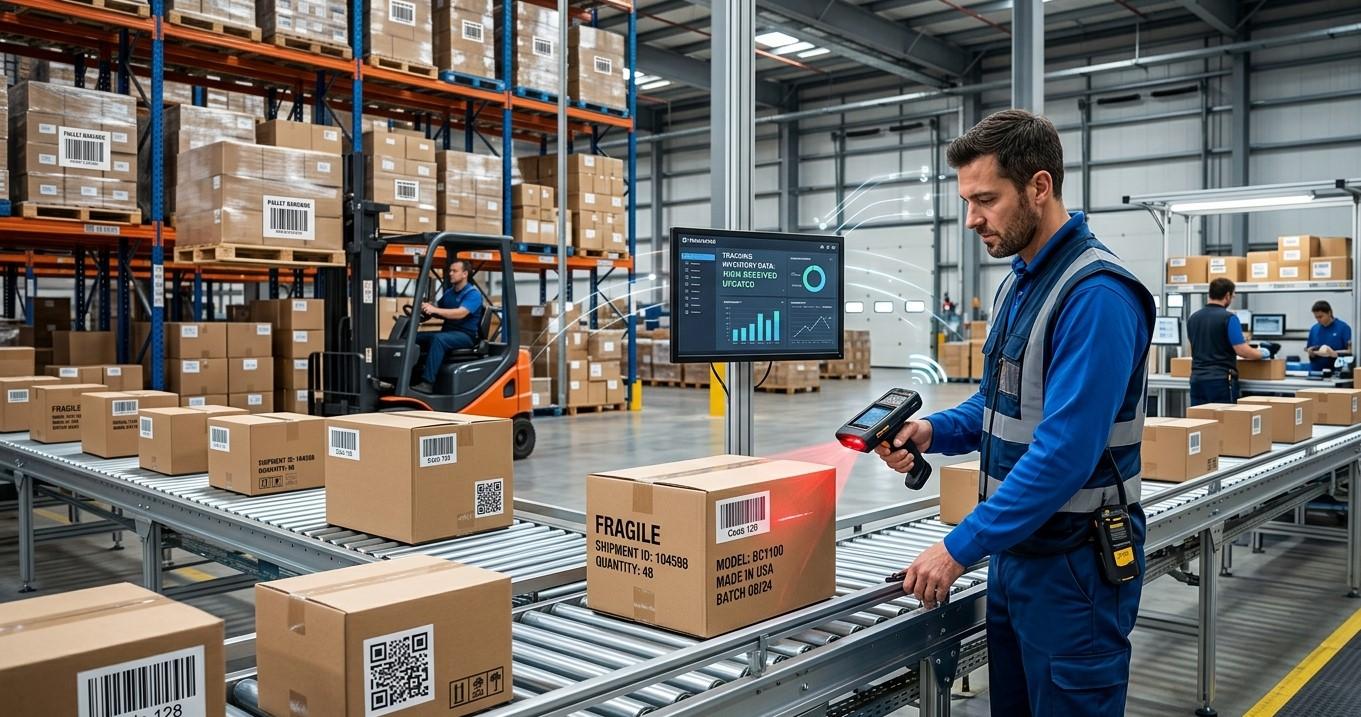
Supply chains have become increasingly complex. Businesses need to manage products across suppliers, warehouses, distribution centers, transportation networks, retail locations, and customers. At every stage, accurate information is essential for keeping products moving efficiently.
Barcode technology provides businesses with a practical way to identify products, capture information, track inventory, and monitor the movement of goods throughout the supply chain. By replacing many manual processes with automated data capture, barcode systems can help reduce errors, improve visibility, and streamline day-to-day operations.
From receiving raw materials to shipping finished products, barcodes can create a consistent identification system that connects physical goods with digital records.
Pointus Solutions provides barcode and identification solutions for businesses across retail, warehousing, logistics, manufacturing, and other industries. Companies looking to Shop Barcode equipment can explore barcode scanners, printers, labels, and other Printing Products designed to support efficient product identification and supply chain operations.
What Is Barcode Technology?
Barcode technology uses machine-readable codes to represent information about a product, package, asset, or location.
A barcode may contain or represent information such as:
- Product numbers
- SKUs
- Serial numbers
- Batch numbers
- Shipment references
- Asset identification numbers
- Location codes
- Order information
A barcode scanner captures the barcode and transfers the information to connected software. Depending on the business setup, the data may be sent to an inventory management system, Warehouse Management System, Enterprise Resource Planning system, point-of-sale platform, or shipping application.
This allows businesses to connect physical products with digital information.
Why Supply Chain Efficiency Matters
Supply chain efficiency affects almost every part of a business.
An inefficient supply chain can result in:
- Inventory inaccuracies
- Shipping delays
- Product shortages
- Overstocking
- Picking mistakes
- Higher labor costs
- Poor order visibility
- Customer dissatisfaction
Even a small error at one stage can create problems further along the supply chain.
For example, if an incoming shipment is recorded incorrectly, warehouse inventory information may become inaccurate. That inaccurate information can then affect order fulfillment, purchasing decisions, and customer deliveries.
Barcode technology helps reduce these problems by providing a standardized method for identifying and tracking goods.
1. Improving Inventory Accuracy
Inventory accuracy is one of the most important benefits of barcode technology.
Businesses need to know:
- What products they have
- How many products are available
- Where products are located
- Which products have been shipped
- Which products are still in storage
Manual inventory records can become inaccurate because of typing mistakes, misplaced products, duplicate entries, or forgotten updates.
Barcode scanning provides a faster and more consistent method of recording inventory movements.
When an employee scans a product, the system can automatically associate the item with its corresponding inventory record.
2. Faster Receiving of Goods
Receiving is the starting point for many supply chain processes.
When goods arrive at a warehouse, employees typically need to verify the shipment, identify products, check quantities, and update inventory records.
Barcode technology can streamline this process.
A typical workflow may look like:
Shipment Arrives → Barcode Scanned → Product Verified → Quantity Recorded → Inventory Updated
Instead of manually entering product information, employees can scan each item or package.
This can reduce processing time and allow inventory to become available in the system more quickly.
3. Better Warehouse Organization
Barcode technology can be used to identify not only products but also warehouse locations.
Businesses can place barcode labels on:
- Aisles
- Shelves
- Racks
- Bins
- Storage zones
- Loading areas
When products are moved, employees can scan the product and its destination location.
This creates a digital record of where inventory is stored.
Better location tracking can reduce the amount of time employees spend searching for products and make warehouse operations more organized.
4. Reducing Picking Errors
Order picking is another area where barcode technology can improve supply chain efficiency.
Warehouse employees need to select the correct products for customer orders. When similar products are stored near each other, mistakes can happen.
Barcode scanning adds a verification step.
An employee can scan the product before adding it to an order. The system can check whether the scanned item matches the order requirements.
If the wrong product is selected, the system can identify the discrepancy before the order is shipped.
This can reduce:
- Incorrect orders
- Returns
- Reshipments
- Customer complaints
- Additional shipping expenses
5. Improving Packing Accuracy
Barcode technology can also be used after picking.
During packing, employees can scan the products in an order to confirm that all required items are included.
This provides another opportunity to identify mistakes before the package leaves the warehouse.
For businesses processing a high number of orders, multiple verification points can significantly improve overall order accuracy.
6. Streamlining Shipping
Shipping is a critical part of supply chain management.
Packages may need to be identified by:
- Order number
- Tracking number
- Customer reference
- Shipment number
- Destination
- Package identifier
Barcode labels make it easier to scan and associate packages with shipment records.
Employees can scan a package before dispatch to verify that it belongs to the correct shipment.
This can help reduce shipping errors and improve the flow of packages through distribution operations.
7. Increasing Supply Chain Visibility
One of the biggest challenges in supply chain management is knowing where products are at any given point.
Barcode scanning can create a series of digital events as products move through the supply chain.
For example:
Supplier → Receiving → Warehouse → Picking → Packing → Shipping → Distribution → Delivery
Each scan can provide another data point.
This can give businesses greater visibility into product movement and help identify where delays or errors occur.
8. Supporting Product Traceability
Traceability is particularly important for businesses that need to track specific products, batches, or serial numbers.
Barcode technology can connect products with information such as:
- Production date
- Batch number
- Serial number
- Supplier
- Warehouse location
- Shipment information
If a product issue occurs, businesses can use this information to identify affected inventory and understand its movement through the supply chain.
9. Improving Supplier Management
Barcode systems can also improve interactions between businesses and suppliers.
When incoming products are scanned, businesses can compare received goods with expected purchase orders.
This can help identify:
- Missing products
- Incorrect products
- Quantity differences
- Unexpected shipments
- Damaged goods
Identifying discrepancies during receiving can help businesses resolve supplier issues more quickly.
10. Reducing Manual Data Entry
Manual data entry requires time and introduces opportunities for mistakes.
Employees may need to type product numbers, quantities, shipment references, or location information into software.
Barcode scanning automates much of this process.
Instead of typing information, employees can scan the barcode and allow the connected system to capture the data.
This can improve productivity while reducing repetitive administrative tasks.
11. Making Inventory Counting More Efficient
Regular inventory counting is essential for maintaining accurate stock records.
Traditional stocktaking can be time-consuming because employees need to identify products and record quantities manually.
Barcode scanners can simplify the process.
Employees can scan products as they count them, allowing information to be recorded directly in the inventory system.
This makes cycle counting and full inventory counts more structured and efficient.
12. Supporting Just-in-Time Inventory
Some businesses use just-in-time inventory strategies to reduce the amount of stock they keep on hand.
Accurate inventory information becomes especially important in this type of operation.
Barcode systems can help businesses monitor stock movements and identify when inventory levels are changing.
More accurate data can support better purchasing and replenishment decisions.
13. Reducing Operating Costs
Barcode technology can help reduce several types of supply chain costs.
For example:
- Faster receiving can reduce labor time.
- Fewer picking mistakes can reduce return costs.
- Better inventory accuracy can reduce unnecessary purchases.
- Faster stock counting can reduce administrative work.
- Improved shipment accuracy can reduce reshipping expenses.
The exact savings depend on the size and complexity of the business, but automation can provide meaningful efficiency improvements when implemented correctly.
14. Improving Customer Satisfaction
Supply chain performance directly affects customers.
Customers expect:
- Accurate orders
- Fast fulfillment
- Reliable delivery
- Correct products
- Up-to-date shipment information
Barcode technology can support these expectations by improving accuracy at different stages of the fulfillment process.
When products are correctly identified and tracked, businesses can reduce mistakes that may otherwise affect the customer experience.
15. Supporting Different Industries
Barcode technology is flexible enough to support many industries.
Retail
Retailers can use barcodes for product identification, inventory control, checkout, receiving, and replenishment.
Manufacturing
Manufacturers can track raw materials, components, work-in-progress products, and finished goods.
Logistics
Logistics companies can identify packages, cartons, pallets, and shipments throughout transportation and distribution.
Warehousing
Warehouses can use barcodes for products, storage locations, inventory counting, picking, and shipping.
Healthcare
Healthcare organizations can use barcode identification for supplies, equipment, specimens, and other operational processes, depending on their systems and requirements.
E-Commerce
Online businesses can use barcode technology throughout receiving, inventory management, picking, packing, and shipping.
1D and 2D Barcodes in Supply Chains
Businesses can choose between different barcode formats.
1D Barcodes
1D barcodes such as UPC, EAN, Code 39, and Code 128 are commonly used for product and inventory identification.
They are suitable when businesses primarily need to encode a simple identifier.
2D Barcodes
2D barcodes such as QR Codes and Data Matrix can store more information in a compact format.
They may be useful for applications involving:
- Serial numbers
- Batch information
- Product details
- Traceability
- Compact labels
The right format depends on the organization's data requirements and existing systems.
The Role of Barcode Printers and Labels
Barcode scanners are only one part of a complete supply chain identification system.
Businesses also need reliable barcode printers and labels.
Poorly printed barcodes can result in:
- Failed scans
- Delays
- Manual data entry
- Inventory errors
- Shipping problems
Businesses should select appropriate label materials and printing technology for their environment.
For example, warehouse labels that experience heavy handling may require more durable materials than temporary shipping labels.
Choosing the Right Barcode Scanner
Different supply chain environments require different scanners.
Businesses should consider:
Scanning Distance
Determine whether employees will scan products close up or from longer distances.
Barcode Type
Make sure the scanner supports the required 1D and 2D formats.
Durability
Warehouse and industrial environments may require scanners that can withstand frequent drops and heavy use.
Connectivity
Consider wired, wireless, Bluetooth, or network-connected solutions depending on workflow requirements.
Mobility
Mobile computers and wireless scanners can provide greater flexibility in large warehouses.
Integrating Barcode Technology With Business Software
Barcode technology becomes significantly more useful when integrated with business systems.
Depending on the organization, scanners can connect with:
- Inventory management software
- Warehouse Management Systems
- ERP platforms
- POS systems
- Shipping software
- Asset management systems
When a product is scanned, the system can automatically update the corresponding record.
This reduces manual work and helps maintain a continuous flow of information.
Best Practices for Barcode Supply Chain Management
Businesses can get more value from barcode technology by following several best practices:
- Give products consistent and unique identifiers.
- Use high-quality barcode labels.
- Select scanners appropriate for the environment.
- Label warehouse locations.
- Integrate scanning with inventory software.
- Train employees properly.
- Maintain printers and scanners.
- Test barcode readability regularly.
- Monitor failed scans.
- Review inventory accuracy periodically.
A barcode system should be treated as an ongoing business process rather than a one-time equipment purchase.
Common Challenges to Consider
Barcode technology can provide substantial benefits, but businesses should plan carefully.
Common challenges include:
- Poorly printed labels
- Damaged barcodes
- Incorrect barcode formats
- Incompatible scanners
- Poor software integration
- Inadequate employee training
- Improper label placement
Addressing these issues during implementation can improve the reliability of the entire system.
How to Build an Efficient Barcode Supply Chain System
A successful implementation typically starts with identifying the areas where manual processes create the most problems.
Businesses can then determine:
- Which products need identification.
- Which locations need barcode labels.
- Which barcode formats are appropriate.
- What type of scanners employees need.
- What printers and labels are required.
- Which software systems need integration.
- How employees will use the system.
- How barcode quality will be monitored.
Starting with the workflow rather than simply purchasing equipment can lead to better results.
Final Thoughts
Barcode technology can play an important role in improving supply chain efficiency. By providing a consistent way to identify and track products, barcodes can help businesses improve inventory accuracy, reduce manual data entry, speed up receiving, minimize picking errors, streamline shipping, and improve supply chain visibility.
The greatest benefits come when barcode scanners, printers, labels, and software work together as part of a complete system. Businesses should select equipment based on their specific product types, warehouse environment, scanning requirements, data needs, and future growth.
If you are planning to Shop Barcode equipment, consider more than just the scanner. The right combination of barcode printers, scanners, labels, and other Printing Products can help create a reliable identification and tracking system throughout your supply chain.
Pointus Solutions provides barcode and identification solutions for retail, warehousing, manufacturing, logistics, inventory management, and other business applications. With an effective barcode strategy, businesses can improve operational visibility, reduce errors, increase productivity, and build a more efficient supply chain.

 Arabic
 French
 Spanish
 Portuguese
 Deutsch
 Turkish
 Dutch
Dutch
 Italiano
 Russian
 Romaian
 Portuguese (Brazil)
 Greek
Greek