


How Food Ordering App Development Can Transform Your Restaurant Business?
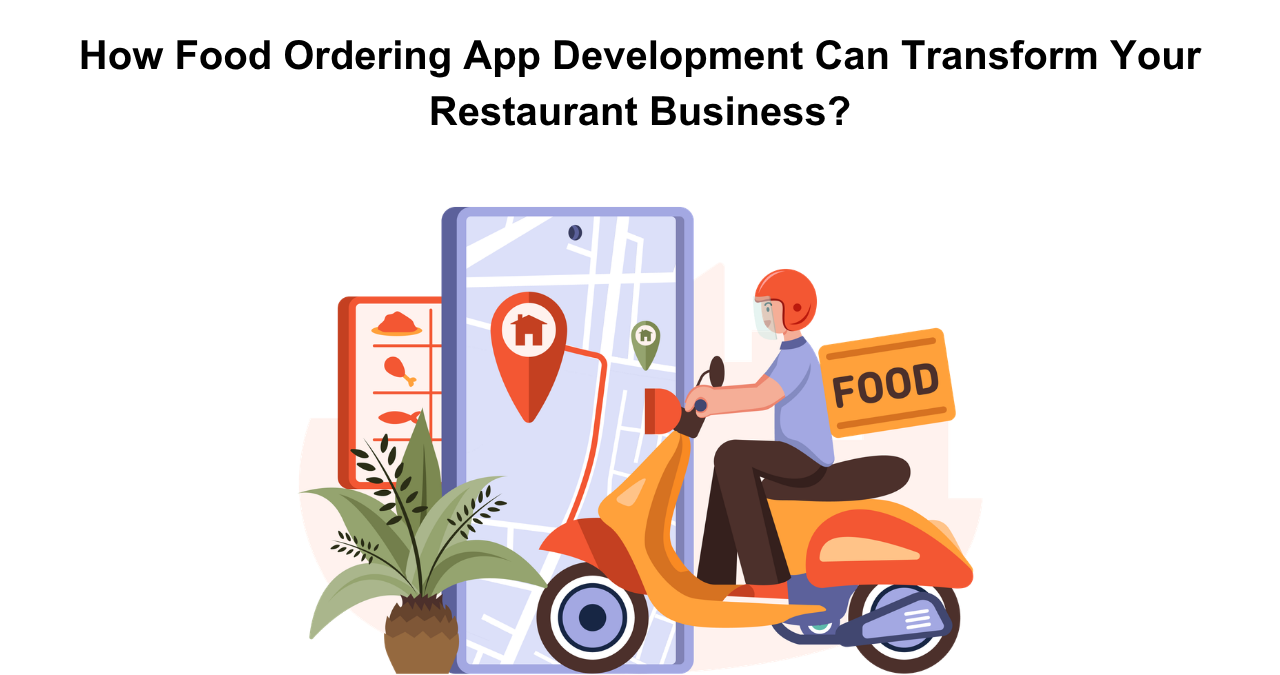
The restaurant industry has changed significantly as customers increasingly prefer convenience, speed, and digital ordering. Instead of waiting for a table, calling a restaurant, or standing in a queue, customers can now browse menus, customize meals, place orders, and receive food through digital platforms.
For restaurant owners, this shift is more than a change in customer behavior. It creates an opportunity to build a stronger digital business, increase direct customer engagement, improve order management, and develop additional revenue channels.
Food Ordering App Development helps restaurants create a dedicated digital ordering experience that connects customers directly with their business. A well-planned app can make ordering simpler while giving restaurant businesses more control over customer relationships, promotions, loyalty programs, and order experiences.
For startups and entrepreneurs entering the food technology market, the opportunity is even broader. A restaurant ordering platform can be developed for a single brand, a restaurant group, or a multi-vendor marketplace that connects restaurants and customers through one platform.
This article explains how a digital food ordering solution can transform restaurant operations, improve customer experience, support business growth, and create new opportunities in a competitive market.
Why Restaurants Are Moving Toward Digital Ordering
Customers today expect businesses to provide convenient digital experiences. Food ordering is no exception.
Traditional ordering methods can create several limitations. Phone orders may result in communication errors, customers may have to wait for staff assistance, and restaurants have fewer opportunities to maintain direct digital relationships with their customers.
An online ordering platform changes this process.
Customers can view the available menu, check meal details, select preferences, add items to their cart, and complete an order from their smartphones. Restaurants can use the same platform to manage incoming orders and communicate important updates.
The benefits are not limited to convenience. Digital ordering can become an important part of a restaurant's overall customer acquisition and retention strategy.
For example, restaurants can use digital channels to:
- Promote new menu items
- Share special offers
- Encourage repeat orders
- Introduce loyalty programs
- Send personalized notifications
- Collect customer feedback
- Understand ordering patterns
- Build stronger customer relationships
This makes digital ordering an important business tool rather than simply another ordering channel.
How Food Ordering App Development Can Transform Your Restaurant
A restaurant app can influence several areas of a business, from customer acquisition to repeat purchases. However, the real value comes from how the application is planned around the restaurant's business objectives.
Here are some of the most important ways it can contribute to growth.
1. Create a Direct Ordering Channel
One of the biggest advantages of having a dedicated ordering platform is creating a direct connection between the restaurant and its customers.
Restaurants that depend entirely on third-party marketplaces may have limited control over customer communication and promotional strategies. A dedicated platform gives businesses greater control over the ordering journey.
Customers can discover the restaurant, explore the menu, place an order, and interact with the brand through one digital channel.
This direct relationship can be especially valuable for established restaurants that already have a strong customer base.
For startups, it also provides an opportunity to build a recognizable food brand from the beginning.
2. Improve the Customer Ordering Experience
Customer experience can directly influence whether people order again.
A complicated ordering process can cause customers to abandon their carts. On the other hand, a simple and convenient experience can encourage customers to complete orders and return later.
Food Delivery App Development allows businesses to create an ordering journey that focuses on usability and convenience.
Customers can quickly access categories, search for food items, customize selections, review their cart, and complete the order without unnecessary steps.
A better experience can also reduce confusion during ordering. Clear menu information, item descriptions, customization options, order updates, and convenient payment choices can make the process more transparent.
The objective should not be to add every possible feature. Instead, restaurant owners should focus on features that solve real customer problems.
3. Increase Repeat Orders
Getting a new customer is only one part of restaurant growth. Encouraging existing customers to order again is equally important.
A dedicated food ordering platform can support customer retention through personalized engagement.
Restaurants can introduce loyalty programs, promotional campaigns, special offers, membership benefits, and targeted notifications.
For example, a restaurant could provide a reward after a specific number of orders. Customers could also receive personalized offers based on their previous purchasing behavior.
This creates a reason for customers to return instead of choosing another restaurant.
A strong retention strategy can help businesses build a loyal customer base over time.
4. Strengthen Customer Relationships
Third-party marketplaces primarily create relationships between customers and the marketplace. A dedicated restaurant application can help the restaurant develop its own relationship with customers.
This is particularly valuable for brands that want to create long-term customer loyalty.
Restaurants can communicate directly with users through relevant notifications and promotional messages. They can also collect feedback and understand what customers like or dislike about their experience.
Customer data can help businesses identify patterns such as popular meals, ordering frequency, preferred categories, and high-demand periods.
These insights can support better business decisions without relying entirely on assumptions.
5. Support Personalized Promotions
Not every customer has the same preferences.
Some customers may regularly order vegetarian meals, while others may prefer desserts, beverages, breakfast items, or family meals.
A digital ordering platform can support more relevant promotional campaigns.
Instead of sending the same offer to every customer, restaurants can create campaigns based on customer behavior and preferences.
For example:
- Frequent customers can receive loyalty rewards.
- Inactive customers can receive return offers.
- Customers who regularly order a particular category can receive relevant promotions.
- New customers can receive introductory incentives.
- Customers with high order frequency can receive membership benefits.
This approach can make marketing communication more relevant and reduce unnecessary promotional messaging.
6. Expand Beyond a Physical Location
A physical restaurant is limited by its location, but a digital ordering channel can extend its reach.
Depending on the restaurant's delivery area and business model, customers from surrounding neighborhoods or regions may be able to discover and order from the brand.
This creates an opportunity for restaurants to build demand beyond walk-in traffic.
For entrepreneurs, the opportunity is even greater. A scalable food platform can be designed around multiple restaurants, locations, categories, or service areas.
This makes digital ordering an important part of expansion planning.
7. Build a Stronger Brand Identity
Restaurants compete not only through food quality but also through customer experience and brand perception.
A dedicated digital platform provides another opportunity to communicate a brand's identity.
The menu presentation, communication style, promotional campaigns, loyalty experience, and overall customer journey can be aligned with the restaurant's brand.
For restaurant chains, this can help create a consistent experience across multiple locations.
For startups, building a recognizable digital identity from the beginning can support long-term brand development.
8. Simplify Order Management
Restaurants need to manage orders accurately and efficiently, especially during busy periods.
Digital ordering can organize incoming orders into a centralized process, making it easier for restaurant teams to handle customer requests.
Instead of depending on handwritten notes or phone communication, orders can be received digitally with relevant information attached.
This can help reduce common ordering issues such as:
- Miscommunication
- Incorrect item selection
- Missing customization details
- Duplicate order information
- Difficulty tracking order status
The result can be a more organized ordering process and a smoother experience for both customers and restaurant staff.
9. Encourage Higher Customer Engagement
A restaurant application can become more than an ordering tool.
It can provide a digital space where customers discover new menu items, explore promotions, interact with loyalty programs, and receive updates.
Restaurants can use engagement strategies such as:
- Personalized recommendations
- New menu announcements
- Limited-time offers
- Loyalty rewards
- Special event promotions
- Customer feedback programs
Consistent but useful engagement can help keep a restaurant visible to existing customers.
The key is relevance. Businesses should avoid excessive notifications and focus on communication that provides genuine value.
10. Support Data-Driven Restaurant Decisions
Digital ordering creates useful business insights.
Restaurants can analyze ordering patterns to understand which products perform well, when demand increases, which categories receive more attention, and how customers respond to promotions.
These insights can influence decisions around menu planning, marketing campaigns, customer retention, and business expansion.
For example, if a particular meal consistently receives high demand, the restaurant may decide to promote it more prominently.
Similarly, if customers frequently abandon orders at a particular stage, the business can investigate the ordering experience and identify opportunities for improvement.
Data does not replace business expertise, but it gives restaurant owners additional information for making better decisions.
Features That Make a Food Ordering Platform More Competitive
The success of a restaurant ordering platform depends heavily on how well its features address customer and business requirements.
A modern platform should focus on practical functionality rather than adding features simply for the sake of complexity.
Easy Customer Registration
Customers should be able to create accounts without unnecessary steps. A simple registration experience reduces friction and allows users to begin ordering quickly.
Restaurant and Menu Discovery
Customers should be able to browse restaurants, categories, dishes, and offers easily.
Search and filtering options can help users find what they want without spending too much time navigating the platform.
Detailed Menu Information
Each food item should provide useful information such as name, description, available options, and relevant dietary information where applicable.
Clear information helps customers make confident ordering decisions.
Cart and Order Customization
Customers may want to modify meals, select add-ons, adjust quantities, or provide specific instructions.
Supporting customization can make the ordering experience more flexible.
Multiple Payment Options
Customers have different payment preferences. Providing suitable digital payment choices can make checkout more convenient.
Order Tracking
Customers want visibility after placing an order. Order status updates can help them understand whether the order has been accepted, prepared, dispatched, or delivered.
Ratings and Reviews
Customer feedback can provide valuable insights for restaurants while helping future customers make informed decisions.
Loyalty and Rewards
Reward programs can encourage customers to return and create a stronger relationship with the restaurant.
Push Notifications
Notifications can communicate important order updates, new menu launches, offers, and other relevant information.
Offers and Promotional Campaigns
Restaurants can use promotional tools to support customer acquisition and retention campaigns.
Why Entrepreneurs Are Investing in Food Delivery Solutions
The food technology market presents opportunities beyond traditional restaurant businesses.
Entrepreneurs can build platforms designed for specific markets, customer segments, cuisines, or geographic areas.
For example, a startup may develop a marketplace focused on local restaurants, healthy food, home chefs, specialty cuisine, corporate meals, or grocery-linked food services.
This is where on demand food delivery app development becomes particularly relevant.
An entrepreneur can create a platform that connects customers with restaurants and delivery partners while establishing a distinct business model.
The opportunity is not simply to replicate an existing food delivery service. The stronger strategy is to identify an underserved customer need and create a platform around it.
Read More: How Online Food Delivery System Helpful For Your Startup Business?
Food Delivery App Development for Different Business Models
Different businesses require different digital strategies.
A restaurant-owned ordering application may focus primarily on direct orders and customer loyalty.
A multi-vendor marketplace may connect multiple restaurants with customers.
A restaurant chain may need a platform that supports multiple locations while maintaining a consistent customer experience.
A startup may create a specialized platform for a specific food category or target market.
Therefore, food delivery app development should begin with the business model rather than the technology.
Before starting development, entrepreneurs should clearly define:
- Target customers
- Restaurant or vendor strategy
- Service area
- Ordering model
- Delivery approach
- Customer acquisition strategy
- Revenue model
- Retention strategy
- Expansion plans
This foundation helps ensure that the platform is built around a clear commercial objective.
Choosing the Right Food Delivery App Development Company
Choosing a development partner is an important decision because the quality of the product can influence the business's ability to compete.
A suitable food delivery app development company should understand both the technology requirements and the commercial side of the food delivery industry.
Businesses should evaluate a potential development partner based on factors such as:
Industry Experience
Experience with food ordering and delivery platforms can help developers understand common customer journeys and business requirements.
Customization Capability
Every restaurant or startup has different requirements. A solution should be adaptable to the business model instead of forcing every company into the same structure.
Scalability
The platform should support future growth as the number of customers, restaurants, orders, and service locations increases.
User Experience
A complicated application can negatively affect customer adoption. The development partner should prioritize a simple and intuitive experience.
Business Understanding
A strong development partner should understand why a feature is required, not just how to implement it.
This distinction is important for startups and entrepreneurs that need to validate a business idea and compete in an established market.
White Label Food Delivery App for Faster Market Entry
Startups often need to enter the market quickly while maintaining the ability to establish their own brand.
A white label food delivery app can provide a ready-made foundation that businesses can adapt to their branding and business requirements.
Instead of building every component from the beginning, entrepreneurs can start with an established application model and customize it according to their target market.
This approach can be useful for businesses that want to validate a concept, launch in a specific market, or expand an existing food delivery operation.
However, entrepreneurs should not choose a white-label solution solely because it offers a faster launch. They should also evaluate customization options, scalability, user experience, business workflows, and long-term adaptability.
The objective should be to achieve a balance between speed and business differentiation.
How Food Delivery App Development Services Support Business Growth
Professional food delivery app development services can support businesses throughout the product development journey, from understanding the business model to launching and improving the platform.
For startups, this can be particularly useful because founders may have a strong business idea but limited technical resources.
A development partner can help convert the concept into a functional digital product while keeping the user journey and business objectives in focus.
For established restaurants, development services can help modernize existing ordering processes and create a more direct relationship with customers.
The important point is that development should not be treated as a one-time technical project. Digital products need continuous improvement based on customer feedback, market changes, and business performance.
Common Mistakes Restaurants Should Avoid
Launching an application does not automatically guarantee business growth.
Restaurants and startups should avoid several common mistakes.
Building Without Understanding the Target Customer
A platform should solve a specific customer problem. Businesses should understand their audience before deciding what functionality is required.
Making the Ordering Journey Too Complicated
Customers usually want to find food and place orders quickly. Unnecessary steps can create friction.
Ignoring Customer Retention
Acquiring users without a strategy for bringing them back can make long-term growth difficult.
Adding Too Many Features
More features do not necessarily mean a better application. Every feature should have a clear customer or business purpose.
Neglecting Marketing
A restaurant application needs a customer acquisition strategy. Businesses should plan SEO, social media, partnerships, promotions, referral programs, and other marketing activities alongside development.
Failing to Collect Feedback
Customer feedback can reveal problems that businesses may not notice internally. Regular feedback collection can help improve the experience over time.
How to Launch a Successful Food Ordering Platform
A successful launch requires more than completing development.
The first step is to identify the target market and understand customer expectations.
Next, businesses should define their value proposition. Customers need a clear reason to choose the platform instead of alternatives.
The next stage is to prioritize the essential customer journey. Registration, discovery, menu browsing, ordering, payment, and order updates should be simple and reliable.
After launch, businesses should monitor customer behavior and feedback.
Marketing should then focus on customer acquisition and retention.
A practical growth strategy may include:
- Local SEO
- Content marketing
- Social media marketing
- Referral campaigns
- Loyalty programs
- Restaurant partnerships
- Influencer collaborations
- Email marketing
- Promotional campaigns
- Customer feedback programs
Businesses should continuously measure what works and adjust their strategy accordingly.
The Future of Restaurant Ordering
Digital ordering is likely to remain an important part of the restaurant industry as customers continue to expect convenience and personalized experiences.
Future platforms are likely to focus more heavily on personalization, automation, customer loyalty, intelligent recommendations, and seamless experiences across multiple channels.
Restaurants that build strong digital relationships with customers can be better positioned to respond to changing customer expectations.
For entrepreneurs, this also creates opportunities to develop specialized food technology platforms instead of competing only with broad marketplace models.
The future opportunity is not simply about allowing customers to order food through an app. It is about creating a complete digital ecosystem around discovery, ordering, engagement, loyalty, and customer retention.
Why Businesses Should Think Beyond Food Ordering
A successful restaurant platform should not be viewed only as a digital menu.
It can become an important customer relationship channel.
The platform can connect marketing, ordering, loyalty, feedback, promotions, and customer engagement into one ecosystem.
This broader approach can create more opportunities for businesses to understand customers and improve their experience.
For startups and entrepreneurs, this perspective is particularly important. A strong food technology product should solve a clear market problem while creating opportunities for sustainable growth.
Final Thoughts
Food Ordering App Development can transform the way restaurants interact with customers, manage orders, promote their offerings, and build long-term relationships.
For restaurant owners, a dedicated digital ordering channel can provide greater control over customer engagement and create new opportunities for retention.
For startups and entrepreneurs, the food delivery market offers opportunities to develop specialized platforms for specific audiences, locations, cuisines, and business models.
However, success depends on more than launching an application. Businesses need a clear target market, strong customer experience, effective marketing, useful features, and a long-term growth strategy.
The right development partner can help turn a restaurant concept or food delivery business idea into a scalable digital product.
If you are planning to launch a restaurant ordering platform, marketplace, or specialized delivery solution, working with an experienced clone app development company can help you build a business-focused product while adapting proven concepts to your own market and brand.
Frequently Asked Questions
1. How can Food Ordering App Development help restaurants increase sales?
Food Ordering App Development can create an additional direct ordering channel where restaurants can promote menu items, run offers, encourage repeat purchases, and build stronger customer relationships. It can also make ordering more convenient, which can contribute to better customer retention.
2. What is the difference between a restaurant ordering app and a food delivery marketplace?
A restaurant ordering app is generally created for an individual restaurant or restaurant brand, while a food delivery marketplace connects multiple restaurants with customers through one platform. The right model depends on the business strategy, target audience, and expansion plans.
3. Is a white-label food delivery app suitable for startups?
A white-label solution can be suitable for startups that want to enter the market with a ready-made foundation and customize it around their brand and business model. Before choosing one, startups should evaluate customization, scalability, user experience, and long-term business requirements.
4. What features should a modern food ordering platform include?
Important features can include customer registration, restaurant and menu discovery, search, menu details, cart management, customization, digital payments, order tracking, ratings and reviews, loyalty programs, offers, notifications, and customer support. Features should be selected based on the target market rather than simply adding unnecessary functionality.
5. How do I choose an online food delivery app development company?
Look for a company with relevant industry experience, customization capabilities, a strong understanding of customer experience, scalable development practices, and experience working with startup and enterprise requirements. The development partner should understand your business objectives and help translate them into a practical digital product.

 English
 French
 Spanish
 Portuguese
 Deutsch
 Turkish
 Dutch
 Italiano
 Russian
 Romaian
 Portuguese (Brazil)
 Greek