


Ancestry DNA Test Results: A Complete Guide to Understanding Your DNA
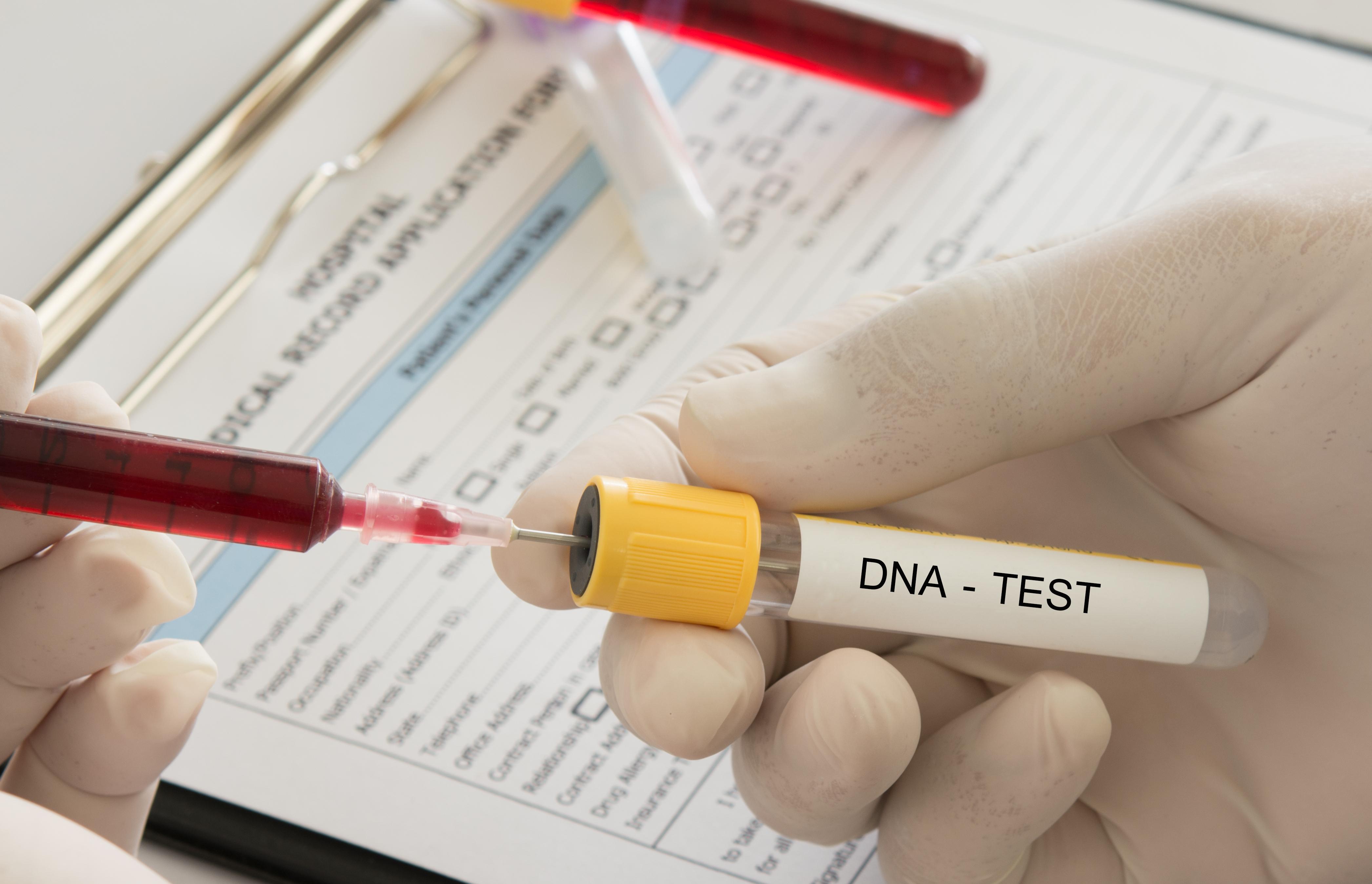
Receiving your Ancestry DNA Test results can be exciting, especially when the report reveals ancestral regions, ethnicity estimates, or genetic connections you did not expect. At the same time, DNA reports can be difficult to interpret. A percentage on a screen does not always translate directly into a specific ancestor, country, or family story.
Understanding what your results actually mean is essential. An ancestry report is based on genetic data, population comparisons, and statistical analysis. It can provide valuable clues about your biological heritage, but it should not be treated as a complete record of your family history.
This guide explains how to read an Ancestry DNA Test UAE report, what ethnicity estimates mean, how DNA matches work, and why results may sometimes change.
Start With the Three Main Parts of Your DNA Report:
Most ancestry DNA reports can be understood through three broad categories: ancestral origins, DNA matches, and genetic information.
Your ancestral-origin section attempts to estimate which populations your DNA most closely resembles. DNA matches identify other tested people who share detectable genetic segments with you. Additional features may provide geographical or family-history clues.
Before interpreting a specific percentage, consider the entire report. A single result rarely tells the complete story.
Understanding Your Ethnicity Estimate:
The ethnicity estimate is often the first section people look at.
It generally represents a statistical comparison between portions of your DNA and genetic patterns found in reference populations. If certain markers resemble those commonly observed in a particular population, the analysis may assign part of your DNA to that category.
For example, an ancestry report might identify several broad regions rather than one single origin.
These percentages should be interpreted carefully. An ethnicity estimate is not necessarily an exact measurement of how many ancestors you had from a particular place. Genetic inheritance is more complicated than dividing your family tree into equal percentages.
Your results also depend on the reference populations and analytical methods used to produce the estimate.
What Does a DNA Percentage Actually Mean?
Suppose a report assigns 20% of your DNA to a particular population category.
It does not automatically mean that exactly 20% of your ancestors came from that population.
Instead, the percentage represents the proportion of the tested genetic information that the statistical model associates with that reference population.
This distinction becomes increasingly important when interpreting small percentages.
Why Your Ethnicity Results May Surprise You?
Unexpected ancestry results are relatively easy to encounter.
You may discover a population estimate that was never mentioned in your family stories. Alternatively, a region that your family strongly associates with its heritage may appear at a lower percentage than expected.
There are several possible explanations.
Family stories can change across generations. Historical populations also migrated and intermarried, meaning modern geographical boundaries do not always correspond to historical genetic populations.
Another factor is the testing database itself. Different ancestry services may use different reference groups and statistical models, so the same DNA can sometimes produce different ethnicity estimates.
Rather than immediately accepting or rejecting an unexpected result, use it as a genealogy research clue.
What Are DNA Matches?
DNA matches are another important part of an ancestry report.
A DNA match is someone whose tested genetic information contains enough shared DNA with yours to suggest a possible biological relationship.
The amount of shared DNA can help provide an estimate of how closely two people may be related. Close relatives generally share more DNA, while distant relatives tend to share smaller amounts.
However, a DNA match alone does not necessarily identify the exact relationship.
For example, a match may be described as potentially belonging to a range of relationships because different family structures can produce similar amounts of shared DNA.
How Shared DNA Helps With Family History?
DNA matching becomes particularly useful when combined with genealogy.
Suppose you have an incomplete family tree and discover several DNA matches connected to the same surname or ancestral branch. Those matches could provide additional clues about a common ancestor.
Researchers may compare:
-
Shared DNA
-
Family trees
-
Surnames
-
Birth and marriage records
-
Historical locations
-
Migration patterns
-
Shared matches
This combination of genetic and documentary evidence is commonly referred to as genetic genealogy.
DNA can point toward a relationship, while historical records can help explain exactly how that relationship fits into your family tree.
What Does a Shared Match Tell You?
A shared match is someone who appears to be genetically connected to both you and another DNA match.
This can help researchers organize DNA matches into potential family groups.
For example, several people may share DNA with you and with one another. If their known family trees point toward the same ancestral couple, that cluster may provide evidence for a particular branch of your family.
However, shared matches should be treated as supporting evidence rather than automatic proof. Complex family relationships can produce overlapping genetic connections.
Why Siblings Can Have Different DNA Results?
It may seem logical that siblings should receive identical ancestry percentages because they have the same parents.
In reality, siblings inherit different combinations of genetic material.
During reproduction, chromosomes undergo recombination, producing unique combinations of DNA in each child. As a result, one sibling may inherit more detectable DNA associated with a particular ancestral population than another.
Therefore, differences between siblings' ethnicity estimates do not necessarily indicate that one person's family history is incorrect.
The underlying family history is shared, but the inherited DNA segments are not identical.
Why Some Ancestors May Not Appear in Your DNA?
One of the most important concepts in genetic genealogy is the difference between genetic ancestry and genealogical ancestry.
Your genealogical ancestors include everyone who appears in your family tree.
Your genetic ancestry includes ancestors whose DNA you inherited and whose genetic contribution remains detectable in the information being analyzed.
As generations pass, inheritance becomes increasingly random. You may therefore have a genuine ancestor in your family tree whose DNA is no longer detectable in your autosomal DNA.
This explains why an ancestry DNA test cannot identify every person who contributed to your family tree.
Can DNA Results Identify a Specific Ancestor?
Usually, DNA results alone cannot identify one specific ancestor with absolute certainty.
Instead, they can provide evidence that helps narrow down possibilities.
A strong research approach combines genetic matches with documentary sources. If multiple DNA matches point toward the same family branch and historical records support that connection, the evidence becomes more compelling.
This is why experienced genealogy research rarely relies on a single DNA percentage.
Why Ancestry DNA Results Can Change?
If your ancestry results change after several months or years, your DNA has not changed.
The interpretation may have changed because the testing company has updated its reference database, population groups, or statistical models.
As more genetic data becomes available, researchers may become better able to distinguish between genetically similar populations.
Consequently, an ethnicity estimate that once showed one broad region may later be divided into more detailed categories.
Result updates should therefore be viewed as refinements to interpretation rather than changes to your biological identity.
How to Read Small Ancestry Percentages?
Small percentages deserve additional caution.
A low percentage may represent a genuine ancestral connection, but it can also be more difficult to interpret confidently because genetically similar populations can be challenging to distinguish.
Instead of focusing exclusively on one small number, look for supporting evidence.
Does the same ancestry appear among close relatives? Do DNA matches connect to that population? Do historical records support the possibility? Does the result remain consistent after updates?
Considering several sources together provides a more reliable research strategy.
What Your DNA Results Cannot Tell You?
An ancestry DNA report has limitations.
It cannot provide a perfect list of every ancestor, determine your cultural identity, or establish exactly where every person in your family tree lived.
DNA also cannot independently explain family traditions, historical events, language, or personal identity.
Genetic ancestry and cultural heritage overlap in some ways, but they are not identical concepts.
A person's identity can include family traditions, nationality, community, language, personal experiences, and historical background that cannot be reduced to genetic percentages.
A Better Method for Researching Your Results:
Instead of asking, "What does this percentage prove?" ask, "What question does this result help me investigate?"
This small change in approach can make DNA testing much more useful.
Start by documenting your known family history. Record parents, grandparents, great-grandparents, surnames, dates, and locations.
Then compare that information with your ethnicity estimates and DNA matches.
Look for patterns rather than isolated results. A group of related DNA matches may be more informative than one surprising percentage.
Finally, verify genetic clues with reliable historical documentation.
The objective is to build a chain of evidence rather than force every DNA result into an existing family story.
Protecting Your Genetic Information:
Your DNA is sensitive personal information, so privacy deserves attention when interpreting and managing ancestry results.
Review the privacy practices associated with the testing service you use. Understand how genetic information may be stored, whether it may be used for research, how matches are handled, and what options exist for deleting or managing your data.
If you download raw genetic data and upload it to another platform, review that platform's policies separately. Privacy protections from one service may not automatically apply elsewhere.
Frequently Asked Questions About Ancestry DNA Results:
Are ancestry DNA results completely accurate?
The genetic markers tested can be measured scientifically, but ethnicity and ancestral-origin estimates involve statistical interpretation. Accuracy can vary depending on the reference populations and methods used.
Do ancestry percentages equal the percentage of ancestors?
Not necessarily. An ethnicity percentage describes a genetic estimate and does not directly represent the exact percentage of ancestors from a particular population.
Can DNA results prove a family story?
DNA can provide evidence that supports or challenges a family story, but it is usually best interpreted alongside documentary genealogy.
Why are my results different from my sibling's?
Siblings inherit different combinations of DNA from their parents, so their genetic ancestry estimates can vary.
Can an ancestry DNA test find unknown relatives?
It may identify potential biological relatives when those individuals have also tested within a compatible database and share enough detectable DNA.
Can ancestry results change over time?
Yes. Testing providers can update their reference databases, population definitions, and statistical models, which can result in revised ancestry estimates.
Turning DNA Results Into a Family History Story:
Ancestry DNA Lab tests results are most valuable when they are treated as research evidence rather than a final answer.
Ethnicity estimates can suggest ancestral population connections. DNA matches can reveal potential biological relationships. Shared DNA can help researchers investigate family branches that may be difficult to document through traditional records.
Yet the most accurate family history usually emerges when genetic evidence is combined with historical documentation.
Your DNA contains a record of biological inheritance, but it does not contain your entire family story. By approaching your ancestry results with curiosity, healthy skepticism, and careful research, you can turn percentages and DNA matches into meaningful clues about the generations that came before you.

 English
 Arabic
 French
 Spanish
 Portuguese
 Turkish
 Dutch
 Italiano
 Russian
 Romaian
 Portuguese (Brazil)
 Greek