


Real Estate Tokenization Platform Development in 2027: Could Automated Rental Distribution Become Standard?
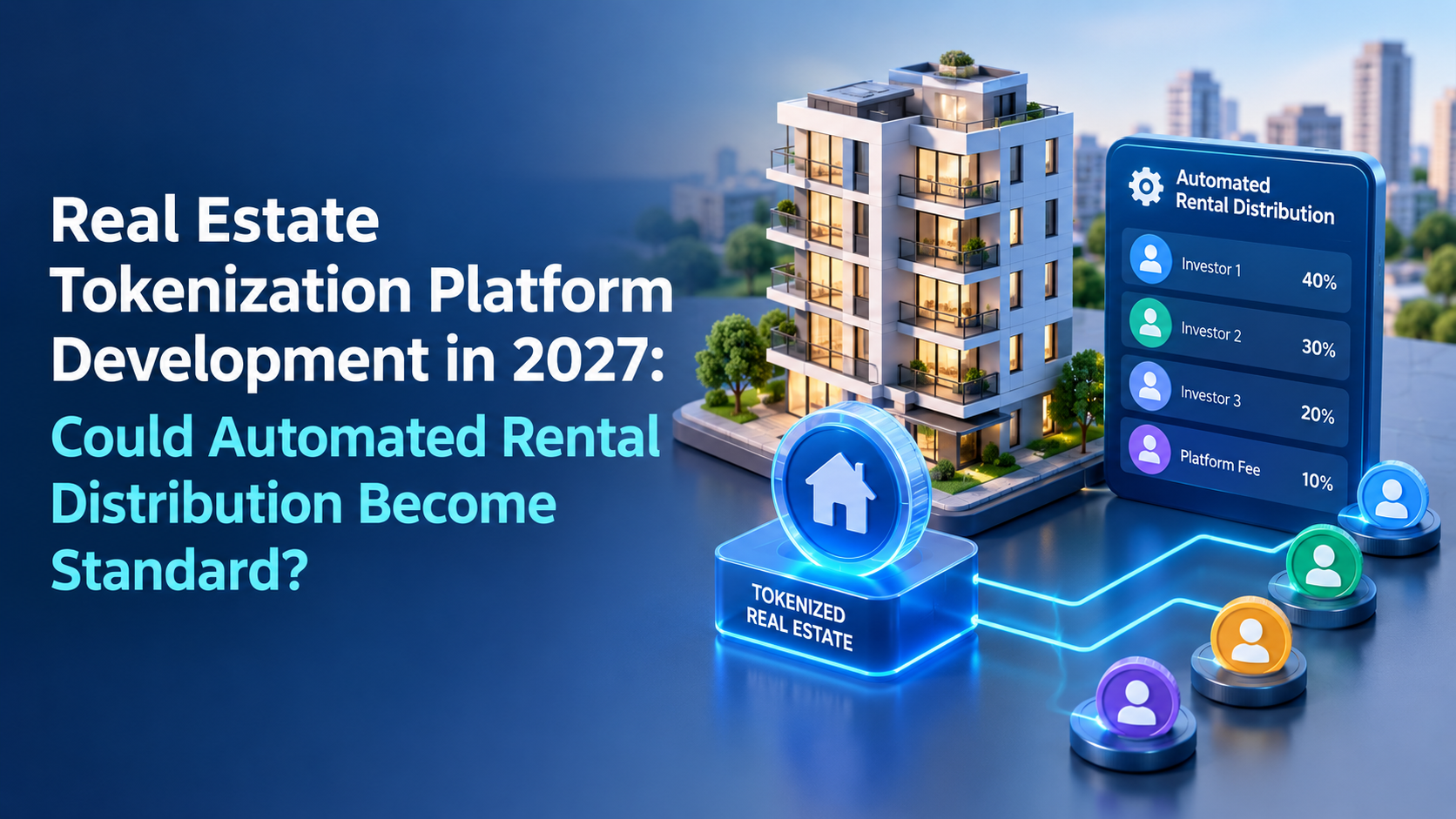
Real estate investment has traditionally involved property managers, banks, accountants, legal teams, and payment providers to collect and distribute rental income. As property ownership becomes more digital, tokenization introduces another way to represent investor interests and manage related financial activity. By 2027, automated rental distribution could become a common feature within some real estate tokenization platforms, particularly where recurring rental payments can be connected with verified ownership records and predefined distribution rules.
Real estate tokenization refers to representing rights or interests associated with a property through blockchain-based tokens. Instead of maintaining ownership records only through conventional databases and paperwork, a platform can associate token balances with investor records, property information, and contractual terms. Rental income can then be calculated according to token holdings and distributed through predefined processes.
For a Real estate tokenization company, this creates an opportunity to offer more than token issuance. The platform can include property onboarding, investor verification, token management, rental accounting, payment processing, reporting, and compliance functions. The question for 2027 is whether automated rental distribution will move from being an optional feature to a regular part of this type of platform.
What Does Automated Rental Distribution Mean in Real Estate Tokenization?
Automated rental distribution involves using software and smart contracts to calculate and distribute rental income according to predefined rules. Suppose a commercial property generates monthly rental income. After permitted expenses, taxes, management charges, and other deductions are accounted for, the remaining distributable amount can be allocated among eligible token holders.
A tokenization platform can maintain records of token ownership and use those records to determine each investor's share. Smart contracts may contain rules covering distribution dates, investor eligibility, wallet addresses, withholding requirements, and payment conditions.
The actual movement of money does not necessarily have to occur entirely on a public blockchain. A platform can combine blockchain records with conventional banking or payment infrastructure. This hybrid approach may be relevant when rental income initially reaches a property owner's bank account before being allocated to investors.
Why Rental Distribution Matters for Tokenized Properties
Rental income is one of the recurring financial activities associated with income-generating properties. Tokenization may create many individual holders for an asset, making manual distribution more complicated as the number of participants increases.
Traditional processes may involve spreadsheets, accounting software, bank transfers, investor statements, and reconciliation. A digital property platform can bring several of these activities into a single workflow.
For investors, the platform can show information such as token holdings, declared rental income, previous distributions, pending payments, and transaction records. For property operators, it can provide a structured process for calculating investor allocations.
This does not mean every tokenized property will use automated rental distribution. Different jurisdictions, property structures, securities rules, tax requirements, and payment arrangements can affect how distributions are handled.
How Could the Rental Distribution Process Work in 2027?
A typical process could begin when rental income is received from tenants. The property manager or asset administrator records the income within the platform. Applicable expenses are then deducted according to the property's financial rules.
The platform calculates the distributable amount. It checks the eligible investor list and determines each investor's share based on token ownership and the applicable distribution formula.
The system can then create payment instructions. Depending on the platform's design, investors could receive fiat currency through banking infrastructure or digital currency through supported wallets.
After payment, the platform records the distribution and updates the investor dashboard. Investors may receive a statement showing the amount distributed, relevant deductions, payment date, and remaining token balance.
This process can reduce repeated manual calculations, but human review can still remain important, especially when financial, tax, or regulatory checks are involved.
Smart Contracts and Rental Income Rules
Smart contracts can play an important role in automated rental distribution. They can contain predefined instructions for how certain events should be processed.
For example, a smart contract could specify that eligible holders receive rental income according to their token balance on a particular record date. It could also define a distribution schedule and conditions that must be satisfied before payment.
However, smart contracts do not independently know whether a property received rent, whether expenses were paid, or whether a bank account contains sufficient funds. External information may need to reach the blockchain through trusted data systems or oracles.
For this reason, a practical Real estate token development project may combine smart contracts with property management systems, accounting software, identity verification systems, payment providers, and data services.
The Role of Investor Identity in Rental Payments
Automated distributions require more than knowing how many tokens an investor owns. The platform may also need to know whether the investor is legally eligible to receive a payment.
Investor onboarding can involve identity verification, jurisdiction checks, accreditation or eligibility requirements where applicable, sanctions screening, and tax information. These requirements depend on the legal structure and market in which the platform operates.
A Real estate asset tokenization company may therefore include identity and compliance functions before an investor receives rental income. The platform can check the investor's status before processing a distribution.
This approach can help connect token ownership with the legal identity of the person or entity receiving the economic benefit.
Property-Level Accounting Could Become More Important
Rental distribution cannot be separated from property-level financial information. A platform needs accurate information about rent collected, operating expenses, maintenance costs, management fees, taxes, reserves, and other permitted deductions.
In 2027, real estate tokenization platforms may place greater emphasis on integrating property accounting data with token ownership records. Rather than treating token issuance as the entire product, platforms may increasingly cover activities that happen after tokens reach investors.
For example, a property dashboard could display monthly revenue, expenses, net distributable income, investor allocations, and payment history. Investors could access this information through their accounts, while administrators could manage the underlying records.
What Could Happen When Rental Distribution Becomes More Automated?
If automated rental distribution becomes more common, property investment platforms could move toward recurring digital workflows. Monthly or quarterly income events could be processed according to predefined instructions rather than requiring a new manual calculation each time.
This could also create a more consistent investor experience. Instead of waiting for separate statements and payment notifications, investors may see rental income information directly within their tokenization account.
Another possibility is the use of event-based processing. A platform could recognize a rental payment event, update accounting records, calculate eligible distributions, and create payment instructions.
Still, automation does not remove the need for accounting controls. A rental amount could be disputed, an expense could be incorrectly entered, or an investor's eligibility could change. Platforms may therefore use approval stages before final distribution.
Secondary Markets and Rental Income
The relationship between token ownership and rental income becomes more interesting when tokens can be traded on permitted secondary markets.
Suppose an investor sells a portion of their property tokens during a month. The platform needs rules determining who receives the rental income associated with that period. A record date could be used to identify eligible holders, similar to mechanisms found in conventional financial markets.
A Real estate tokenization platform development project may therefore need to account for ownership changes, settlement periods, transfer restrictions, and distribution dates.
This is one reason rental distribution cannot be treated as an isolated feature. It connects token ownership, investor identity, property accounting, payments, and trading activity.
Compliance Considerations for Automated Distributions
Automation does not remove regulatory responsibilities. Tokenized real estate may fall under securities, property, investment, tax, payments, and digital asset rules depending on the jurisdiction and legal structure.
A platform may need controls covering investor eligibility, transfer restrictions, reporting, tax documentation, record keeping, and payment compliance.
A Real estate tokenization development company working on such platforms may therefore design separate roles for administrators, property managers, investors, compliance teams, and payment operators.
The exact requirements can vary significantly between countries. A platform intended for multiple jurisdictions may require jurisdiction-specific rules rather than applying one distribution model to every investor.
Technology Architecture for Automated Rental Distribution
A modern tokenization platform can contain several technical layers. The user interface handles investor accounts, property information, portfolio views, statements, and payment details.
The application layer manages investor records, property accounting, token balances, distribution calculations, permissions, and reporting. Smart contracts manage blockchain-based token records and predefined transaction rules.
An identity and compliance layer can manage investor verification and eligibility checks. A payment layer can connect the platform with banks, payment processors, or supported digital asset infrastructure.
The database can store property records, investor information, accounting data, distribution history, and operational records. Blockchain networks can maintain token ownership and selected transaction records.
The exact architecture will depend on the property's legal structure, token model, jurisdiction, investor base, and payment method.
Features a 2027 Real Estate Tokenization Platform May Include
A platform focused on rental income could include property onboarding, investor onboarding, token issuance, wallet management, ownership tracking, rental accounting, distribution calculation, payment processing, investor statements, compliance checks, and administrative controls.
It may also include notifications for upcoming distributions, downloadable financial reports, transaction histories, property performance dashboards, and role-based access.
For investors, the dashboard could show the number of tokens held, ownership percentage, rental income received, upcoming distributions, and historical transactions.
For property administrators, the system could provide tools for entering rental income, recording expenses, reviewing calculations, approving distributions, and generating reports.
Challenges That Could Limit Full Automation
Despite the potential benefits, automated rental distribution has practical limitations. Property income is not always predictable. Vacancies, late payments, repairs, insurance claims, taxes, and unexpected expenses can change the amount available for distribution.
Legal ownership structures can also complicate the process. A property may be held through an SPV, trust, fund, partnership, or another entity. The token may represent an interest in that structure rather than direct ownership of the physical property.
Tax treatment can also differ between investors. Two investors holding the same number of tokens may have different reporting requirements depending on their jurisdiction or legal status.
For these reasons, the most practical approach may involve partial automation with human approval rather than completely unattended payments.
How Real Estate Tokenization Companies Could Approach 2027
For a Real estate tokenization company, rental distribution can become part of a wider property lifecycle system. Instead of focusing only on issuing tokens, the platform can support activities from property onboarding through investor servicing and recurring income events.
A Real estate tokenization platform development company may also need to consider interoperability with accounting systems, payment providers, custody solutions, identity systems, and secondary trading venues.
When comparing Top real estate tokenization companies or Best real estate tokenization companies, businesses and investors may examine how these platforms handle property data, investor servicing, compliance, token transfers, distributions, and reporting rather than looking only at the token issuance function.
The market may also see different platform models. Some systems may focus on residential rental properties, while others could support commercial buildings, hospitality assets, industrial properties, or property funds.
Could Automated Rental Distribution Become Standard in 2027?
Automated rental distribution has the characteristics of a feature that could become increasingly common in tokenized property platforms. Recurring rental payments provide a practical use case for linking property cash flows with digital ownership records.
However, whether it becomes a standard feature across the entire market will depend on regulation, investor adoption, payment infrastructure, accounting practices, and the legal structures used for tokenized properties.
The likely development path may involve controlled automation rather than completely automatic payments. Platforms can automate calculations, ownership checks, reporting, and payment instructions while retaining administrative approval for unusual or high-value events.
As Real estate tokenization development continues, rental distribution could therefore become part of a broader digital property management process. The value of the platform may increasingly depend on what happens after tokens are issued, especially when investors expect regular income, accurate records, and convenient access to their financial information.
Conclusion
Real estate tokenization is moving toward use cases that extend beyond fractional property ownership. Automated rental distribution is one area where blockchain records, smart contracts, investor identity systems, accounting data, and payment infrastructure can work together around recurring property income. In 2027, some platforms may use automated workflows for rental calculations, eligibility checks, distribution records, and payment instructions, while human review remains relevant for compliance and unusual financial events. The development of these capabilities could make rental management an important part of real estate tokenization platforms as property owners and investors look for digital ways to manage ongoing asset activity. Blockchain App Factory provides Real estate tokenization development services.
FAQs
1. What is automated rental distribution in real estate tokenization?
Automated rental distribution is a process where software and smart contracts calculate investor rental allocations according to predefined ownership and distribution rules.
2. Can smart contracts distribute property rental income automatically?
Smart contracts can manage predefined distribution logic, but actual payment may require banking systems, payment providers, digital wallets, and external property or accounting data.
3. Will automated rental distribution become standard in 2027?
It could become more common in certain tokenized property models, but adoption will depend on regulations, payment infrastructure, property structures, accounting processes, and investor requirements.
4. Does rental distribution require investor verification?
In many tokenized property structures, investor identity and eligibility checks can be relevant before distributing income. The exact requirements depend on the jurisdiction and legal structure.
5. What role does blockchain play in rental distribution?
Blockchain can maintain token ownership records and execute predefined smart-contract rules. Other systems may handle property accounting, identity checks, tax information, and fiat payments.
6. Can investors receive rental income in digital assets?
Depending on the platform and applicable regulations, investors may receive payments through supported digital assets or conventional payment channels. The available method depends on the platform's legal and technical setup.
7. What features can a real estate tokenization platform include?
Features may include property onboarding, token issuance, investor verification, wallet management, ownership tracking, rental accounting, distribution management, payment processing, reporting, and compliance controls.
8. Why is accounting important for automated rental distribution?
Rental income is usually affected by property expenses, taxes, management fees, reserves, and other deductions. Accurate accounting data is needed before calculating the amount available for investors.

 English
 Arabic
 French
 Spanish
 Portuguese
 Deutsch
 Turkish
 Dutch
 Italiano
 Romaian
 Portuguese (Brazil)
 Greek