


Medical Representative Institute in Delhi for Beginners and Freshers?
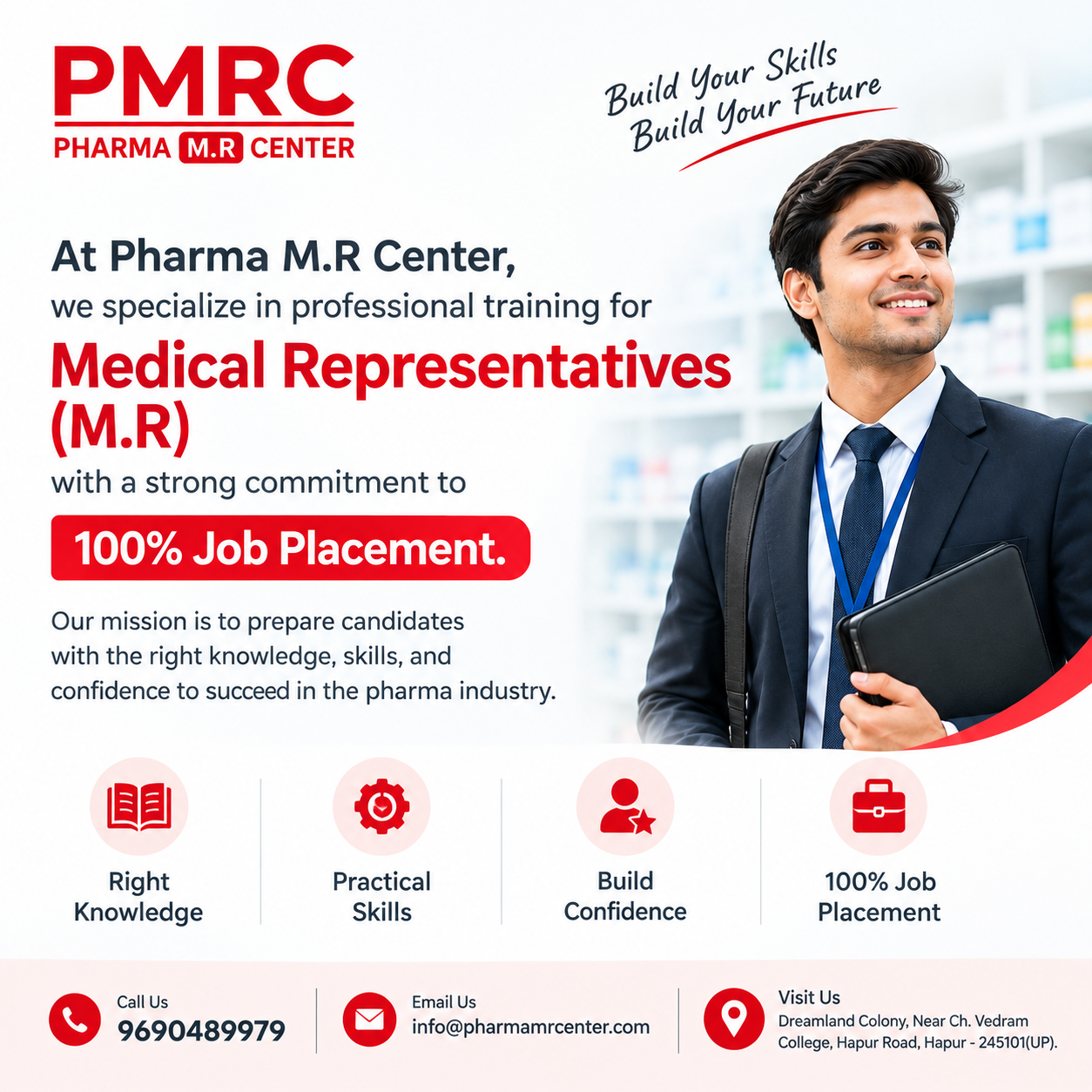
For someone entering the pharmaceutical industry for the first time, the biggest challenge is often not finding information but understanding where to begin. A fresher may have a degree, basic knowledge of medicines, or an interest in pharmaceutical sales, but still feel uncertain about what happens inside a medical representative's working day.
A structured learning environment can help bridge this gap. A Medical Representative Institute in Delhi can introduce beginners to pharmaceutical sales, professional communication, product knowledge, fieldwork, and the practical expectations of the industry.
Training is particularly useful for freshers because the responsibilities of a medical representative are different from those of a typical office job. Representatives may spend much of their day travelling, meeting healthcare professionals, planning visits, discussing approved product information, maintaining records, and reporting their activities.
The purpose of training should therefore be to make beginners more familiar with these responsibilities before they enter the workplace.
Starting With the Basics
Beginners should not feel pressured to know everything about the pharmaceutical industry before joining a training programme.
A good learning process starts with basic concepts and gradually moves toward practical situations.
The first stage may introduce:
- Pharmaceutical industry terminology
- Common medicine categories
- Basic medical terms
- Pharmaceutical sales
- Healthcare professionals
- Field responsibilities
- Professional workplace behaviour
This foundation gives a beginner enough context to understand the more practical parts of medical representative training.
The goal is not to memorise large amounts of information. It is to understand how different parts of the job connect with each other.
Understanding What a Medical Representative Actually Does
Many freshers have a general idea that a medical representative promotes pharmaceutical products, but the actual job involves much more.
Depending on the company, responsibilities can include:
- Visiting doctors and healthcare professionals
- Presenting approved product information
- Maintaining professional relationships
- Planning daily visits
- Managing a geographical territory
- Recording field activities
- Following up with contacts
- Preparing reports
- Meeting assigned business objectives
A beginner should understand these responsibilities before applying for employment.
This is one reason practical education can be useful. It allows a learner to understand the profession rather than relying only on a job title.
Learning Pharmaceutical Product Knowledge
Product knowledge is an important part of pharmaceutical sales.
During training, beginners may be introduced to concepts such as:
- Product composition
- Therapeutic categories
- Indications
- Basic dosage information
- Precautions
- Contraindications
- Product positioning
- Medical terminology
A fresher does not need to become a medical expert to start learning about pharmaceutical sales. However, they should develop enough understanding to communicate approved product information accurately.
Good training should also explain the limits of a medical representative's role. A representative should not make unsupported medical claims or present themselves as a substitute for a qualified healthcare professional.
Developing Communication Skills From the Beginning
Communication can be difficult for beginners, especially when they have to speak with experienced professionals.
Training can give freshers a controlled environment in which they can practise before entering the field.
They can learn how to:
- Introduce themselves
- Start a professional conversation
- Present information clearly
- Ask appropriate questions
- Listen carefully
- Respond to questions
- End a discussion politely
The focus should be on clarity rather than complicated language.
A medical representative needs to communicate confidently, but professional confidence comes from preparation, listening, and understanding the subject.
Practising Through Role-Play
Role-playing is particularly useful for people who have never worked in pharmaceutical sales.
For example, one learner can act as a medical representative while another plays the role of a doctor. The trainer can introduce a realistic situation and ask the learner to conduct a short product discussion.
Afterwards, the trainer can discuss:
- Introduction
- Presentation
- Body language
- Product knowledge
- Listening
- Question handling
- Professional behaviour
Beginners can repeat the exercise several times and gradually improve.
This type of practice can be more useful than simply reading about communication because it allows students to experience the pressure of speaking in a professional situation.
Learning How to Approach Healthcare Professionals
A fresher may initially wonder how a representative should approach a doctor or pharmacist.
The answer depends on the professional setting, schedule, company expectations, and individual circumstances.
Training should teach the importance of:
- Respecting professional time
- Being properly prepared
- Keeping communication relevant
- Avoiding unnecessary interruptions
- Following appropriate appointment or visiting procedures
- Maintaining professional boundaries
A good representative does not need to dominate a conversation. The objective is to communicate relevant information professionally and build a respectful working relationship.
Understanding Fieldwork Before Joining
One of the biggest differences between classroom learning and a medical representative position is fieldwork.
Beginners should understand that the job may involve travelling across an assigned territory during the day.
This can include:
- Visiting multiple locations
- Managing changing schedules
- Dealing with traffic
- Reaching appointments on time
- Maintaining daily records
- Working independently
For candidates preparing through a Medical Representative Institute in Delhi, understanding local travel and territory management can be especially useful.
Delhi is a large and busy urban area, so planning realistic travel time is an important part of field productivity.
Learning Territory Planning
A beginner may not initially understand how a representative decides which customer to visit and when.
Training can introduce simple territory-planning principles.
A trainee may practise creating a daily schedule based on:
- Customer locations
- Appointment timings
- Travel distance
- Priority visits
- Follow-up requirements
- Available working hours
These exercises help learners understand that field sales requires planning before the day begins.
Poor planning can result in unnecessary travel, missed appointments, and an unorganised working day.
Basic Sales Skills for Freshers
Pharmaceutical sales is not simply about convincing someone to purchase a product.
Beginners can learn basic concepts such as:
- Understanding customer requirements
- Presenting relevant information
- Building relationships
- Handling questions
- Responding professionally to objections
- Following up
- Maintaining regular communication
The emphasis should remain on ethical and responsible professional interaction.
A fresher should understand that building trust takes time. Trying to force every interaction into an immediate sales result can damage long-term professional relationships.
Reporting and Documentation
Many beginners underestimate the amount of reporting involved in field-based work.
Depending on the employer, a medical representative may need to record:
- Visits
- Customer interactions
- Product discussions
- Follow-ups
- Sales information
- Expenses
- Territory activities
Training can help freshers develop organised reporting habits before joining a company.
Accurate documentation also makes it easier for representatives and managers to understand what has happened in the field.
Getting Comfortable With Digital Tools
Modern pharmaceutical sales may involve smartphones, mobile applications, email, spreadsheets, digital calendars, online forms, and company reporting systems.
Beginners should develop basic confidence with these tools.
They may need to learn how to:
- Send professional emails
- Maintain digital records
- Complete online forms
- Use spreadsheets
- Organise appointments
- Share documents
- Use mobile applications
Advanced computer knowledge may not always be necessary, but basic digital skills can make the working day considerably easier.
Personality Development for Freshers
Personality development should not mean trying to create an artificial personality.
Instead, training can help beginners become more comfortable with professional situations.
Useful areas include:
- Speaking clearly
- Maintaining appropriate body language
- Listening without interrupting
- Developing punctuality
- Building confidence
- Dressing appropriately
- Remaining calm during difficult conversations
These small improvements can make a noticeable difference when a fresher begins interacting with professionals.
Preparing for the First Interview
Training can also help beginners understand what happens during recruitment.
An interview for a medical representative position may include questions about:
- Educational background
- Pharmaceutical knowledge
- Communication
- Fieldwork
- Travel
- Career interests
- Product understanding
- Handling difficult situations
Freshers should not try to pretend that they have years of experience.
Instead, they can demonstrate preparation, willingness to learn, communication ability, and an understanding of the responsibilities associated with the position.
Mock interviews can help beginners become more comfortable answering questions in a professional environment.
Understanding the Medical Representative Institute Job
The term Medical Representative Job should be understood carefully.
A training institute and a pharmaceutical employer have different responsibilities. An institute may provide training, practical preparation, career guidance, or placement assistance, while the pharmaceutical company is responsible for employment.
If an institute offers job or placement support, freshers should ask what that support actually includes.
Questions can include:
- Are interviews arranged?
- Are employer contacts provided?
- Is resume assistance available?
- Are mock interviews conducted?
- Are vacancies shared with students?
- Is there post-training guidance?
Clear information helps beginners develop realistic expectations.
What Freshers Should Look for in Training
When selecting a Medical Representative Institute in Delhi, beginners can evaluate the programme based on practical learning rather than just its name.
Look for training that provides:
- Clear pharmaceutical fundamentals
- Communication practice
- Product presentation exercises
- Role-playing
- Territory planning activities
- Reporting practice
- Interview preparation
- Professional behaviour guidance
- Opportunities to ask questions
A programme that allows students to practise what they learn can be particularly useful for someone with no previous industry experience.
What Happens After Training?
Completing training is only the beginning.
Once a fresher gets an entry-level position, there will still be new products, company procedures, territories, reporting systems, and professional expectations to learn.
The first months should therefore be viewed as an extension of learning.
A new representative can continue improving:
- Product knowledge
- Communication
- Territory management
- Reporting
- Customer relationships
- Time management
- Digital skills
- Professional judgement
Feedback from managers and experienced colleagues can help accelerate this development.
Final Thoughts
For beginners and freshers, a Medical Representative Institute in Delhi can provide a useful starting point for understanding pharmaceutical sales and preparing for the workplace. The most valuable training is not simply about memorising pharmaceutical terms. It should help learners understand how the profession works and give them opportunities to practise the skills they will eventually use in the field.
Product knowledge, communication, territory planning, reporting, digital confidence, professional behaviour, and interview preparation can all help a beginner become more prepared for an entry-level position.
For anyone exploring a Medical Representative Institute Job, it is equally important to understand the difference between training and employment. A course can improve knowledge and practical readiness, but actual employment depends on qualifications, employer requirements, recruitment processes, and individual performance.
The best approach for a fresher is to start with the fundamentals, practise consistently, ask questions, accept feedback, and continue learning after entering the pharmaceutical industry. With realistic expectations and steady skill development, training can become a useful first step toward building a professional career in pharmaceutical sales.

 English
 Arabic
 French
 Spanish
 Portuguese
 Deutsch
 Turkish
 Dutch
 Italiano
 Russian
 Portuguese (Brazil)
 Greek