


Beet Juice for Cyclists: Performance Benefits and Timing
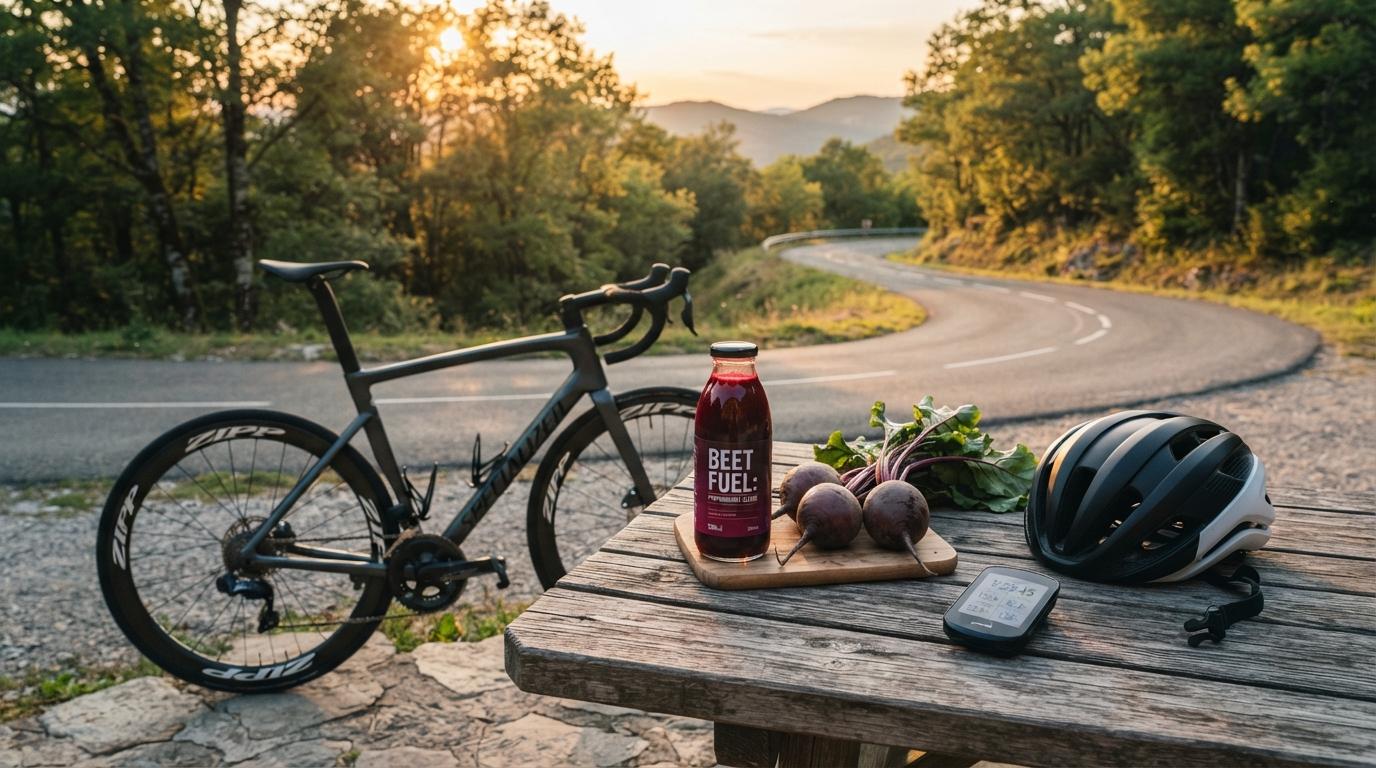
Cycling has been one of the more heavily studied sports when it comes to dietary nitrate research, largely because time trials and sustained power output offer a fairly clean way to measure performance changes in a lab or controlled field setting.
Why Cycling Research Has Been a Good Fit for This Topic.
Cycling performance, particularly in time-trial formats, depends heavily on sustained aerobic power output over a defined distance or duration — precisely the kind of effort where oxygen delivery efficiency, the mechanism beet juice research centers on, has the clearest theoretical relevance.
What Cycling-Specific Studies Have Found.
A number of studies using cyclists as subjects have measured outcomes like time-trial performance, power output at a given oxygen consumption level, and time-to-exhaustion following beet juice or nitrate supplementation. Some of this research has found modest but measurable improvements in these markers, particularly in recreational and moderately trained cyclists, though findings are less consistent among highly trained or elite cyclists.
Which Type of Cycling Benefits Most.
The research interest centers most on sustained, submaximal efforts — think longer time trials or steady endurance rides — rather than short, explosive sprint efforts, where the underlying oxygen-delivery mechanism is less relevant to performance.
Timing for a Race or Key Ride.
Based on how dietary nitrates are processed and converted to nitric oxide, most protocols in the research literature involve consuming beet juice a few hours before the event — commonly in the range of two to three hours — rather than immediately before starting.
Should You Load Beet Juice Over Multiple Days?
Some research protocols have cyclists consume beet juice over several consecutive days leading into a key event or test, rather than relying on a single dose. This approach has support in some studies, though single-dose protocols have also shown effects in others. If you're planning around a specific event, testing a multi-day approach during a training block first is a reasonable way to find what works for you specifically.
Don't Skip the Training Test Run.
As with any new nutrition strategy, testing beet juice during training rides — ideally including at least one ride at race-relevant intensity and duration — before relying on it for an actual race or event avoids any unwelcome surprises around digestion or personal response.
Combining With Existing Race Nutrition.
Beet juice fits alongside, rather than replacing, established race-day nutrition strategies like carbohydrate loading and hydration planning. It's a small addition to an existing nutrition strategy, not a replacement for the fundamentals that already matter most.
Heat and Altitude Considerations.
Some research has explored whether nitrate supplementation might offer additional benefit in conditions where oxygen delivery is already more challenged — like heat or altitude — though this remains a less settled area than the baseline endurance research and shouldn't be assumed as a given additional benefit.
Choosing a Product for Cycling Use.
Given how much of the research protocol relies on a defined nitrate dose, a concentrated, minimally diluted product like natural organic beet juice is a more practical way to approximate research conditions than a diluted juice blend, where the actual beet and nitrate content per serving is far less clear.
A Cyclist's Practical Checklist:
-
Time it 2–3 hours before a key ride or race, not immediately before
-
Consider testing a multi-day loading approach during a training block
-
Focus expectations on sustained, submaximal efforts rather than sprint power
-
Test it during training before relying on it for race day
-
Treat it as a complement to existing nutrition strategy, not a replacement
A Realistic Expectation.
Beet juice isn't going to turn a mid-pack rider into a podium contender, but for cyclists focused on sustained-effort events — long time trials, gran fondos, endurance races — it's a well-studied, low-risk addition worth testing as part of an overall nutrition and training approach.

 Arabic
 French
 Spanish
 Portuguese
 Deutsch
 Turkish
 Dutch
 Italiano
 Russian
 Romaian
 Portuguese (Brazil)
 Greek