


How to Teach Kids Telling Time With Worksheets Easily
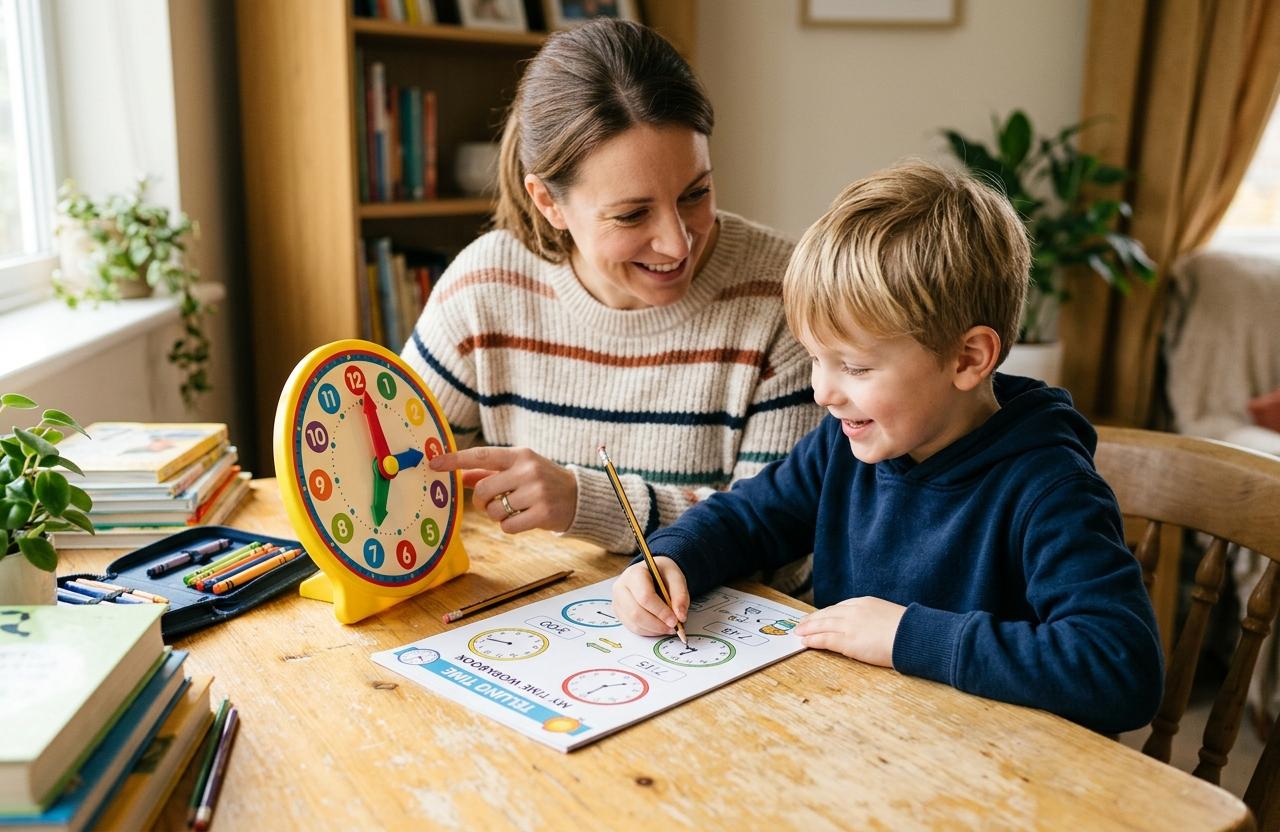
Teaching children how to tell time is an important part of early mathematics education. It helps kids understand daily routines, manage activities, and develop basic mathematical thinking. However, learning to read an analogue clock can sometimes be challenging, especially when children are introduced to hour and minute hands, numbers, and different time intervals.
One effective way to make this learning process easier is by using worksheets. How to Teach Kids About Telling Time With Worksheets is a useful approach because worksheets give children structured practice while allowing them to learn at their own pace. With carefully designed activities, parents and teachers can turn telling time into an engaging and manageable learning experience.
Why Is Learning to Tell Time Important for Kids?
Understanding time is an everyday life skill. Children use time when getting ready for school, eating meals, attending activities, going to bed, and planning their day. Learning to read a clock also introduces important mathematical concepts such as counting, numbers, addition, subtraction, and intervals.
For younger children, worksheets can provide repeated exposure to clock faces and time-related questions. This repetition helps them become familiar with the position of the hands and understand what each hand represents.
When Should Kids Start Learning to Tell Time?
Children can begin learning basic time concepts at an early age. The exact age depends on their development and previous mathematical knowledge.
Young learners can first become familiar with concepts such as morning, afternoon, evening, today, tomorrow, and yesterday. Once they understand these ideas, they can begin learning whole hours.
As their skills develop, children can progress to half hours, quarter hours, five-minute intervals, and eventually exact minutes. Worksheets can be adjusted to match each stage of learning.
How Can Worksheets Make Telling Time Easier?
Worksheets provide children with visual and practical activities. Instead of simply listening to an explanation, kids can look at clock faces, identify times, draw hands, match clocks with written times, and solve simple time problems.
For example, a worksheet may show a clock with the hour hand pointing to 3 and the minute hand pointing to 12. The child can be asked to write "3:00." Another activity may provide "7:30" and ask the child to draw the hands in the correct positions.
These activities reinforce the connection between digital and analogue time.
Start With the Basics
When teaching children how to tell time, it is best to begin with simple concepts. Explain that an analogue clock has two main hands. The shorter hand shows the hour, while the longer hand shows the minutes.
Start by teaching whole hours. A worksheet containing several simple clock faces can help children identify times such as 1:00, 4:00, 8:00, and 11:00.
Ask children to say each time aloud before writing it down. This combines visual recognition with verbal learning.
Once children are comfortable with whole hours, introduce half hours. Explain that when the minute hand points to 6, it represents 30 minutes.
Teach Five Minute Intervals
After children understand hours and half hours, worksheets can introduce five-minute intervals. This is an important stage because each number on an analogue clock represents five minutes when counting around the clock.
For example:
- 1 represents 5 minutes
- 2 represents 10 minutes
- 3 represents 15 minutes
- 4 represents 20 minutes
- 5 represents 25 minutes
- 6 represents 30 minutes
A worksheet can include blank clocks where children count by fives and write the correct minute value.
Using several examples helps children recognize the pattern instead of memorizing individual answers.
Use Matching Activities
Matching exercises are another effective way to teach time. A worksheet can contain analogue clocks in one column and written or digital times in another.
Children can draw lines between the matching pairs. For example, a clock showing 2:30 can be matched with the written time "2:30."
This type of activity encourages children to recognize time in different formats. It also makes worksheets more interactive than simple question-and-answer exercises.
Encourage Kids to Draw Clock Hands
Reading a clock is only one part of learning to tell time. Children should also practice creating a time on a clock face.
A worksheet can provide a blank clock and give an instruction such as:
"Draw the hands to show 5:00."
Children then need to identify the correct hour and minute positions and draw the hands accordingly.
As their confidence improves, introduce more challenging examples such as 6:15, 9:45, or 3:20.
Include Real Life Time Examples
Worksheets become more meaningful when questions relate to everyday activities. Instead of using only isolated clock faces, include simple situations that children can understand.
For example:
"School starts at 8:00. What time does school start?"
Or:
"Ali eats lunch at 12:30. Draw the hands on the clock to show lunchtime."
These questions help children understand why learning time matters outside the classroom.
Make Worksheets Age Appropriate
Not every worksheet should be designed for the same level. Young beginners may need large clock faces, fewer questions, and simple whole-hour exercises.
More advanced learners can work with:
- Five-minute intervals
- Quarter hours
- Elapsed time
- Comparing two times
- Time word problems
- Converting analogue time to digital time
Using age-appropriate worksheets prevents children from becoming frustrated and allows them to build their skills gradually.
Combine Worksheets With Practical Activities
Worksheets work best when they are combined with hands-on learning. Parents and teachers can use a real analogue clock alongside worksheet exercises.
For example, set the clock to 4:00 and ask the child to identify the time. Then ask them to find the same time on their worksheet.
Another useful activity is creating a daily schedule. Children can write down when they wake up, eat breakfast, attend school, play, and go to bed. They can then practice representing those times on clock worksheets.
Use Regular Short Practice Sessions
Children do not need to complete a large number of questions in one sitting. Short and consistent practice sessions can be more effective.
Spend around 10 to 15 minutes working on time worksheets several times a week. Begin each session by reviewing something the child already understands before introducing a new concept.
Regular practice helps reinforce learning without making the activity feel overwhelming.
Correct Mistakes Positively
Mistakes are a normal part of learning. If a child places the minute hand incorrectly, explain the concept again rather than simply marking the answer wrong.
Ask questions such as, "Which hand shows the minutes?" or "Where should the minute hand be when it is half past?"
This encourages children to think about their answers and understand the reasoning behind the correction.
Conclusion
Learning how to tell time can become much easier when children receive clear explanations and regular practice. Worksheets provide a simple and flexible way to reinforce important concepts, from whole hours and half hours to five-minute intervals and everyday time problems.
The key to How to Teach Kids About Telling Time With Worksheets is to progress gradually. Start with basic clock concepts, introduce more challenging times step by step, and combine worksheet practice with real-life activities. With patience, repetition, and age-appropriate exercises, children can develop confidence in reading and understanding time.

 English
 Arabic
 French
 Spanish
 Deutsch
 Turkish
 Dutch
 Italiano
 Russian
 Romaian
 Portuguese (Brazil)
 Greek