


Movement Disorders: Types, Symptoms, Causes and Treatment
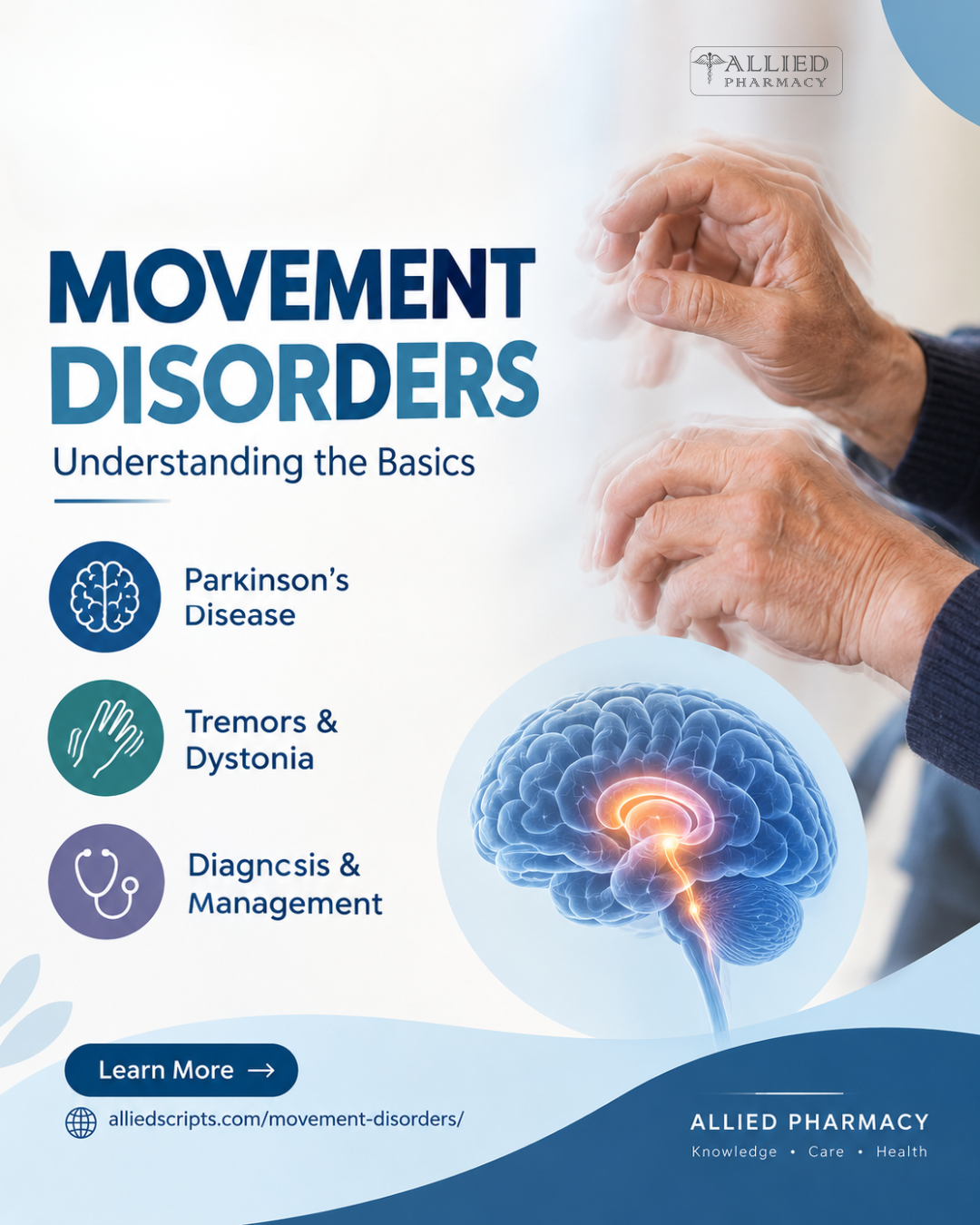
Movement disorders are neurological conditions that affect the way a person moves, maintains posture, or controls muscles. Some movement disorders cause movements to become unusually slow, while others can lead to shaking, muscle contractions, jerking, or other movements that a person cannot fully control. Because movement is involved in almost every part of daily life, these conditions can affect activities such as walking, writing, eating, speaking, and maintaining balance.
The term movement disorders covers a wide range of neurological conditions rather than one specific disease. Parkinson’s disease, essential tremor, dystonia, chorea, myoclonus, and several other conditions fall within this category. Their symptoms can look similar in some cases, which is why identifying the exact pattern of movement is an important part of diagnosis.
What Are Movement Disorders?
Movement disorders develop when the nervous system has difficulty controlling voluntary or involuntary movement. A person may experience too much movement, too little movement, or movement that occurs in an unusual pattern.
For example, Parkinson’s disease commonly involves slowness of movement, stiffness, tremor, and balance problems. Dystonia can cause muscles to contract involuntarily, producing twisting movements or unusual postures. Myoclonus is characterized by sudden, brief muscle jerks, while chorea involves quick, unpredictable movements.
The symptoms and their severity vary considerably from one person to another. Some conditions remain relatively mild for years, while others can gradually become more disabling.
Common Types of Movement Disorders
Parkinson’s Disease
Parkinson’s disease is one of the best-known movement disorders. It is a progressive neurological condition associated with changes in brain systems involved in movement control. Common motor symptoms include tremor, stiffness, slowness of movement, and problems with balance.
A resting tremor is often associated with Parkinson’s disease, although not every person with Parkinson’s experiences tremor in the same way. Diagnosis is generally based on medical history, symptoms, and neurological examination rather than one single test. Doctors may use additional investigations to rule out other causes or support a suspected diagnosis.
Essential Tremor
Essential tremor is another common movement disorder. It usually produces rhythmic shaking during movement or when maintaining a particular posture. The hands and arms are frequently affected, although tremor can also involve the head, voice, or other parts of the body.
Essential tremor is different from Parkinsonian tremor, although the two can sometimes be confused. The timing, pattern, and circumstances in which the shaking occurs help healthcare professionals distinguish between different tremor disorders.
Dystonia
Dystonia causes involuntary muscle contractions that can lead to twisting, repetitive movements, or abnormal postures. It may affect one part of the body, such as the neck, or involve several areas.
Cervical dystonia, for example, affects muscles in the neck and may cause the head to turn or tilt involuntarily. Dystonia can be uncomfortable and may interfere with work, walking, writing, speaking, or other everyday activities.
Myoclonus and Chorea
Myoclonus refers to sudden, brief jerks of a muscle or group of muscles. These movements can occur for different reasons and may be associated with neurological or other medical conditions.
Chorea, on the other hand, produces brief, irregular, involuntary movements that can appear to flow from one part of the body to another. The underlying cause is important because chorea may occur as part of several different neurological conditions.
Symptoms to Watch For
The symptoms of movement disorders depend on the specific condition. Some commonly reported signs include:
- Uncontrolled shaking or tremor
- Slowness of movement
- Muscle stiffness
- Repetitive or twisting movements
- Sudden muscle jerks
- Problems with balance
- Difficulty walking
- Abnormal posture
- Changes in speech or handwriting
- Difficulty performing precise movements
A single symptom does not automatically mean that someone has a movement disorder. For example, occasional shaking can have many possible causes. Persistent, worsening, or unexplained symptoms should be discussed with a qualified healthcare professional.
How Are Movement Disorders Diagnosed?
Diagnosis usually begins with a detailed medical history and physical or neurological examination. The healthcare professional may ask when the symptoms started, whether they occur at rest or during movement, what makes them better or worse, and whether other family members have similar symptoms.
Depending on the suspected condition, doctors may use blood tests, genetic testing, MRI or CT imaging, electromyography, or specialized scans. These tests may help identify another medical condition, rule out alternative explanations, or provide additional information about the nervous system.
For Parkinson’s disease, there is currently no single test that independently establishes the diagnosis. A neurological examination and the overall pattern of symptoms remain central to the diagnostic process.
Treatment Options
Treatment depends on the specific movement disorder, its cause, the severity of symptoms, and the person's overall health.
Medicines may be prescribed to reduce tremor, stiffness, abnormal muscle contractions, or other symptoms. Parkinson’s disease, for example, is often managed with medicines that improve dopamine-related movement problems. Levodopa is one of the important medicines used in Parkinson’s treatment.
For some forms of dystonia and tremor, botulinum toxin injections may be considered. Physical therapy, occupational therapy, and speech therapy can also play an important role in helping people maintain function and manage everyday challenges.
For selected people with severe symptoms that do not respond adequately to other treatments, procedures such as deep brain stimulation may be considered. DBS uses implanted electrodes to deliver electrical stimulation to specific brain areas involved in movement control and is used for conditions including Parkinson’s disease, essential tremor, and some forms of dystonia.
Living With a Movement Disorder
Living with a movement disorder often requires more than medication. Practical changes can make daily activities easier. Physical activity appropriate to the person's condition, rehabilitation, regular medical follow-up, and support from family can all be valuable.
Keeping track of symptoms can also help during medical appointments. Notes about tremor frequency, changes in walking, medication timing, sleep, or activities that make symptoms worse may give the healthcare team useful information.
It is also important not to change or stop prescribed medication without medical guidance. Some movement disorders require carefully adjusted treatment, and symptoms can change over time.
When Should You Seek Medical Advice?
New or persistent tremors, unexplained muscle contractions, repeated jerking, significant changes in walking, or increasing difficulty controlling movement deserve professional evaluation.
Early assessment does not necessarily mean that a serious neurological disorder is present. However, identifying the cause can help determine whether treatment, monitoring, rehabilitation, or further testing is appropriate.
Final Thoughts
Movement disorders are a diverse group of neurological conditions, and their symptoms can range from mild tremor to significant problems with movement and posture. Parkinson’s disease, essential tremor, dystonia, myoclonus, and chorea are only some examples.
Because different disorders can produce overlapping symptoms, accurate diagnosis is important before choosing treatment. With appropriate medical care, rehabilitation, medication, and in selected cases advanced therapies, many people can manage symptoms and maintain greater independence in daily life.

 English
 French
 Spanish
 Portuguese
 Deutsch
 Turkish
 Dutch
 Italiano
 Russian
 Romaian
 Portuguese (Brazil)
 Greek