


Real Estate App Development Trends to Watch in 2027
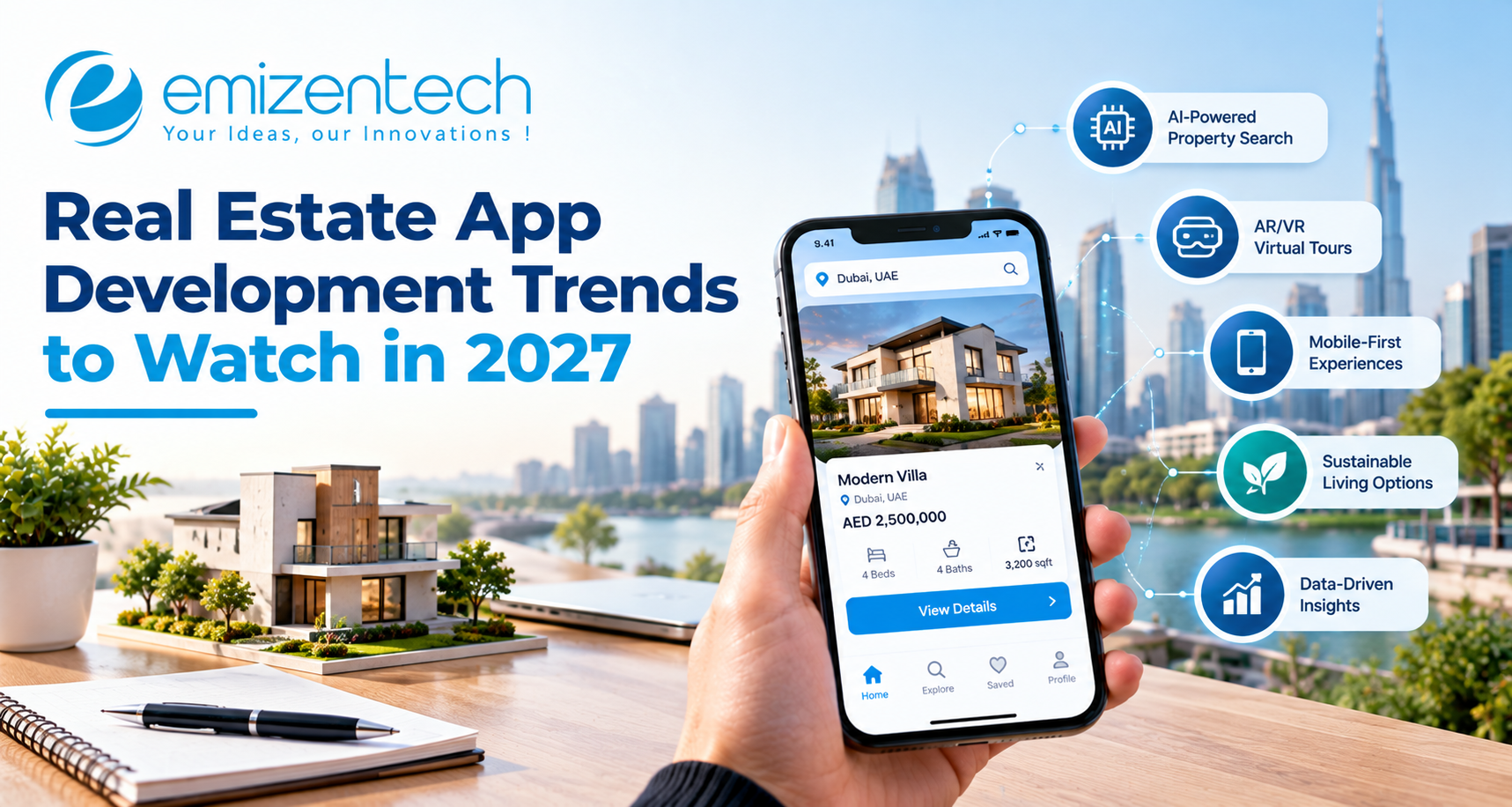
The property journey now starts and increasingly ends inside an app. Buyers browse on a phone, tour homes in 3D, compare mortgage options and sign paperwork without ever visiting an office. That is why real estate app development trends matter far more today than they did a few years ago. 2027 looks like a turning point because mature AI, cheaper immersive tech, and stricter data rules are all arriving together. This guide ranks ten trends by impact, then looks at what comes after 2027, so you can decide what deserves a budget first.
What Is Driving Real Estate App Innovation in 2027?
Three forces are pulling in the same direction. First, AI has moved from demo to dependable, so assistants, valuation models and recommendation engines can now sit inside real estate app development projects without heavy custom research. Second, capture cameras, 3D scanning, and AR tooling have become cheap enough for small brokerages, which pushes immersive tours from premium extra to baseline expectation. Third, privacy and AI disclosure rules are tightening across regions, forcing teams to design consent and data handling properly from the start. Together, these shifts change what users expect and what regulators accept. Budgets matter too, and a clear view of the real estate app development cost helps teams decide which features to fund first.
Top Real Estate App Development Trends in 2027
Here are the ten shifts shaping how property apps get built in 2027, ordered from the highest expected impact on users and revenue down to the smaller yet useful bets.
Agentic AI Assistants Handle First Contact
Assistants now qualify leads, book viewings, answer listing questions, and nudge buyers through paperwork without a human in the loop, which cuts response time and keeps serious prospects from drifting away.
Predictive Pricing and Personalization
Models learn from saved searches, dwell time, and neighborhood data to suggest homes people actually tour, while valuation engines flag fair prices and rent forecasts before an agent picks up the phone.
3D Tours, AR, and Digital Twins
Cheaper capture tools make walkthroughs and furniture overlays standard, so remote buyers can judge layout and scale from their phone and shortlist fewer homes for physical visits and wasted weekends.
Generative AI for Listings and Staging
Apps draft listing descriptions, virtually stage empty rooms, and clean up photos in seconds, helping agents publish faster, though clear labels on edited images are becoming a trust and compliance expectation.
Voice and Conversational Search
Users increasingly describe what they want in plain language, such as a quiet two-bedroom near a metro stop, and expect the app to translate that into filters, maps, and ranked results.
In-App Digital Transactions
E-signatures, document vaults, mortgage pre-approval, and payment rails are moving inside the app, shortening the gap between a viewing and a signed offer while leaving a much cleaner audit trail.
Smart Home and IoT Integration
Property apps are linked with smart locks, meters, and sensors so landlords can grant access, track energy use, and catch maintenance issues early, turning a listing app into a daily-use tool.
Privacy-First Data Handling
Tighter data rules push teams toward consent controls, minimal data collection, and secure storage, and apps that handle location and financial details carefully earn the trust that keeps users returning.
Fractional and Tokenized Ownership
Some platforms let investors buy small shares of rental property through digital ownership records. Demand exists, but regulation and liquidity vary widely, so it remains a selective bet, not a standard feature.
Sustainability and Energy Insights
Buyers and tenants want energy ratings, utility estimates, and retrofit data inside the listing, so apps that surface efficiency details help people compare homes on running costs, not only price.
What's Next for Real Estate Apps After 2027?
Beyond 2027, the app becomes less of a search tool and more of a long-term property companion. These signals are worth tracking now so your roadmap does not age badly.
-
Autonomous deal agents: AI that handles scheduling, document chasing, and offer comparison under human approval, shifting human agents toward negotiation, advice, and relationship work.
-
Lighter mixed reality: As headsets and glasses get cheaper and more comfortable, shared virtual walkthroughs with agents and co-buyers may move from novelty to routine.
-
Verified digital property records: Shared records for ownership, inspections, and maintenance history could cut due diligence time, provided regions agree on standards and legal recognition.
-
Climate and risk scoring: Flood, heat, wildfire, and insurance cost layers will probably sit beside price in listings as buyers weigh long-term exposure.
-
Modular architecture: Apps built on flexible APIs adapt faster as these shifts arrive, which is why many owners rely on real estate app development services that plan for modular upgrades from day one.
Conclusion
The ten shifts above point the same way: faster answers, richer visuals, safer data, and fewer steps between a search and a signed deal. You do not need all of them at once. Start with the ones that remove the most friction for your users, test them in a small release, then build outward. Teams that treat privacy and clear AI disclosure as part of the product, not an afterthought, will carry far less risk. Many of these trends are already appearing in real-world projects delivered by EmizenTech, reflecting how quickly expectations are changing across the property technology sector.
Frequently Asked Questions
1. What are the biggest real estate app development trends in 2027?
AI assistants and personalization lead, followed by 3D and AR tours, in-app transactions, smart home links, and privacy-first design.
2. How will AI change real estate apps?
AI will handle first contact, suggest listings, estimate prices, and process documents, so users get faster answers and agents spend less time on routine work.
3. Are AR/VR and 3D tours worth adding?
Usually yes. Start with 3D walkthroughs, which cost less, then add AR staging once usage data shows buyers actually use it.
4. Which technologies will power real estate apps in 2027?
Machine learning, computer vision, cloud, 3D capture, AR, IoT, and secure APIs, which are real estate app development solutions combined into one stack.
5. Is tokenized real estate a real trend or hype?
A bit of both. Fractional ownership platforms exist, but regulation and liquidity vary, so treat it as a selective product, not a must-have feature.

 English
 Arabic
 French
 Spanish
 Portuguese
 Deutsch
 Turkish
 Dutch
 Italiano
 Romaian
 Portuguese (Brazil)
 Greek