


Copywriting That Converts: How to Turn Website Visitors into Customers
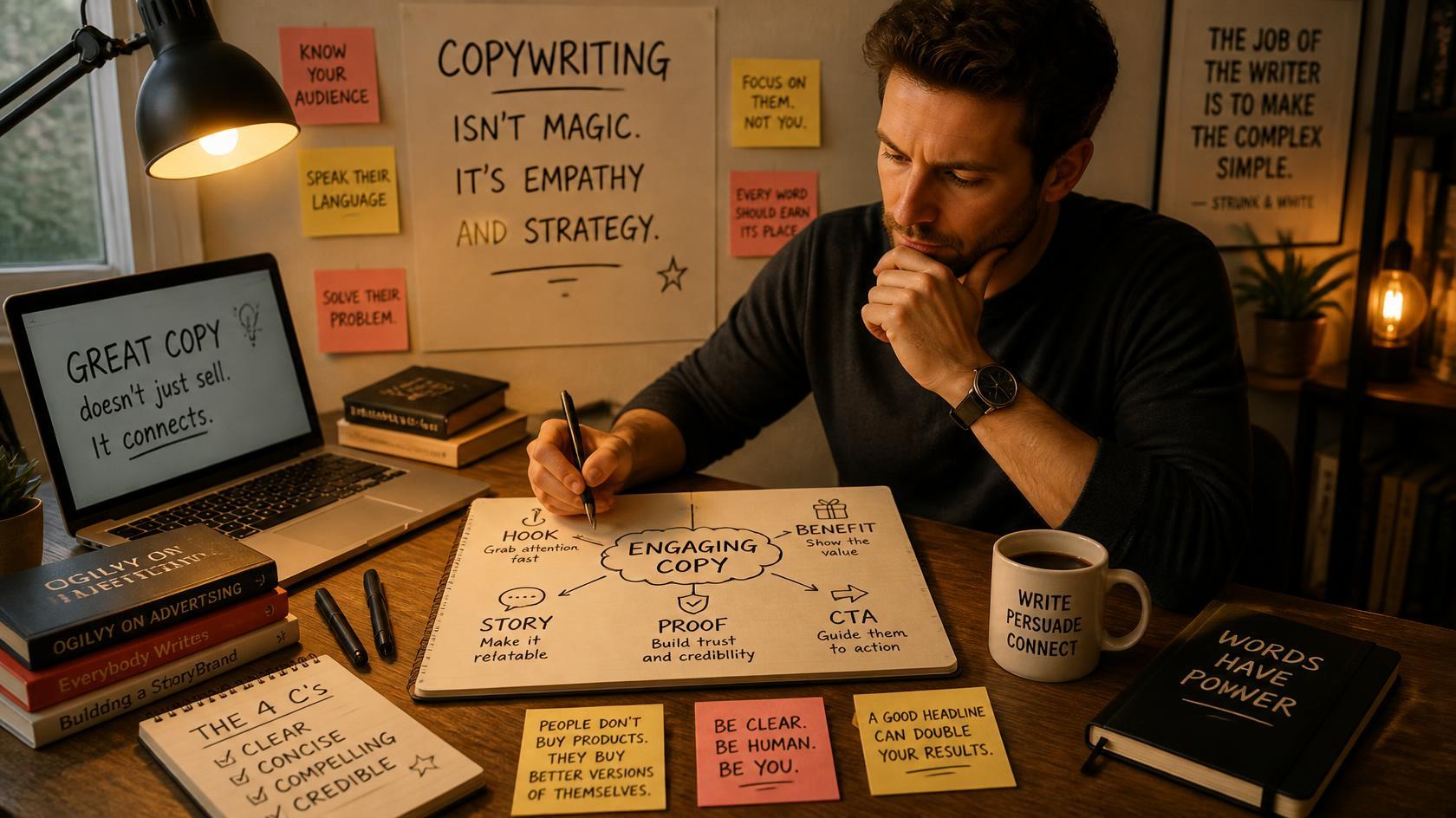
Introduction
Traffic doesn't pay the bills; customers do. The words on your website are the deciding factor in how many of those visitors actually turn into paying clients. Many businesses pour massive budgets into ads, SEO, and social media to drive people to their site, only to watch most of them bounce within seconds because the messaging misses the mark.
Your design might look stunning, and your product might be world-class, but if your headline is fuzzy, your benefits are buried, and your next steps are unclear, people will leave. They rarely tell you why; they simply hit the back button and find a competitor who made things easier to understand.
This is where conversion copywriting comes in. It is the art of using words to guide a visitor from simple curiosity to total confidence and, ultimately, to action. Great copy isn't about clever slogans or high-pressure sales tactics. It’s about answering questions, smoothing over doubts, and making the next step feel like the easiest thing in the world.
In this guide, we’ll break down exactly what conversion copywriting is, why it’s a game-changer for your bottom line, and how to write copy that actually works. We’ll also cover the key areas of your website where words matter most and wrap up with answers to common questions.
What Is Conversion Copywriting?
At its core, conversion copywriting is writing designed to trigger a specific response—whether that’s buying a product, booking a consultation, requesting a quote, or joining an email list. While general website writing focuses on informing, conversion copy focuses on persuading by showing the reader exactly why your offer is the right solution for them.
A "conversion" is just the moment a visitor does what you intended them to do. Conversion copy is built entirely around that moment, and it usually shares a few key traits:
· Customer-focused: It focuses on the reader’s problems and goals rather than just bragging about the company.
· Benefit-led: It doesn't just list features; it explains what those features actually do for the customer.
· Clear and specific: It swaps vague buzzwords like "top-tier service" for plain language and concrete details.
· Action-oriented: It tells the reader exactly what to do and what to expect once they do it.
· Trust-building: It uses real proof—like reviews, results, and guarantees—to eliminate hesitation.
It’s also helpful to distinguish this from other types of writing. Brand writing establishes your company's personality, and SEO writing helps you get found in search results. Conversion copywriting is what happens once they arrive, helping them make a decision. The most successful websites blend all three: they are easy to find, they sound like the brand, and they move people to act.
Crucially, good copywriting isn't manipulation. It’s clarity with a purpose. When your words align with what a visitor is searching for and honestly demonstrate how you can help, taking the next step feels completely natural.
Why Copywriting Matters for Website Conversions
Think of your copywriting as your salesperson when you aren't in the room. Since visitors can't ask you questions in real-time, your page has to do the heavy lifting. Here is why strong copy is so vital:
· It maximizes your traffic value. If your page converts a higher percentage of visitors, every dollar spent on ads or SEO goes much further. Better copy can often boost your revenue without you having to spend a cent more on traffic.
· It kills confusion instantly. People decide in a heartbeat whether a page is relevant to them. A sharp headline and a straightforward explanation keep them engaged, while vague wording drives them away.
· It builds immediate trust. It’s hard to buy from a stranger. By providing specific details, honest claims, and clear policies, you reduce the perceived risk for the visitor.
· It tackles objections before they stall the sale. Common concerns about price, shipping, or suitability can be addressed right on the page, preventing the visitor from leaving to "think about it."
· It amplifies your other marketing efforts. Whether it's an ad, an email, or a social post, those channels are all driving people to your site. Weak copy on the landing page essentially wastes all that hard work.
· It helps you stand out. In a crowded market, most businesses sound exactly the same. Customer-focused, distinctive copy makes you memorable and much easier to choose.
· It allows for constant improvement. You can test different headlines, buttons, and offers, meaning your results can steadily climb over time through simple refinement.
How to Write Copy That Converts
Whether you’re working on a homepage or a product page, follow these steps to get better results:
1. Know your reader. Talk to your actual customers and read their reviews. Pay attention to the exact language they use to describe their struggles. Write to one specific person, not a faceless crowd.
2. Stick to one goal per page. Decide on the single most important action you want them to take. A page that asks for five different things usually ends up getting none.
3. Write a headline that promises a benefit. Tell the visitor what they get and why it matters. A great headline is specific, easy to grasp, and directly related to why they clicked.
4. Lead with benefits, then back them up with features. Explain the transformation—like saving time or removing stress—and then provide the technical details that make the promise believable.
5. Keep it simple and direct. Use short sentences and everyday language. A conversational tone feels more honest and is much easier to read quickly.
6. Back it up with proof. Use real testimonials, case studies, impressive numbers, or client logos. Proof turns a mere claim into undeniable evidence.
7. Answer objections proactively. Address concerns regarding price, process, or risk openly—often through a short FAQ near the decision point.
8. Use a clear Call to Action (CTA). Instead of a boring "Submit," use action-oriented phrases like "Get my free quote" or "Book my call." Repeat these at natural breaking points down the page.
9. Format for easy scanning. Most people don't read every word; they scan. Use short paragraphs, descriptive subheadings, and bullet points to make your message digestible.
10. Test and refine. Never stop tweaking. Small changes in wording can lead to massive changes in conversions. Try testing different headlines, button text, and page layouts over time, keeping only the versions that actually drive more inquiries.
Writing persuasive copy is a demanding process that requires deep research, specific skills, and a significant time investment—time that most business owners would much rather spend running their companies. Dyprocs Media Marketing, the digital marketing division of Dyprocs Pvt Ltd, specializes in website content, copywriting, SEO writing, AI-assisted content creation, and lead generation. Their team crafts pages designed to rank well in search engines, read naturally, and guide visitors toward taking action. You can find out more at dyprocsmediamarketing.com.
Where Your Copy Matters Most
Not every sentence on your site carries the same impact. You should pay extra attention to these specific areas:
· Headlines and subheadlines: These are usually the first things people read. Together, they need to explain what you offer, who you serve, and why they should care.
· Calls to action (CTAs): This is where decisions are made. Use specific wording on your buttons and links so the next step is unmistakable.
· Product and service descriptions: Focus on outcomes rather than just technical specs. Explain what the product actually does for the buyer and why it’s the right choice for them.
· Testimonials and case studies: Real stories—complete with names, specific details, and measurable results—are far more convincing than generic praise.
· Forms: Use short instructions, friendly labels, and a quick note explaining what happens after they hit submit to reduce user hesitation.
· FAQs: Placing these near your pricing or checkout area helps clear up any last-minute doubts.
· Search titles and descriptions: This is the text people see in search results. Write it clearly and use the actual language your customers use to ensure they click.
· Error and confirmation messages: Even small moments, like a well-crafted thank-you page, can reassure customers and encourage them to move forward.
A simple trick is to read each page out loud. Ask yourself: Would a stranger immediately understand what I offer, why they should trust me, and what they should do next? If the answer is "no" to any of those, that is exactly where you need to start editing.
Conclusion & FAQs
Copy that actually converts is clear, honest, and entirely focused on the customer. It knows its audience, leads with benefits, backs up claims with evidence, addresses concerns, and makes the next step effortless. Because high-quality copy multiplies the value of the traffic you're already getting, it is one of the most cost-effective upgrades any business can make. Start by refining your headlines and CTAs, then work your way down the page, testing as you go. If you need professional help, Dyprocs Media Marketing is ready to step in.
Frequently Asked Questions
What is a good conversion rate for a website?
It depends heavily on your industry, your specific offer, where your traffic comes from, and your price point. Instead of chasing a magic number, focus on measuring your own baseline and working to improve it steadily.
How long should website copy be?
It should be as long as necessary to answer the visitor's questions, and not a word longer. Simple, low-cost offers generally require less text than complex or high-ticket services.
Should I focus on SEO or conversion copy?
You need both. SEO brings the right people to your doorstep, while conversion copy convinces them to stay and act. If you neglect one, you're wasting the effort you put into the other.
Can AI write my website copy?
AI is great for brainstorming and building initial drafts, but it still requires a human touch. You need someone who understands your customers, your unique voice, and your facts to edit and verify everything before it goes live.
How do I know if my new copy is working?
Track your inquiries, sales, form submissions, and button click-through rates before and after you make a change. Try to test only one variable at a time so you can pinpoint exactly what caused the improvement.

 English
 Arabic
 French
 Spanish
 Portuguese
 Deutsch
 Turkish
 Dutch
 Russian
 Romaian
 Portuguese (Brazil)
 Greek