


What Causes Slow-Rising hCG Levels in Early Pregnancy?
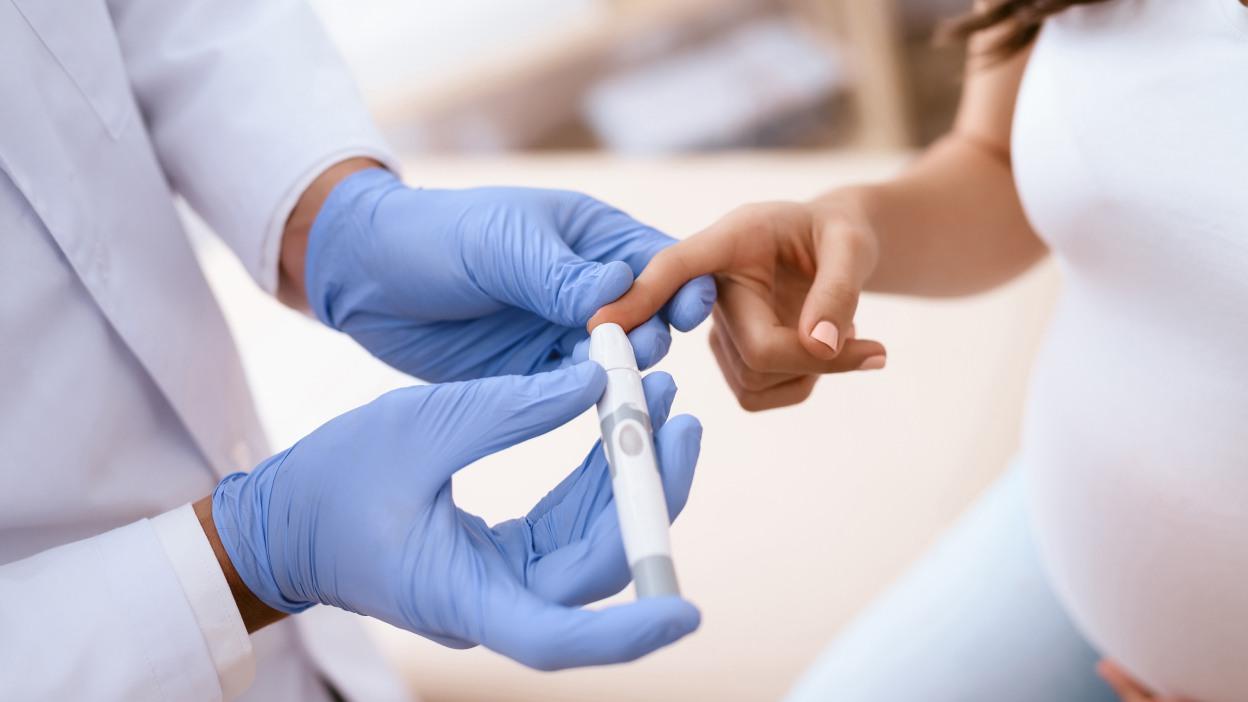
Seeing your pregnancy blood test results show a slower-than-expected increase in hCG can be worrying, especially when you are hoping for reassurance that everything is progressing normally. You may wonder whether low or slowly rising hormone levels indicate a miscarriage, an ectopic pregnancy, or simply an early pregnancy that needs more time to develop.
Human chorionic gonadotropin (hCG) is an important hormone during early Pregnancy Blood Test Dubai. Healthcare professionals sometimes measure it more than once to understand how its concentration changes over time. However, hCG levels do not increase at exactly the same rate in every pregnancy, and a slow rise does not automatically mean something is wrong.
What Are Slow-Rising hCG Levels?
hCG is a hormone produced by developing placental tissue after implantation. It supports early pregnancy by helping maintain the hormonal environment needed for development.
A quantitative beta-hCG blood test measures the amount of this hormone in your bloodstream, usually in mIU/mL.
When healthcare professionals refer to slow-rising hCG, they mean that the hormone concentration is increasing more gradually than expected for the circumstances.
To identify a trend, doctors usually compare at least two quantitative hCG measurements taken at different times. A single blood test cannot establish whether hCG is rising slowly because it provides only one measurement.
Does hCG Have to Double Every 48 Hours?
No. The traditional belief that hCG must double every 48 hours in every healthy pregnancy is an oversimplification.
In early pregnancy, hCG generally increases, but the rate of change varies. The expected minimum rise also depends partly on the starting hormone concentration.
Clinical guidance often uses approximate minimum expected increases over 48 hours of:
| Initial hCG concentration | Approximate minimum rise over 48 hours |
|---|---|
| Below 1,500 mIU/mL | 49% |
| 1,500–3,000 mIU/mL | 40% |
| Above 3,000 mIU/mL | 33% |
These are clinical reference points, not absolute rules for diagnosing pregnancy outcomes. Individual circumstances, laboratory methods, symptoms, and ultrasound findings all matter.
Six Possible Reasons Your hCG Levels Are Rising Slowly:
A slower increase in beta-hCG can have several explanations. Some relate to pregnancy timing, while others may require closer medical evaluation.
1. You May Be Earlier in Pregnancy Than You Think
Incorrect pregnancy dating is one possible explanation for unexpected hCG results.
If you ovulated later than expected, fertilization and implantation may also have occurred later. Your hCG level may therefore be lower than anticipated when compared with a chart based on your last menstrual period.
This is particularly common among people with irregular menstrual cycles or uncertain ovulation dates.
Your healthcare provider may review your cycle history and recommend repeat blood testing or an appropriately timed ultrasound.
2. Normal Biological Differences Between Pregnancies
Every pregnancy develops differently. Hormone production can vary between individuals, and hCG does not follow an identical pattern in every healthy pregnancy.
Some pregnancies show a less dramatic increase than others while still developing normally.
This is why doctors avoid making conclusions based only on comparisons with online hCG charts or another person's laboratory results.
3. An Early Pregnancy That May Not Be Developing Normally
A slow-rising hCG pattern can sometimes indicate an early pregnancy that is not progressing as expected.
If an embryo stops developing, hormone production may become slower, remain relatively stable, or eventually decrease.
However, a slow rise alone cannot confirm a miscarriage. Your healthcare provider may need additional blood tests and ultrasound examinations before determining what is happening.
4. Possible Ectopic Pregnancy
An ectopic pregnancy occurs when a fertilized egg implants outside the uterus, most commonly in a fallopian tube.
Ectopic pregnancies can produce hCG, but hormone levels may rise more slowly than expected, remain relatively unchanged, or sometimes decrease.
Importantly, an ectopic pregnancy cannot be ruled out simply because hCG is increasing.
If you have a positive pregnancy test but an ultrasound cannot yet identify the pregnancy's location, your healthcare provider may classify the situation as a pregnancy of unknown location and arrange close follow-up.
5. Differences in Testing Conditions or Laboratory Methods
Although quantitative beta-hCG tests are widely used, laboratory methods and measurement conditions can differ.
If blood samples are tested at different laboratories, small variations in results may complicate comparisons.
For this reason, healthcare professionals may prefer repeat measurements using the same laboratory and testing method when practical.
6. A Recent Pregnancy or Fertility Treatment
Recent childbirth, miscarriage, or pregnancy termination can leave detectable hCG in the bloodstream for some time.
Fertility treatments involving hCG injections may also affect test results because the medication itself can contribute to detectable hormone levels.
If you have undergone fertility treatment or recently experienced a pregnancy, provide your healthcare professional with those details before interpreting your hCG trend.
How Can You Tell Whether hCG Is Rising Appropriately?
The most useful information comes from comparing quantitative beta-hCG results over time rather than focusing on one isolated number.
For example, consider these simplified patterns:
| First test | Second test after 48 hours | General pattern |
|---|---|---|
| 100 mIU/mL | 160 mIU/mL | Increasing |
| 100 mIU/mL | 120 mIU/mL | Slower increase |
| 100 mIU/mL | 100 mIU/mL | Relatively unchanged |
| 100 mIU/mL | 70 mIU/mL | Decreasing |
These examples illustrate hormone patterns only. They cannot diagnose a healthy pregnancy, miscarriage, or ectopic pregnancy.
Even when hCG rises within an expected clinical range, additional assessment may be needed to confirm pregnancy location and development.
What Will Your Doctor Do If Your hCG Is Rising Slowly?
If your pregnancy blood test shows a slower-than-expected increase, your healthcare provider may use a combination of investigations rather than relying on one result.
Step 1: Review Your Pregnancy Dates and Symptoms
Your doctor may ask about your last menstrual period, menstrual cycle regularity, possible ovulation date, and any symptoms such as bleeding or abdominal pain.
This information helps determine whether your pregnancy may be earlier than initially estimated.
Step 2: Repeat the Quantitative Beta-hCG Test
A repeat blood test is often recommended after approximately 48 hours when clinically appropriate.
The purpose is to establish whether hCG is increasing, decreasing, or remaining relatively stable.
The timing may differ depending on your symptoms, previous results, and clinical assessment.
Step 3: Arrange an Ultrasound Examination
An ultrasound can provide information that a blood test cannot.
Depending on the pregnancy stage, it may help identify:
-
Whether a gestational sac is visible inside the uterus.
-
Whether a yolk sac or embryo can be identified.
-
Whether embryonic cardiac activity is visible when expected.
-
Whether there are signs of an ectopic pregnancy.
-
Whether a repeat scan is needed.
A very early ultrasound may not provide a definite answer. If findings are uncertain, your doctor may recommend another scan after an appropriate interval.
Step 4: Continue Follow-Up Until the Situation Is Clear
When the pregnancy location or outcome is uncertain, follow-up may involve additional hCG measurements and ultrasound examinations.
Do not stop attending recommended appointments simply because your hCG level begins to decrease. Falling levels do not automatically exclude an ectopic pregnancy.
Can Slow-Rising hCG Levels Still Result in a Healthy Pregnancy?
Yes, a slower-than-expected increase does not automatically mean that a pregnancy will end in miscarriage.
Pregnancy dating errors, individual biological differences, and variations in testing can all influence how results appear.
However, a persistently slow rise can also indicate a pregnancy complication. The important point is that no single hCG trend can provide a complete diagnosis.
Your healthcare provider will consider the complete clinical picture, including symptoms, serial beta-hCG measurements, and ultrasound findings.
Avoid assuming either a positive or negative outcome based on one blood test.
Symptoms You Should Never Ignore:
While waiting for repeat pregnancy blood tests or ultrasound results, pay attention to how you feel.
Seek urgent medical attention if you experience:
-
Severe or worsening abdominal or pelvic pain, particularly on one side.
-
Shoulder-tip pain.
-
Heavy vaginal bleeding.
-
Dizziness or fainting.
-
Severe weakness or feeling close to collapse.
These symptoms may indicate an ectopic pregnancy or another serious complication.
Do not wait for your next scheduled beta-hCG test if severe symptoms occur. An ectopic pregnancy can be dangerous even when hCG levels are low or rising.
Common Mistakes to Avoid When Interpreting hCG Results:
Understanding what not to do can be just as important as understanding the test itself.
Do not rely on the doubling rule alone: Healthy pregnancies do not all follow an identical 48-hour pattern.
Do not compare your results with someone else's: Individual hormone concentrations vary significantly.
Do not assume slow-rising hCG confirms miscarriage: Additional assessment is necessary before making that diagnosis.
Do not use hCG to determine pregnancy location: Ultrasound and clinical assessment are needed to evaluate this.
Do not ignore symptoms: Severe pain, heavy bleeding, shoulder-tip pain, or fainting require urgent medical attention.
Frequently Asked Questions:
1. What Is Considered a Slow Rise in hCG?
A rise that is lower than expected for the starting hCG concentration may be considered slower than anticipated. Doctors interpret this using clinical reference points, symptoms, and ultrasound rather than one universal doubling rule.
2. Can hCG Rise Slowly and Still Lead to a Healthy Pregnancy?
Yes. Some pregnancies with slower-than-expected early increases may still progress. However, a slow rise can also indicate a complication, so medical follow-up is important.
3. Does Slow-Rising hCG Always Mean Miscarriage?
No. It may be associated with an early pregnancy complication, but it does not independently diagnose miscarriage. Further testing and clinical assessment are needed.
4. Can an Ectopic Pregnancy Cause Slow-Rising hCG?
Yes. Ectopic pregnancies can produce slowly rising, plateauing, or decreasing hCG levels. A positive test with an uncertain pregnancy location requires appropriate medical follow-up.
5. How Often Should I Repeat My hCG Blood Test?
A repeat quantitative beta-hCG test is commonly performed around 48 hours after the first measurement when clinically appropriate. Your healthcare provider will determine the best schedule for your circumstances.
6. Should I Worry If My hCG Does Not Double?
Not automatically. The expected rate of increase depends on the starting hormone concentration and pregnancy stage. Your doctor should interpret the complete pattern rather than applying a fixed doubling requirement.
Conclusion: Slow-Rising hCG Needs Careful Evaluation, Not Immediate Assumptions
Slow-rising hCG levels in early pregnancy Lab tests can have several explanations, including incorrect pregnancy dating, normal biological variation, early pregnancy loss, and ectopic pregnancy. Although a slower increase may require closer monitoring, it does not automatically mean that a pregnancy is unhealthy.
The most reliable approach is to review your quantitative beta-hCG results with a healthcare professional, repeat testing when recommended, and arrange ultrasound assessment at the appropriate time.
Remember that hCG is only one part of early pregnancy evaluation. Your symptoms, medical history, and imaging findings are equally important. Follow your recommended care plan and seek urgent medical attention if you develop severe pain, heavy bleeding, shoulder-tip pain, or fainting.

 English
 Arabic
 French
 Spanish
 Portuguese
 Deutsch
 Turkish
 Dutch
 Italiano
 Russian
 Portuguese (Brazil)
 Greek