


Floating Single Sink Bathroom Vanities: A Complete Guide to Wall-Mounted Style
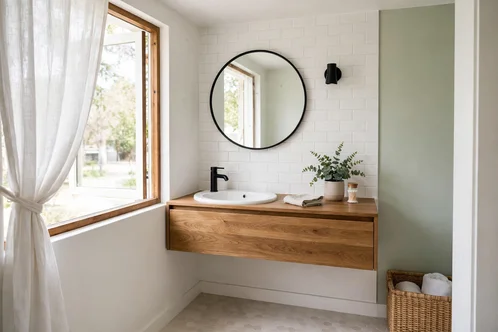
Few upgrades change the feel of a bathroom as quickly as lifting the vanity off the floor. A floating single sink vanity — a basin unit fixed directly to the wall, with clear floor visible beneath it — turns a room that once felt boxed-in into one that feels open, calm and deliberately designed. It is a style that began in boutique hotels and modern apartments, but it has become a practical favourite for ordinary homes too, because it solves real problems: tight floor space, awkward cleaning, and rooms that feel smaller than they are.
This guide walks through everything a homeowner needs to know before choosing one. We will look at the genuine benefits of the wall-mounted format, the unglamorous but essential questions of wall support and plumbing, how storage works when a unit has no legs and no floor-standing cabinet, and how to size and style the vanity so it suits a small bathroom or cloakroom. Along the way, we will draw on the approach taken by specialist retailers such as veilbathvanity.com, where solid wood vanities are made in both floating and freestanding styles, in widths from 20 to 84 inches, with white and black finishes and single or double sink options — a useful reminder that "floating" is not one fixed product, but a whole family of designs.
Whether you are renovating a family bathroom or squeezing a basin into the smallest room in the house, the principles below will help you choose with confidence.
Why Choose a Floating Single Sink Vanity?
The most obvious benefit is visual space. Because the floor continues uninterrupted beneath the unit, the eye reads the full footprint of the room, and even a compact bathroom feels larger. There are no legs breaking up the floor line and no shadowed gap where a cabinet meets the tiles. In a small room, that single effect can be worth more than any decorative trick.
A single sink layout brings its own advantages. One basin means one set of fittings, a simpler plumbing run, and — importantly — more uninterrupted worktop space on either side of the bowl for soap, toothbrushes and the everyday clutter of a morning routine. In a household where the bathroom is mainly used by one or two people at a time, a single sink is usually the honest, comfortable choice, and it leaves the vanity itself narrower, which is exactly what compact rooms need.
There are practical gains too. With nothing standing on the floor, the whole floor area can be mopped in one pass. There is no cabinet base to trap moisture, no plinth to swell if water pools against it, and no dark corners where dust gathers unseen. For homes with underfloor heating, a wall-mounted unit also keeps the warm floor clear and working as intended.
Finally, there is flexibility of height. A floor-standing vanity arrives at a fixed height; a floating unit is fixed at the height that suits the people who use it. Set it a little higher for tall adults, or a touch lower in a family bathroom, and the daily routine becomes noticeably more comfortable.
Wall Support and Installation: The Part Nobody Sees
A floating vanity is only as good as the wall behind it, and this is the stage where careful planning matters most. A solid wood vanity filled with a basin, water, and stored items carries real weight, and that weight hangs on the fixings rather than resting on the floor. Before anything is ordered, the wall needs an honest assessment.
Solid masonry walls — brick or block — are the straightforward case: they can take heavy-duty fixings and spread the load well. Stud walls need more thought. The unit should be fixed into the timber studs themselves, not just the plasterboard, and where the studs do not fall in the right places, a horizontal timber batten or a sheet of plywood fitted behind the plasterboard can spread the load across several studs. This reinforcing work is far easier to do before tiling than after, which is why floating vanities reward being planned at the start of a renovation rather than added as an afterthought.
Most wall-mounted vanities hang on a metal rail or a pair of sturdy brackets screwed to the wall; the cabinet then hooks or bolts onto that hardware, which allows small adjustments for level. Use the fixings the manufacturer specifies, check the wall is flat where the unit will sit, and confirm the finished height before drilling — a few millimetres of slope are obvious once a basin is full of water.
If you are in any doubt about the wall, this is the moment to involve a professional installer. The installation itself is not complicated, but it is unforgiving: done properly, the unit feels as solid as any floor-standing cabinet; done casually, it will creak, shift and eventually pull at its fixings.
Plumbing for a Wall-Mounted Basin
Plumbing a floating vanity differs from a floor-standing one in one visible way: there is nowhere to hide untidy pipework. On a traditional unit, supplies and waste disappear into the cabinet,t and nobody thinks about them again. Under a floating vanity, the trap and pipes sit in open view, so they need to be neat — and ideally chosen to look neat.
The neatest solution is a bottle trap, the compact cylindrical trap designed to be seen, finished in chrome or a colour that matches the taps. It keeps the area under the basin tidy and leaves the open floor feeling genuinely open. Flexible supply hoses can be kept short and routed close to the wall, and the waste should ideally exit through the wall rather than dropping to the floor, which preserves the floating effect completely.
Access deserves a thought too. Inside the cabinet, the back panel is usually cut around the pipework, and drawers in floating vanities are often shaped with a U-shaped cut-out so they close around the trap while still offering usable storage either side. Before ordering, check the position of your existing waste and supply points against the internal layout of the vanity you like; moving a waste outlet a short distance is usually simple for a plumber at first-fix stage, but it is much harder once the room is tiled and finished.
One last detail: because the underside of the unit is visible, take a moment to look at the vanity from a low angle — from the bath, for example — and make sure pipes, fixings and the underside itself present a tidy picture from every viewpoint, not just standing height.
Storage Without a Floor-Standing Cabinet
The common worry about going wall-mounted is storage: if the cabinet floats, surely it holds less? In practice, a well-designed floating vanity stores about as much as a floor-standing unit of the same width, because the storage lives in the same place in both designs — in drawers and shelves inside the box. What changes is only what happens underneath it.
Deep drawers are the most useful format for a single sink vanity. A top drawer, notched around the trap, suits the small daily items — toothpaste, razors, medicines, make-up — while a deeper lower drawer swallows towels, spare bottles and a hairdryer without stacking. Drawers beat cupboard doors in a bathroom because everything is visible from above; nothing disappears into a dark corner behind the pipes.
It is worth being realistic about what genuinely needs to live in the vanity. Cleaning products, bulk refills, and rarely used items are often better in a separate tall cabinet or a mirrored wall cabinet above the basin, which pairs naturally with the floating look and adds storage without touching the floor either. Keep the vanity itself for the things you reach for every day, and even a modest unit will feel generous.
When browsing floating bathroom vanities, compare internal layouts rather than outside photographs: drawer depth, the size of the plumbing cut-out, and whether the drawer boxes are solid and smooth-running will matter far more over ten years than a few centimetres of extra width.
Sizing for Small Bathrooms and Cloakrooms
Floating vanities come into their own where floor space is scarce, and solid wood ranges typically run from compact 20-inch units up to wide 84-inch pieces — the floating format spans the whole spectrum. For a cloakroom or en-suite, the narrow end of that range is transformative: a unit around 20 to 24 inches wide gives you a proper basin and a drawer for essentials while leaving the room feeling open rather than fitted-out.
When measuring, work through four dimensions. First, width: leave a little breathing room on either side rather than wedging the unit wall-to-wall, which reads as cramped. Second, depth: compact vanities are often shallower than standard ones, which helps in narrow rooms where every inch of floor in front of the basin counts. Third, height: mark the proposed top edge of the basin on the wall with tape and mime washing your hands — comfort at this stage is free to adjust, and expensive later. Fourth, the space below: leaving roughly a foot or more of clear floor beneath the unit maximises the light, airy effect and leaves room for a mop, a small stool for children, or simply your feet as you stand at the basin.
Door swing and traffic flow matter as well. Stand where the bathroom door opens, where the shower screen sits, and where someone will stand to dry their hands, and check the vanity does not crowd any of them. In very small rooms, pairing a floating vanity with a wall-hung toilet and a large mirror completes the trick: everything floats, the floor runs clear, and the room feels a size larger than it is.
Among single sink bathroom vanities, the compact sizes are usually the sweet spot for cloakrooms, while mid-range widths suit a main bathroom where one basin is enough but worktop space is welcome.
Cleaning Underneath: The Everyday Dividend
Ask owners of floating vanities what they like most after a year, and many give an unglamorous answer: cleaning. The area under and around a floor-standing vanity is a trap for hair, dust, and splashed water, and the junction between cabinet and floor is where bathroom grime quietly builds. A floating unit removes the junction entirely.
A mop or vacuum passes straight under the unit in one movement. Splashes that land beneath the basin are visible immediately rather than soaking unseen into a plinth, which protects both the floor and the vanity itself. For households with children — where bath water travels surprising distances — this openness is a genuine hygiene benefit, not just a convenience.
The vanity itself needs simple care. Solid wood should be wiped with a soft, slightly damp cloth and dried afterwards; standing water left on any timber surface is the enemy, so a quick wipe of splashes around the basin should become habit. Avoid abrasive pads and harsh chemical sprays on the finish, keep the area under the basin ventilated, and check the silicone seal where the unit meets the wall once in a while — a sound seal keeps water out of the fixing zone and everything behind the unit dry.
Style and Finish: Pairing the Vanity with the Room
Because a floating vanity presents a clean, unbroken face to the room, its finish carries a lot of visual weight — there are no legs or plinths to dilute it. White and black, the two classic finishes for solid wood vanities, pull a room in opposite directions, and both work beautifully when they are chosen for the room rather than from a photograph.
White lightens and quietens. It reflects light, suits small or windowless bathrooms, and sits comfortably with almost any tile, from pale stone to patterned floors. Black makes a statement: it anchors a light room, adds contrast against pale tiles and sanitaryware, and gives a larger bathroom a confident focal point. In both cases, keep the rest of the palette simple and let the vanity do the talking.
Hardware and taps tie the look together. Brushed brass warms up white and softens black; chrome keeps either finish crisp and modern; matt black fittings on a white unit add definition, while the same fittings on a black unit create a sleek, single-colour effect. A basin in white ceramic is the safe, timeless partner for both. Mirrors deserve a final word: a wide mirror amplifies the floating effect by reflecting the clear floor, and a small light beneath the vanity — a soft night-time glow on the floor below — is one of the most effective finishing touches in the whole design.
Common Mistakes, and a Buying Checklist
Most floating vanity disappointments trace back to a handful of avoidable errors. The first is fixing into plasterboard alone; the second is choosing the vanity before checking where the waste and water supplies actually are. Others are subtler: setting the basin too high or low for the people using it, ordering a unit so deep that a narrow room becomes awkward, picking a spout that splashes because its reach does not suit the basin, and forgetting that the underside and trap are on display, so cheap visible pipework spoils an otherwise smart installation.
Before you buy, work through this short checklist:
- Wall type identified, and a fixing plan (studs, battens or masonry fixings) agreed before tiling.
- Waste and supply positions measured and matched against the vanity's internal layout.
- Width, depth, and finished basin height tested against the room — and against the users.
- Drawer layout checked: depth, plumbing cut-out, and room for daily essentials.
- Trap and fittings chosen as visible pieces, in a finish that matches the taps.
- Finish — white or black — chosen for the room's light and size, with hardware to match.
- Sealant and aftercare planned: soft cloths, prompt wiping, no abrasives on the wood.
Conclusion
A floating single sink vanity earns its popularity honestly: it makes small rooms feel bigger, cleaning quicker, and daily routines more comfortable, while giving the bathroom a calm, architectural quality that floor-standing furniture rarely achieves. The secrets to success are unglamorous — a wall that is properly prepared, plumbing that is planned to be seen, and a size and height chosen for the people who will use it every day. Get those right, choose a solid wood unit in a finish that suits your light, and the vanity will repay you every morning for years: a clear floor, a tidy basin, and a room that feels larger than the day you measured it.

 English
 French
 Spanish
 Portuguese
 Deutsch
 Turkish
 Dutch
 Italiano
 Russian
 Romaian
 Portuguese (Brazil)
 Greek