


What Should Drivers Do When a Loaded Tractor-Trailer Becomes Disabled on I-285?
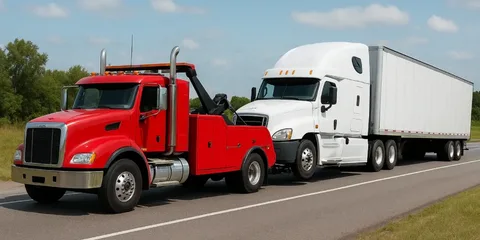
A loaded tractor-trailer breaking down on I-285 in Atlanta, GA, can create a dangerous situation for the truck driver and surrounding motorists. Because I-285 carries heavy commercial traffic throughout the Atlanta metropolitan area, a disabled semi-truck can quickly affect traffic flow, especially during rush hours. Mechanical failures, tire blowouts, overheating, brake problems, and transmission issues can leave a fully loaded truck unable to continue its journey.
Knowing what to do when a loaded tractor-trailer becomes disabled on I-285 can help drivers reduce safety risks, protect their cargo, and arrange the appropriate heavy-duty towing service.
Move the Truck to a Safe Location If Possible
When a tractor-trailer starts experiencing mechanical problems, the driver should look for a safe location away from moving traffic. If the truck can still move safely, steering it toward an emergency shoulder or another designated safe area may help reduce the risk of a collision.
However, drivers should never attempt to keep moving if the vehicle has serious brake problems, steering failure, or another mechanical issue that makes it unsafe to operate. A fully loaded truck requires additional stopping distance and can become difficult to control when something goes wrong.
Activate Hazard Lights and Warn Other Drivers
Once the tractor-trailer has stopped, the driver should activate the hazard warning lights to make the disabled vehicle more visible. This is particularly important on I-285, where vehicles frequently travel at highway speeds and traffic can change quickly.
Drivers should follow applicable commercial vehicle safety requirements for warning devices, including properly placing reflective triangles when it is safe to do so. They should avoid standing directly in traffic lanes or behind the trailer.
Identify the Cause of the Breakdown
Understanding why the tractor-trailer stopped operating helps determine the appropriate recovery solution. Some breakdowns may involve relatively straightforward mechanical problems, while others require specialized towing equipment.
Common reasons a loaded tractor-trailer may become disabled include:
-
Engine overheating or complete engine failure.
-
Transmission problems that prevent movement.
-
Tire blowouts or multiple damaged tires.
-
Brake system malfunctions.
-
Damaged axles or suspension components.
-
Electrical system failures.
-
Fuel system problems.
Drivers should communicate any warning lights, unusual noises, visible damage, or changes in vehicle performance to the roadside assistance or towing provider.
Avoid Unnecessary Repairs Near Moving Traffic
Attempting extensive mechanical repairs on the shoulder of I-285 can expose drivers and roadside workers to passing traffic. Even relatively minor repairs may become dangerous when there is limited working space.
If the truck has significant mechanical damage, it may be safer to arrange professional heavy-duty towing or recovery. Drivers should avoid crawling underneath the vehicle or attempting repairs involving heavy components while the truck is positioned near active highway lanes.
Arrange Specialized Heavy-Duty Truck Towing
A fully loaded tractor-trailer cannot be handled like an ordinary passenger vehicle. Its combined weight, trailer dimensions, cargo distribution, and mechanical condition all affect how it must be recovered.
Professional heavy-duty towing operators use specialized equipment designed to handle large commercial vehicles. Depending on the situation, recovery may require heavy-duty wreckers, appropriate towing attachments, winching equipment, or additional recovery support.
Before dispatching a tow truck, drivers should provide important information, including:
-
Their exact location on I-285 and the nearest exit or landmark.
-
Whether the tractor-trailer is fully loaded or empty.
-
The type of mechanical failure or visible damage.
-
Whether the trailer is separated, overturned, or still attached.
-
Whether the vehicle is blocking a traffic lane.
-
Any special cargo or access requirements.
Accurate information helps towing operators determine the equipment and recovery approach needed for the situation.
Protect the Cargo During the Recovery Process
Cargo protection is another important consideration when a loaded tractor-trailer becomes disabled. Sudden mechanical failures, damaged tires, or roadside collisions can affect trailer stability and cargo positioning.
Drivers should inform the recovery provider about the type of cargo and any concerns regarding shifting loads or trailer damage. If the trailer has structural damage or appears unstable, recovery should be handled carefully by qualified professionals.
For temperature-sensitive, fragile, or time-sensitive shipments, fleet managers may also need to coordinate replacement transportation or cargo transfer arrangements.
Notify Fleet Management and Coordinate the Next Steps
Truck drivers operating commercial vehicles should notify their dispatcher or fleet manager as soon as possible. This allows the company to update delivery schedules, contact customers, coordinate replacement equipment, and arrange any necessary cargo handling.
Fleet managers should also keep records of the breakdown location, reported mechanical issues, towing arrangements, and recovery progress. This information can help identify recurring maintenance problems and reduce future vehicle downtime.
Why Fast Heavy-Duty Recovery Matters on I-285
I-285 is an important transportation route around Atlanta, connecting commercial traffic with major highways and distribution areas. When a loaded tractor-trailer becomes disabled, the situation can affect other motorists, commercial deliveries, and overall traffic movement.
Delays in arranging appropriate recovery may increase roadside exposure and complicate traffic management. Having access to a heavy-duty towing provider familiar with commercial vehicle recovery can help drivers and fleet operators respond more effectively.
Heavy-Duty Truck Towing in Atlanta, GA
When a loaded tractor-trailer becomes disabled on I-285, drivers need more than standard roadside assistance. They may require specialized heavy-duty towing, commercial truck recovery, winch-out assistance, or mobile mechanical support depending on the nature of the breakdown.
DR Wrecker provides heavy-duty towing and commercial truck recovery services in Atlanta, GA. Whether a semi-truck experiences a mechanical failure, a loaded tractor-trailer becomes stranded, or a commercial vehicle requires specialized recovery, DR Wrecker helps address heavy-duty towing needs.
When facing a commercial truck breakdown on I-285 or another Atlanta-area highway, contact DR Wrecker for heavy-duty towing and recovery assistance.

 English
 Arabic
 French
 Spanish
 Portuguese
 Deutsch
 Turkish
 Dutch
 Italiano
 Russian
 Romaian
 Greek