


Donation Receipt: Meaning, Importance, Format, and Benefits
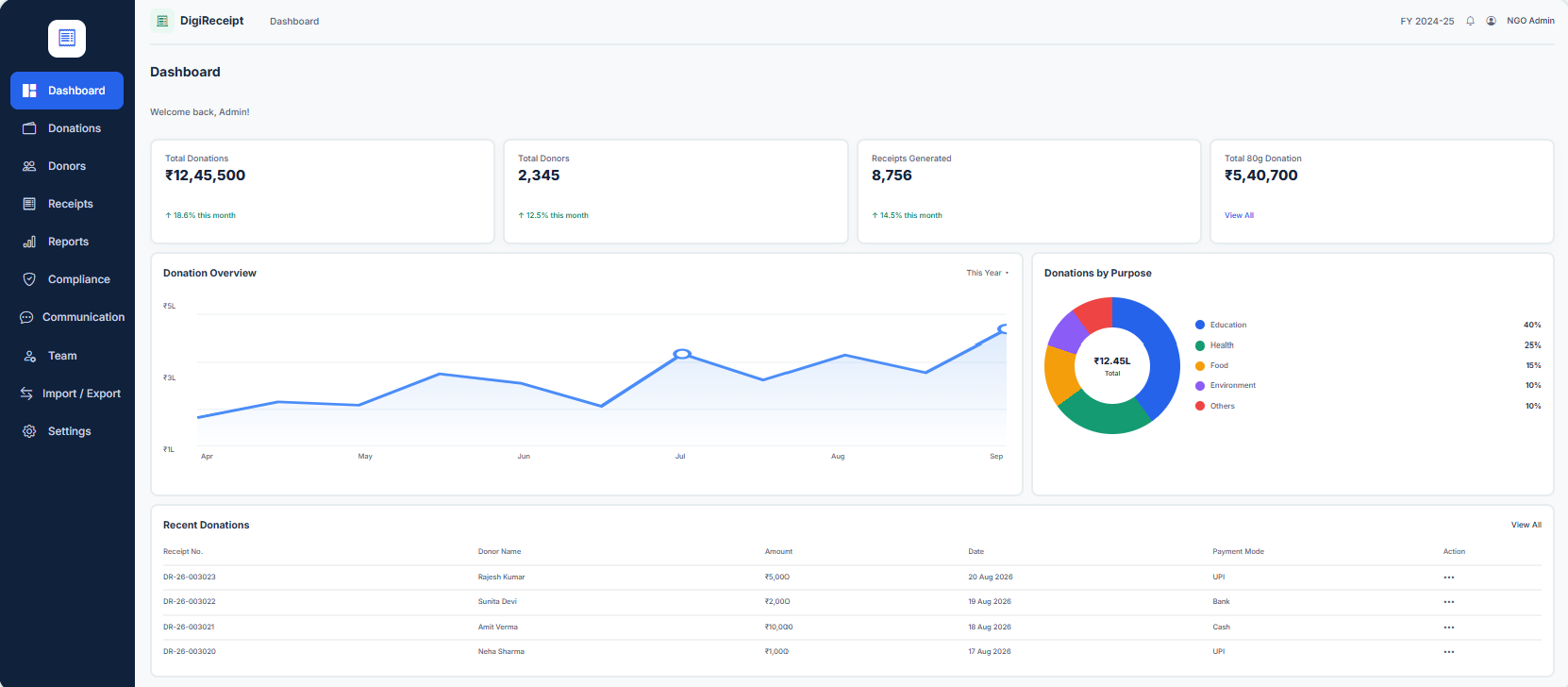
Donations are an important way to support charitable activities, social welfare programs, educational initiatives, healthcare services, and organizations working to improve society. Individuals, businesses, and institutions contribute money or resources to help people in need and support meaningful causes.
Whenever a person makes a donation to a charitable organization, receiving proper documentation is important. A donation receipt serves as official proof that the contribution has been received by the organization.
A donation receipt not only confirms the transaction but also helps maintain financial transparency, build donor trust, and keep accurate records of charitable contributions.
In this blog, we will explore what a donation receipt is, why it is important, what information it should contain, and how organizations can generate professional donation receipts.
What Is a Donation Receipt?
A donation receipt is an official document issued by a charitable organization, NGO, trust, or eligible institution to acknowledge a donation received from an individual or organization.
It confirms that the organization has received a specific contribution and provides details about the donor, donation amount, payment method, and transaction date.
Donation receipts can be issued for different types of contributions, including:
-
Cash donations
-
Online donations
-
UPI payments
-
Bank transfers
-
Cheque donations
-
Donations of goods and other materials
Organizations generally provide donation receipts in printed formats, through email, or as downloadable PDF documents.
Why Is a Donation Receipt Important?
A donation receipt plays an important role in maintaining transparency between donors and charitable organizations. It provides several benefits to both parties.
1. Proof of Donation
A donation receipt acts as official confirmation that an organization has received a contribution. Donors can use it as proof of payment and maintain it for future reference.
2. Tax Benefits
Donations made to eligible charitable institutions may qualify for tax deductions under applicable tax laws.
In India, eligible donations may qualify for deductions under Section 80G of the Income Tax Act, subject to the applicable conditions and limits.
However, not every donation qualifies for tax benefits. Donors should verify the organization's eligibility before claiming deductions.
3. Financial Transparency
Providing donation receipts demonstrates that an organization maintains proper financial documentation. This helps build confidence among donors and encourages continued support.
4. Better Record Management
Donation receipts help organizations maintain accurate financial records, monitor contributions, and prepare accounting reports.
5. Easy Donation Tracking
Donors can maintain a record of their contributions, while organizations can track donation histories and manage donor information more efficiently.
Essential Details Included in a Donation Receipt
A professional donation receipt should contain all the necessary information to identify the organization, donor, and contribution.
The following details are generally included:
| Information | Description |
|---|---|
| Organization Name | Official name of the charitable organization |
| Organization Logo | Logo for identification and branding |
| Receipt Number | Unique identification number |
| Receipt Date | Date the donation was received |
| Donor Name | Full name of the contributor |
| Donor Address | Address of the donor, where applicable |
| Donation Amount | Total amount contributed |
| Payment Method | Cash, UPI, cheque, or bank transfer |
| Transaction ID | Payment reference number, if applicable |
| Donation Purpose | Cause or purpose of the contribution |
| Registration Details | Relevant registration information |
| Authorized Signature | Signature of the authorized representative |
For eligible 80G donations in India, organizations must also follow applicable tax reporting requirements, including Form 10BD and Form 10BE, where required.
Sample Donation Receipt Format
A well-designed donation receipt should be simple, professional, and easy to understand.
Here is an example of a standard donation receipt format:
[Organization Name]
Making a Difference Through Every Contribution
DONATION RECEIPT
Receipt Details
-
Receipt Number: DON-2026-001
-
Receipt Date: 15 November 2026
Donor Information
-
Donor Name: Rahul Sharma
-
Address: Mumbai, Maharashtra
-
Email: rahul@example.com
Donation Information
-
Donation Amount: ₹5,000
-
Amount in Words: Rupees Five Thousand Only
-
Payment Method: UPI
-
Transaction ID: UPI123456789
-
Donation Purpose: Education Support
Total Donation Received: ₹5,000
Authorized Signatory
[Organization Name]
Note: This is an illustrative sample. Tax exemption details should only be included when applicable.
Different Types of Donation Receipts
Organizations receive contributions through different payment methods and donation categories. Depending on the nature of the contribution, different types of receipts may be issued.
1. Cash Donation Receipt
A cash donation receipt is issued when an individual contributes money directly to a charitable organization in cash. It confirms the amount received and the date of contribution.
2. Online Donation Receipt
An online donation receipt is generated when a donor contributes through a website or online payment gateway using debit cards, credit cards, or net banking.
3. UPI Donation Receipt
This receipt is issued for donations made through UPI applications such as Google Pay, PhonePe, and other supported payment platforms.
4. Cheque Donation Receipt
A cheque donation receipt acknowledges contributions made through cheques. It should include relevant cheque details and reflect the applicable payment realization status.
5. In-Kind Donation Receipt
An in-kind donation receipt is issued when donors contribute physical goods instead of money. Examples include clothes, books, food, medicines, furniture, and educational materials.
How to Create a Donation Receipt?
Creating a donation receipt is straightforward when an organization follows a standardized process.
Here are the steps to generate a professional donation receipt:
-
Add the organization's name, logo, and contact information.
-
Generate a unique receipt number.
-
Enter the donor's name and relevant personal details.
-
Mention the donation amount and payment method.
-
Include the transaction reference number, if applicable.
-
Specify the purpose of the donation.
-
Add relevant registration and tax exemption details, where applicable.
-
Include the authorized signatory's information.
-
Generate the receipt in PDF format and share it with the donor.
Organizations can also use donation management software to automate receipt generation and maintain organized donor records.
Benefits of Digital Donation Receipts
With the increasing popularity of online donations, digital receipts have become an efficient way for organizations to manage donation documentation.
Some key benefits include:
Instant Receipt Generation
Digital systems allow organizations to generate receipts quickly after confirming successful payments.
Paperless Documentation
Digital receipts reduce paperwork and eliminate the need to maintain large volumes of physical documents.
Easy Accessibility
Donors can receive receipts through email or online portals and download them whenever required.
Reduced Manual Errors
Automated receipt generation minimizes manual data-entry mistakes and helps prevent duplicate receipt numbers.
Efficient Record Management
Organizations can maintain centralized donation records, retrieve previous receipts, and monitor contributions easily.
Improved Donor Experience
Providing quick and professional receipts creates a positive donor experience and encourages long-term relationships.
Best Practices for Managing Donation Receipts
Organizations should follow certain practices to maintain accurate donation records and ensure transparency.
-
Generate a unique receipt number for every donation.
-
Verify payment details before issuing receipts.
-
Maintain accurate donor information.
-
Issue receipts promptly after receiving donations.
-
Clearly mention the donation amount and payment method.
-
Include tax exemption details only when legally applicable.
-
Store digital receipts securely.
-
Maintain proper donation records for accounting and auditing.
-
Follow applicable financial and tax regulations.
Conclusion
A donation receipt is more than just proof of payment. It is an essential document that promotes transparency, accountability, and trust between donors and charitable organizations.
It helps donors maintain records of their contributions while allowing organizations to manage donations, maintain accurate financial documentation, and improve their administrative processes.
By adopting digital donation receipt systems, organizations can simplify documentation, reduce paperwork, improve donor satisfaction, and focus more on their charitable activities.
Whether donations are received through cash, cheque, UPI, or online payment platforms, issuing proper donation receipts is an important step toward building a transparent and trustworthy donation management process.

 English
 Arabic
 French
 Spanish
 Portuguese
 Deutsch
 Dutch
 Italiano
 Russian
 Romaian
 Portuguese (Brazil)
 Greek