


What Are Cabinet Shop Drawings & Why Every Manufacturer Needs Them?
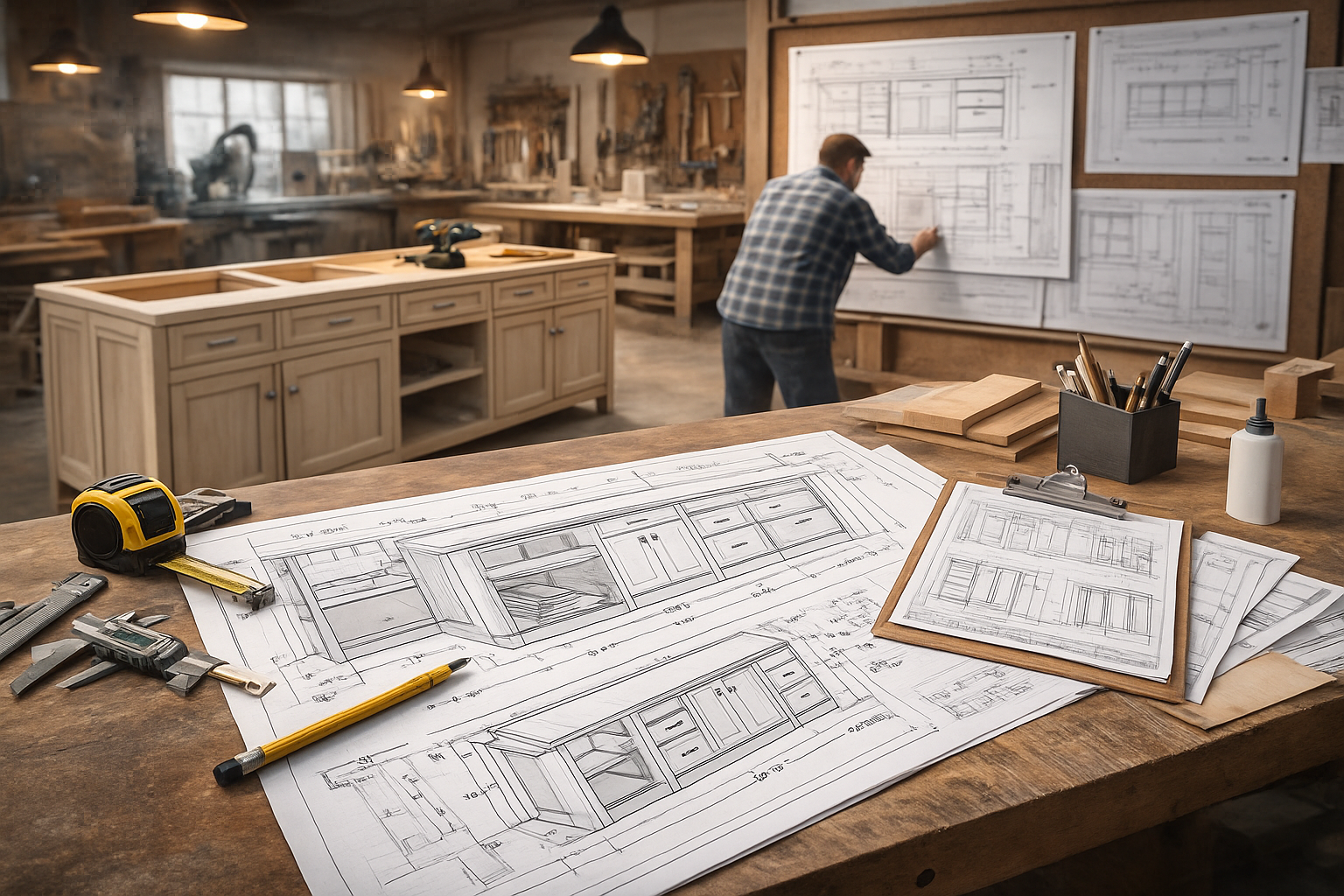
In the world of modern cabinetry and millwork, precision isn’t just important it’s everything. Whether you’re a business owner, architect, startup founder, engineer, or tech decision-maker in the USA or globally, understanding cabinet shop drawings is vital to ensuring quality, efficiency, and profitability in your manufacturing workflows. But what exactly are these drawings and why have they become indispensable in today’s design and production landscape?
Let’s break it down in a clear, engaging, and conversational way with insights into industry trends, challenges, and opportunities shaping the CAD design world.
What Exactly Are Cabinet Shop Drawings?
At their core, cabinet shop drawings are highly detailed technical illustrations used by manufacturers to build cabinetry and millwork products. They serve as a bridge between conceptual design and physical fabrication.
Unlike architectural plans which show where cabinets go these shop drawings tell manufacturers exactly how to construct them:
-
Precise dimensions of every component
-
Material specifications (wood types, hardware, finishes)
-
Assembly instructions and joinery details
-
Cut lists for CNC machines and fabrication tools
-
Bill of materials (BOM) and sequencing of operations
In short, these aren't just sketches they are the actionable blueprints that guide the actual building process.
Why Are Cabinet Shop Drawings So Important?
1. Minimize Errors and Rework
Without detailed cabinet shop drawings, manufacturers are left to interpret ambiguous designs, which often leads to mis-cuts, inconsistent parts, and costly rework. With precise CAD-based shop drawings, each dimension and detail is verified before cutting begins meaning fewer mistakes and better quality outcomes.
2. Make Manufacturing Scalable and Predictable
Detailed drawings enable repeatability. Once a set of specifications and templates are verified, they can be reused for multiple projects, reducing lead times and smoothing production pipelines. This is critical for companies looking to scale custom cabinetry or multi-unit installations.
3. Improve Collaboration Across Teams
Architects, engineers, cabinetmakers, and installers all speak different technical “languages.” Cabinet shop drawings function as a common reference point enhancing communication and reducing misinterpretation between design and fabrication teams. With cloud-based tools, everyone can view and update drawings in real time, accelerating project timelines.
How Are Shop Drawings Created Today?
CAD and Digital Workflows
Gone are the days of hand-drafted blueprints. Today, cad shop drawings (created through computer-aided design software) provide accuracy, efficiency, and flexibility that simply can’t be matched by manual techniques.
Modern CAD workflows allow:
-
3D modeling and visualizations
-
Automated dimensioning
-
BIM (Building Information Modeling) integration
-
CNC-ready outputs for fabrication
-
Simulation and clash detection before fabrication
This shift to digital tools has helped minimize errors and dramatically enhance clarity across teams. In fact, around 63% of woodworking and furniture companies now use CAD tools as part of their design workflow and many have integrated CNC automation into their production process to further streamline results.
What Are Millwork Shop Drawings Services and Why They Matter
While cabinet shop drawings are specific to cabinetry, millwork shop drawings services cover a broader range of custom woodwork including:
-
Trim and molding
-
Wall paneling
-
Custom doors and frames
-
Architectural wood features
These services are increasingly essential in both residential and commercial projects especially in high-end interiors where precision is non-negotiable. Millwork drawings ensure that every element fits the overall design intent, complies with code requirements, and interfaces correctly with other building systems.
What’s the Difference Between CAD Shop Drawings and Traditional Drafting?
Traditional drafting done by hand or simple 2D tools is no longer sufficient for the demands of modern production.
Here’s how CAD shop drawings stand out:
| Feature | Traditional Drafting | CAD Shop Drawings |
|---|---|---|
| Accuracy | Human-dependent | Machine-assisted precision |
| Collaboration | Harder to share and sync | Cloud-based updates & access |
| Re-use & Revision | Manual redrafting | Instant updates & repeatability |
| Integration | Stand-alone | Works with BIM/CNC/ERP systems |
With the advent of cloud collaboration and AI-driven tools, CAD services are now more aligned with modern manufacturing expectations than ever before. WiseGuy Reports
What Are the Key Trends Shaping Cabinet Shop Drawings?
Let’s look at the trends that business owners, architects, and manufacturers should watch in 2025 and beyond:
1. Increased Adoption of Cloud-Based CAD Platforms
Cloud-based solutions enable real-time collaboration, remote access, and easier version control across teams meaning fewer delays and smoother approvals.
2. Integration of AI and Automation
Tools equipped with AI are now assisting designers by suggesting optimal layouts, detecting clashes automatically, and even improving drawing accuracy reducing turnaround times and enhancing productivity.
3. BIM and Data-Driven Design
Although prominent in building design, BIM workflows are now extending into millwork and cabinetry, enabling coordinated data across architectural, mechanical, and fabrication teams.
4. Sustainability & Optimization
Millwork and cabinet design are increasingly focusing on material waste reduction and energy-efficient solutions, driven by both regulatory pressures and consumer demand.
What Challenges Do Manufacturers Face?
Even as technology evolves, there are hurdles that many businesses still encounter:
Data Security and Interoperability
As firms move more CAD workflows to the cloud, ensuring secure data access and seamless interoperability between different platforms remains critical.
Talent Shortages
There’s an industry-wide shortage of skilled drafters and engineers, particularly in the U.S., which has led many companies to outsource or partner with specialist CAD firms. Automated systems help close this gap, but expertise is still crucial.
Balancing Speed with Precision
Faster delivery is always a business priority but not at the cost of accuracy. The most successful companies find workflows that combine rapid drafting with meticulous quality control.
What Opportunities Lie Ahead in 2025 and Beyond?
The CAD and drafting services market is growing and fast.
📈 The global computer-aided drafting service market is projected to grow robustly over the next decade, expanding opportunities for CAD providers and in-house teams alike. WiseGuy Reports
📈 Millwork and cabinetry chart demand is rising as custom interiors continue to dominate architectural trends in commercial and residential spaces.
For manufacturers and tech leaders, this means:
-
Better digital workflows
-
Faster time to market
-
Lower error rates
-
Enhanced client satisfaction
-
Improved integration with fabrication systems
Final Thoughts:
If you manufacture cabinetry or custom millwork whether for kitchens, commercial interiors, or bespoke furniture cabinet shop drawings aren’t optional; they’re foundational to success.
They provide clarity, improve collaboration, reduce costly errors, and help teams deliver beautiful, functional products that meet client expectations every time.
Looking for Expert Assistance?
For businesses seeking reliable shop drawings services and Millwork shop drawings services, partnering with a specialist CAD design company can be a game-changer. A leading UK-based CAD design provider delivers precise, compliant, and CNC-ready drawings that help manufacturers across the globe streamline production from initial concept through to fabrication.

 English
 Arabic
 French
 Spanish
 Portuguese
 Deutsch
 Turkish
 Dutch
Dutch
 Italiano
 Romaian
 Portuguese (Brazil)
 Greek
Greek