


What Is Concrete Jacketing and Why Is It Used in Structural Strengthening
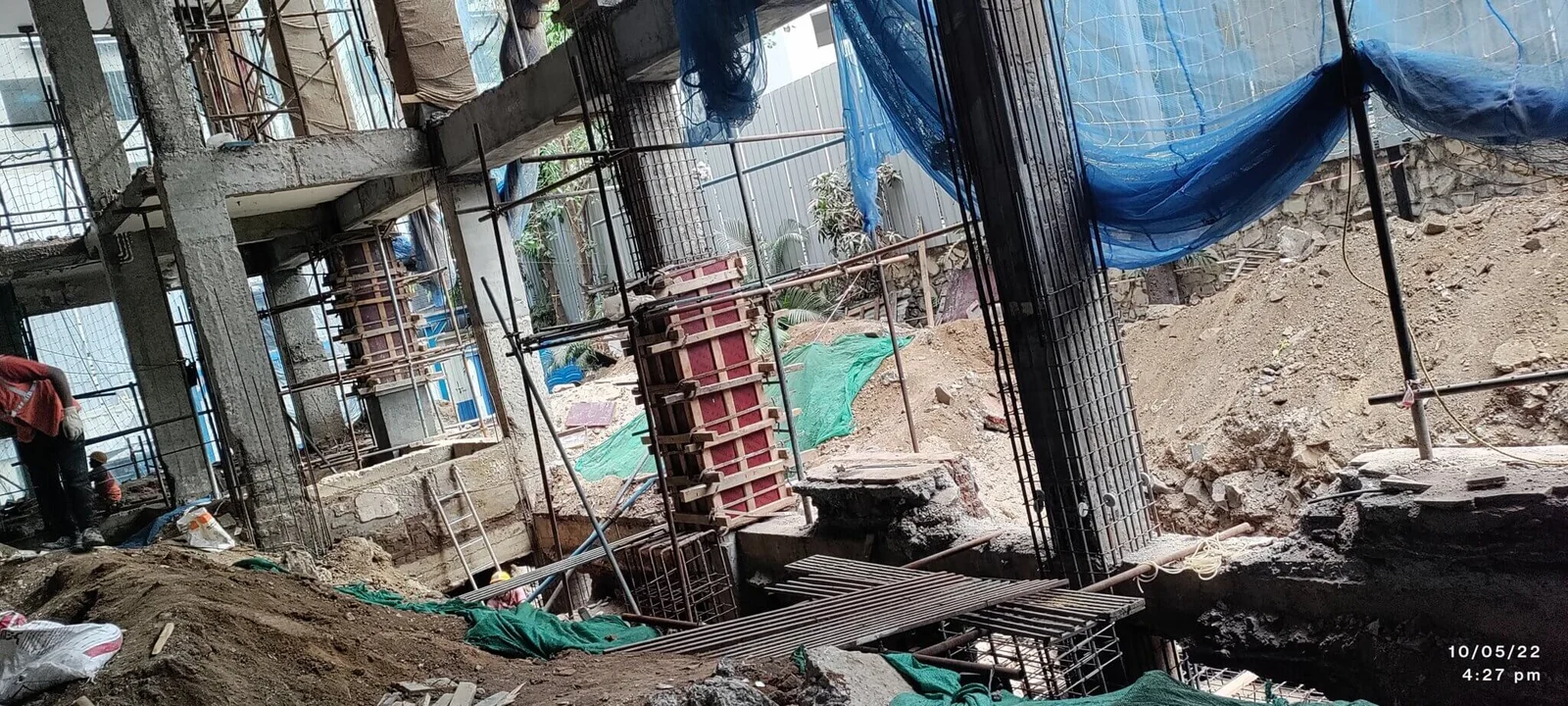
Concrete Jacketing is a widely used structural strengthening technique that improves the load carrying capacity of existing columns, beams, and slabs. It involves adding a new layer of reinforced concrete around the original structural member. This method is commonly adopted in old buildings, damaged structures, and projects where design loads have increased due to functional changes or additional floors.
Why Concrete Jacketing Is Needed in Buildings
Over time, buildings experience wear due to aging, environmental exposure, design limitations, or construction defects. Concrete Jacketing helps restore strength, stiffness, and durability without demolishing the structure. It is especially useful when columns show cracks, corrosion, or reduced load bearing capacity. This technique also supports compliance with updated structural safety and seismic strengthening requirements.
How Concrete Jacketing Improves Structural Strength
The primary purpose of Concrete Jacketing is to enhance axial load capacity and flexural strength. By increasing the cross sectional area and adding reinforcement, the structural member becomes stronger and more stable. The jacketed concrete works together with the existing member, reducing stress concentration and improving overall performance under vertical loads, lateral forces, and seismic activity.
Common Applications of Concrete Jacketing
Concrete Jacketing is commonly applied in residential buildings, commercial complexes, parking structures, hospitals, and industrial facilities. It is frequently used for column strengthening, beam strengthening, and slab retrofitting. This technique is also preferred during building rehabilitation projects where structural members need upgrading to support additional floors or heavier machinery loads.
Concrete Jacketing for Column Strengthening
Column strengthening is one of the most popular uses of Concrete Jacketing. Columns are critical load transferring elements, and any weakness can compromise building safety. Jacketing increases column dimensions and reinforcement, improving axial load resistance and ductility. This approach is widely chosen when columns are undersized, damaged, or exposed to seismic vulnerability.
Concrete Jacketing in Seismic Strengthening Projects
In earthquake prone regions, Concrete Jacketing plays an important role in seismic retrofitting. The added confinement improves ductility and energy dissipation during seismic events. Strengthened columns and beams perform better under cyclic loading, reducing the risk of sudden failure. This makes the technique highly effective for upgrading existing RCC buildings to meet seismic design standards.
Materials Used in Concrete Jacketing
The effectiveness of Concrete Jacketing depends on proper material selection. High strength concrete, steel reinforcement bars, bonding agents, and shear connectors are commonly used. The new concrete layer must achieve strong bonding with the existing surface. Proper surface preparation ensures composite action between old and new concrete, resulting in reliable long term performance.
Step by Step Process of Concrete Jacketing
The Concrete Jacketing process begins with surface cleaning and roughening of the existing member. Damaged concrete is removed, and reinforcement corrosion is treated. Additional steel bars are installed, followed by formwork placement. Concrete is then poured and compacted properly. Curing is carried out to achieve desired strength and ensure effective bonding.
Advantages of Concrete Jacketing Over Demolition
One major advantage of Concrete Jacketing is that it avoids complete demolition and reconstruction. This saves time, reduces material waste, and minimizes disruption to occupants. The technique is cost effective compared to rebuilding and allows structural upgrading while preserving the original building layout. It is also suitable for projects with limited space constraints.
Limitations of Concrete Jacketing
While Concrete Jacketing is effective, it does increase the size and weight of structural members. This may reduce usable space or add load to foundations. Proper structural analysis is essential to ensure foundations can handle the added weight. Careful planning helps overcome these limitations and ensures the strengthening solution remains safe and efficient.
Comparison With Other Strengthening Methods
Compared to methods like steel jacketing or fiber reinforced polymer wrapping, Concrete Jacketing offers higher stiffness and durability. It performs well in fire resistance and long term exposure conditions. Although it requires more space and curing time, it remains a preferred option for heavy load strengthening and large scale structural rehabilitation projects.
Quality Control in Concrete Jacketing Works
Quality control is critical for successful Concrete Jacketing. Proper surface preparation, correct reinforcement detailing, and controlled concrete mix design are essential. Regular inspection during casting and curing ensures strength development. Non destructive testing may be conducted to verify bonding quality and structural performance after completion of the strengthening work.
Concrete Jacketing in Building Retrofitting
Building retrofitting projects often rely on Concrete Jacketing to extend the life of aging structures. It allows existing buildings to meet modern load requirements without altering architectural features significantly. This technique is widely used in urban areas where redevelopment options are limited, making structural strengthening the most practical solution.
Cost Considerations for Concrete Jacketing
The cost of Concrete Jacketing depends on structural size, extent of damage, material specifications, and site conditions. While initial costs may appear higher than surface level repairs, the long term benefits justify the investment. Improved safety, increased load capacity, and extended building life make it a value driven strengthening approach.
Maintenance After Concrete Jacketing
After Concrete Jacketing, regular structural inspections help maintain performance. Proper waterproofing and protective coatings reduce moisture ingress and corrosion risk. Timely maintenance ensures the strengthened members continue to perform as designed. With correct execution and care, concrete jacketing delivers durable and reliable structural enhancement.
Concrete Jacketing remains one of the most trusted methods for structural strengthening and building rehabilitation. Its ability to enhance load capacity, improve seismic performance, and extend service life makes it highly relevant today. When designed and executed correctly, it provides a practical, durable, and efficient solution for strengthening existing RCC structures.

 English
 Arabic
 French
 Spanish
 Portuguese
 Deutsch
 Turkish
 Dutch
Dutch
 Italiano
 Russian
 Portuguese (Brazil)
 Greek
Greek