


The Science of Surgery: How OT Table Mats and Gel Pads Enhance Patient Safety
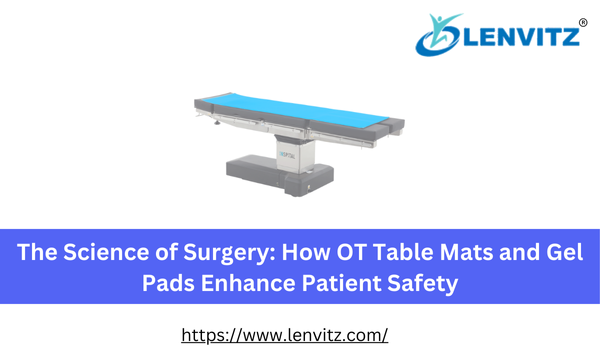
When we think about medical miracles, we often imagine robotic arms or life-saving medications. However, some of the most critical tools in an Operating Theater (OT) are those designed to simply hold and protect the human body. During surgery, a patient’s safety depends heavily on "pressure management." This is where high-quality ot table mat systems and specialized gel pads become the unsung heroes of the medical world.
For anyone preparing for a procedure or looking into hospital-grade care at home, understanding these supports is key to ensuring a complication-free recovery.
1. The Foundation of Safety: The OT Table Mat
The Operating Theater table is naturally hard and flat to provide stability for surgeons. However, lying on such a surface for hours can lead to serious skin breakdown and muscle strain. An ot table mat made of high-grade visco-elastic polymer or medical gel acts as a specialized mattress.
It works by redistributing the patient’s weight across the entire surface area. By reducing the pressure on bony prominences like the hips and shoulders, a high-quality ot table mat prevents "pressure ulcers," which are a major concern in post-operative care.
2. Advanced Support with Prone Position Gel Pads
In certain surgeries, such as spinal or posterior procedures, the patient must be placed face-down. This is known as the "prone position." This position is particularly challenging because it places the chest, knees, and pelvic bones under significant stress.
Prone position gel pads are specifically engineered to address these challenges. These pads:
-
Protect the Chest and Pelvis: They allow for abdominal expansion, making it easier for the patient to breathe while under anesthesia.
-
Prevent Nerve Compression: By cushioning the knees and hips, prone position gel pads ensure that major nerves are not pinched against the hard table.
-
Enhance Stability: They provide a non-slip surface that keeps the patient securely in place throughout the procedure.
3. Protecting the Upper Body: Arm Rest Gel Pad
During any surgery, the arms must be positioned carefully to avoid stretching the brachial plexus—a network of nerves in the shoulder. If the arm slips or rests on a hard edge, the patient could wake up with numbness or even temporary paralysis.
An Arm Rest Gel Pad is designed to cradle the arm in a neutral, natural position. These gel pads are soft enough to prevent skin shearing but firm enough to maintain the limb's elevation. Whether the arm is tucked at the side or extended on an armboard, the Arm Rest Gel Pad ensures that blood circulation remains optimal and nerves are protected.
4. Why Medical Professionals Choose Gel Pads Over Foam
While foam supports are common, gel pads offer superior protection. Gel mimics the consistency of human fat and skin, allowing it to move with the patient rather than resisting them.
-
Durability: Unlike foam, an ot table mat or Arm Rest Gel Pad won't "bottom out" or lose its shape over time.
-
Hygiene: Gel is non-porous and waterproof, making it easy to sterilize—a vital feature for preventing hospital-acquired infections.
Conclusion: Comfort Leads to Better Healing
Whether it is a full-length ot table mat or specialized prone position gel pads, the goal remains the same: total patient safety. By using these advanced gel pads, surgical teams can focus on the procedure, knowing the patient's physical integrity is being guarded.

 Arabic
 French
 Spanish
 Portuguese
 Deutsch
 Turkish
 Dutch
Dutch
 Italiano
 Russian
 Romaian
 Portuguese (Brazil)
 Greek
Greek