


Ultimate Head Support: Why You Need a Head Gel Pad and Silicon Head Ring for Recovery
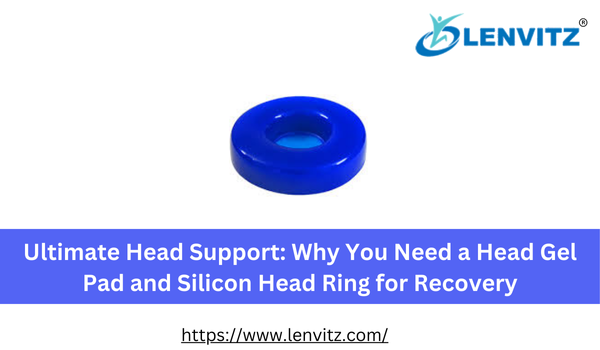
When it comes to surgical recovery or long-term bed rest, we often focus on the spine or the limbs, but the head is actually one of the most vulnerable parts of the body. The human head is heavy, and its bony structure makes it highly susceptible to pressure sores and nerve discomfort if not supported correctly.
Modern medical technology has introduced specialized solutions like the Head Gel Pad, head ring, and prone head rest to ensure that patients remain safe and comfortable. Whether you are a healthcare professional or someone caring for a loved one at home, understanding these tools is essential.
1. The Importance of Cranial Pressure Distribution
The back of the head (the occipital region) has very little natural padding. When a person lies flat for an extended period, the constant pressure against a standard mattress can restrict blood flow to the scalp. This is where a Head Gel Pad becomes a lifesaver.
A Head Gel Pad is engineered from high-grade visco-elastic polymer. Unlike a traditional pillow that may lose its shape, this gel-based support redistributes the weight of the head across a wider surface area, significantly reducing the risk of pressure ulcers and hair loss associated with long-term immobilization.
2. Stability and Comfort: The Silicon Head Ring
For procedures or resting periods where the patient is lying on their back (supine position), a head ring is often the preferred choice. These are donut-shaped supports that provide a hollow center for the back of the head to rest in.
The silicon head ring is particularly popular because:
-
Hypoallergenic Material: Silicon is skin-friendly and does not cause irritation or rashes.
-
Firm Yet Soft: A silicon head ring offers the perfect balance of firmness to keep the head stable and softness to cushion the skin.
-
Easy Sterilization: In a medical environment, hygiene is paramount. A silicon head ring can be easily wiped down or disinfected between uses.
By using a head ring, caregivers can ensure that the patient’s head does not tilt or slide, which helps in maintaining a clear airway and proper spinal alignment.
3. Specialized Support: The Prone Head Rest
In some cases, patients must be positioned face-down, especially during spinal surgeries or for specific respiratory treatments. This is known as the prone position, and it presents a unique challenge: how do you support the head without putting pressure on the eyes, nose, or mouth?
The prone head rest is the answer. These are specifically designed cushions that cradle the forehead and chin while providing a cutout area for the face.
-
Airway Management: A prone head rest ensures that the patient can breathe freely without the face being pressed into a flat surface.
-
Eye Protection: It prevents direct pressure on the eyeballs, which is critical for avoiding post-operative vision complications.
-
Neck Alignment: By lifting the face slightly, the prone head rest keeps the cervical spine in a neutral position, preventing neck strain.
Conclusion: Investing in Better Healing
From the versatile Head Gel Pad to the specialized prone head rest, these tools are about more than just "softness." They are about protecting the nervous system and the skin from preventable injury. Using a head ring or a silicon head ring ensures that recovery is as painless and safe as possible.

 English
 French
 Spanish
 Portuguese
 Deutsch
 Turkish
 Dutch
Dutch
 Italiano
 Russian
 Romaian
 Portuguese (Brazil)
 Greek
Greek