


Solana vs Ethereum: A Deep Comparison of Performance, Ecosystem, and Future Potential
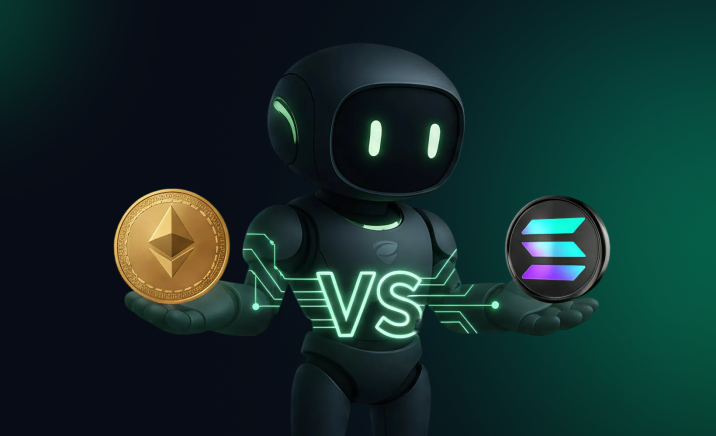
The debate around Solana vs Ethereum has become one of the most important discussions in the blockchain industry. Both networks represent powerful but very different visions of how decentralized technology should scale, innovate, and serve global users. Ethereum is widely regarded as the pioneer of smart contracts and decentralized applications, while Solana has positioned itself as a high-performance blockchain designed for speed and low transaction costs. As developers, investors, and institutions evaluate these platforms, the Solana vs Ethereum comparison continues to shape decisions across the crypto ecosystem.
Understanding the differences between Solana and Ethereum requires looking beyond price movements and hype. Their architectures, philosophies, ecosystems, and long-term strategies offer valuable insight into where blockchain technology may be heading in the coming years.
Origins and Core Philosophy
Ethereum was launched in 2015 with the goal of creating a decentralized world computer capable of running smart contracts. Its vision focused on flexibility, decentralization, and security, even if that meant sacrificing speed and efficiency in its early years. This approach allowed Ethereum to become the foundation for decentralized finance, non-fungible tokens, and much of the Web3 movement.
Solana, launched several years later, entered the market with a different philosophy. From the beginning, Solana aimed to solve scalability challenges by prioritizing high throughput and low latency. Its design choices reflect a belief that blockchains must compete with traditional financial systems in terms of speed and cost to achieve mass adoption. This contrast in philosophy lies at the heart of the Solana vs Ethereum discussion.
Network Architecture and Performance
One of the most significant differences in the Solana vs Ethereum comparison is network performance. Solana is known for its ability to process thousands of transactions per second with extremely low fees. This is achieved through a unique combination of technologies, including a novel consensus mechanism that emphasizes time synchronization and parallel processing.
Ethereum, by contrast, has historically processed far fewer transactions per second. Congestion during peak usage has led to high transaction fees, which became a major criticism of the network. However, Ethereum’s slower performance was a trade-off for a highly decentralized and secure system that could support a wide range of applications.
While Solana’s speed is impressive, Ethereum’s roadmap has focused on long-term scalability through layered solutions rather than raw throughput at the base layer. This strategic difference continues to define the Solana vs Ethereum narrative.
Ecosystem and Developer Adoption
Ethereum’s greatest strength lies in its vast and mature ecosystem. Thousands of decentralized applications, tools, and protocols have been built on Ethereum over the years. Developers benefit from extensive documentation, community support, and interoperability between projects. This network effect has made Ethereum the default choice for many blockchain innovators.
Solana’s ecosystem, though younger, has grown rapidly. Its low fees and fast transaction times have attracted developers building applications in areas such as decentralized finance, gaming, and NFTs. Many projects that struggled with high costs on Ethereum found Solana appealing as an alternative.
In the Solana vs Ethereum debate, ecosystem maturity versus rapid innovation is a recurring theme. Ethereum offers stability and proven infrastructure, while Solana provides an environment optimized for performance and experimentation.
Decentralization and Security Considerations
Decentralization is a core value in blockchain design, and it is a key point of comparison in Solana vs Ethereum. Ethereum places a strong emphasis on decentralization, with thousands of nodes distributed globally. This structure enhances censorship resistance and network security but can limit performance.
Solana’s design requires more powerful hardware to run validator nodes, which has raised concerns about centralization. Fewer validators with higher technical requirements may increase efficiency but can reduce accessibility. Additionally, Solana has experienced network outages in the past, highlighting the challenges of pushing performance boundaries.
Ethereum’s cautious approach has resulted in fewer outages and a reputation for reliability. These differences shape how developers and institutions evaluate risk when choosing between Solana vs Ethereum.
Economic Models and User Costs
Transaction fees play a major role in user experience. Ethereum’s gas fees have historically fluctuated based on network demand, sometimes reaching levels that make small transactions impractical. This has driven users toward alternative networks, including Solana.
Solana’s consistently low fees make it attractive for high-frequency transactions and consumer-facing applications. For use cases such as gaming or microtransactions, Solana often appears more practical in the Solana vs Ethereum comparison.
However, Ethereum’s fee structure also reflects strong demand for block space. High fees can be seen as a sign of network value, and ongoing upgrades aim to make fees more predictable and manageable without sacrificing decentralization.
Zero Knowledge Proof and Scalability Innovation
Zero knowledge proof technology has become a critical component of blockchain scalability and privacy discussions. A zero knowledge proof allows one party to prove that a transaction or computation is valid without revealing the underlying data. This innovation enables more efficient verification while preserving security and confidentiality.
Ethereum has embraced zero knowledge proof systems as part of its long-term scaling strategy. Technologies such as zero-knowledge rollups process transactions off-chain and submit cryptographic proofs to the Ethereum network, significantly reducing congestion and fees. This approach allows Ethereum to scale without compromising decentralization.
Solana, on the other hand, focuses more on base-layer performance rather than layered scaling using zero knowledge proof techniques. While Solana benefits from simplicity and speed, Ethereum’s integration of zero knowledge proof solutions adds flexibility and future-proofing. This contrast highlights another important dimension of the Solana vs Ethereum debate.
Institutional and Enterprise Adoption
Ethereum has gained significant traction among institutions and enterprises. Its role in decentralized finance, tokenization, and enterprise blockchain solutions has attracted banks, asset managers, and technology companies. The familiarity and robustness of Ethereum make it a preferred choice for long-term, high-value applications.
Solana’s institutional adoption is growing but remains more limited in comparison. Its appeal lies primarily in consumer-facing applications and innovative startups. As Solana’s infrastructure matures and reliability improves, institutional interest may increase, but Ethereum currently holds a clear advantage in this area.
Community and Governance
Community engagement plays a crucial role in the evolution of blockchain networks. Ethereum’s community is one of the largest and most diverse in the industry, encompassing developers, researchers, and users worldwide. Its open governance model encourages collaboration and long-term research-driven development.
Solana’s community is smaller but highly active and focused on rapid iteration. This culture fosters innovation but can also lead to faster deployment of features that may require refinement over time. In the Solana vs Ethereum comparison, governance style reflects broader differences in philosophy and pace.
Long-Term Vision and Future Outlook
The long-term outlook for Solana vs Ethereum depends on how each network adapts to changing demands. Ethereum’s roadmap emphasizes modular scalability, security, and decentralization. Its gradual approach may result in slower progress but offers resilience and trust.
Solana’s vision centers on becoming a high-performance blockchain capable of supporting millions of users with minimal friction. If it can address concerns around decentralization and stability, Solana could continue to gain market share in performance-critical applications.
Rather than a winner-takes-all outcome, the future may involve coexistence. Different applications may favor different platforms based on their specific needs, making the Solana vs Ethereum debate less about competition and more about specialization.
Conclusion
The Solana vs Ethereum discussion reflects broader questions about how blockchains should scale, govern, and serve global users. Ethereum represents maturity, decentralization, and a layered approach to innovation, supported by technologies like zero knowledge proof systems. Solana represents speed, efficiency, and a bold attempt to redefine blockchain performance at the base layer.
Both networks have strengths and limitations, and their ongoing development will continue to influence the crypto landscape. Understanding Solana vs Ethereum is not just about choosing one over the other, but about recognizing how different design philosophies contribute to the evolution of decentralized technology.

 English
 French
 Spanish
 Portuguese
 Deutsch
 Turkish
 Dutch
Dutch
 Italiano
 Russian
 Romaian
 Portuguese (Brazil)
 Greek
Greek