


RA Cross Roller Bearing Solutions That Eliminate Vibration and Stability Issues
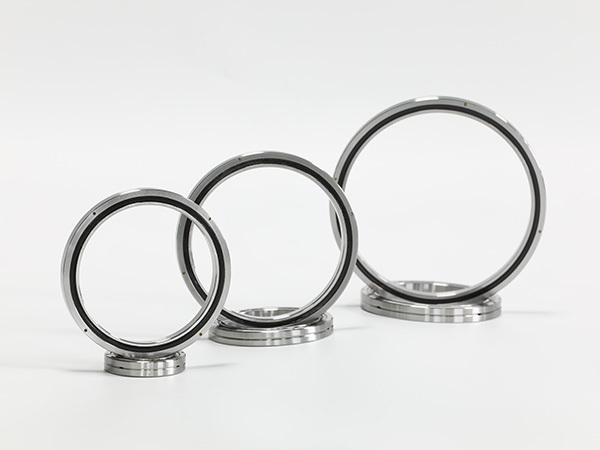
In high-precision machinery, stability is not optional—it is essential. Yet many manufacturers continue to face vibration, positioning errors, uneven wear, and frequent maintenance issues. These problems often appear in applications such as rotary tables, robotic joints, and automation equipment where loads act from multiple directions. In many cases, the underlying cause is an unsuitable bearing design. When compactness, rigidity, and accuracy are required, an RA cross roller bearing provides a reliable solution.
Why Multi-Directional Loads Overwhelm Conventional Bearings
Standard bearings are typically designed to handle either radial or axial loads efficiently, but not both simultaneously—let alone moment loads. In precision equipment, this limitation leads to uneven stress distribution, deformation, and reduced control accuracy.
An RA cross roller bearing features cylindrical rollers arranged at right angles between the raceways. This structure allows the bearing to support radial, axial, and moment loads at the same time, delivering exceptional stiffness and load capacity within a compact design.
Separable Outer Ring Simplifies Installation and Adjustment
Installation accuracy plays a major role in bearing performance. Improper mounting or alignment errors can reduce bearing life and compromise system stability. In complex assemblies, this challenge becomes even more critical.
The separable outer ring design of the RA cross roller bearing allows easier installation, inspection, and adjustment during assembly. This flexibility improves alignment accuracy and helps maintain consistent performance, especially in precision systems where tolerances are tight.
Insufficient Rigidity Leads to Vibration and Position Errors
Rigidity is one of the most important factors in maintaining motion accuracy. When bearings flex under load, even slightly, vibration and positioning errors become unavoidable. Over time, these issues reduce product quality and accelerate wear on connected components.
By using an RA cross roller bearing, manufacturers achieve high rigidity with minimal elastic deformation. The line contact between rollers and raceways ensures even load distribution, reducing vibration and maintaining smooth, controlled motion under varying operating conditions.
Compact Design Supports Space-Constrained Equipment
Modern machinery often demands compact designs without sacrificing performance. Using multiple bearing types to manage different loads increases system size, complexity, and weight.
A single RA cross roller bearing can replace several conventional bearings by handling all load directions within a slim profile. This space-saving advantage allows designers to simplify structures, reduce component count, and improve overall mechanical efficiency.
Balanced Load Distribution Extends Bearing Life
Uneven load concentration is a leading cause of premature bearing failure. When stress focuses on limited contact points, surface fatigue and raceway damage occur much faster.
The cross-arranged rollers in an RA cross roller bearing distribute loads evenly across all rolling elements. This balanced load sharing reduces wear, improves durability, and extends service life—even in applications with frequent start-stop motion or fluctuating loads.
Reliable Bearings Safeguard Precision Equipment Investment
Precision machinery represents a significant investment, and bearing failure can disrupt entire production processes. Choosing the correct bearing solution is essential to maintaining uptime and protecting equipment performance.
By selecting a proven RA cross roller bearing, manufacturers can reduce vibration, improve accuracy, and ensure long-term reliability in demanding applications such as automation systems, indexing tables, and robotic assemblies.

 English
 Arabic
 French
 Spanish
 Portuguese
 Deutsch
 Turkish
 Dutch
Dutch
 Italiano
 Russian
 Romaian
 Greek
Greek