


Payment Gateways in India: An Overview of the Ecosystem
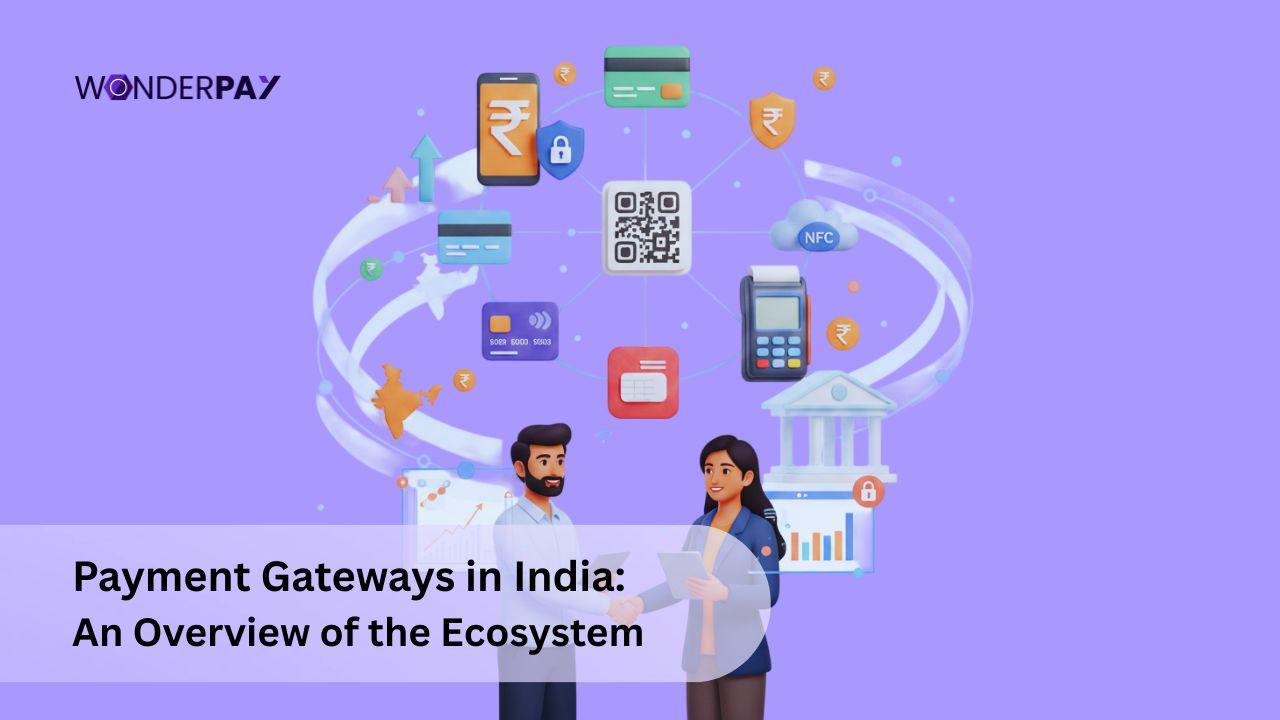
India’s digital economy has been going through significant growth over the past decade. Smartphones, affordable internet, and strong government-backed digital initiatives are the factors that have driven the growth. What lies at the heart of this transformation? The Top Payment Gateway in India ecosystem. And this, in turn, is an essential backbone that makes sure that secure, seamless, and real-time online transactions take place for businesses of all sizes. A startup? A D2C brand? Or maybe it is just enterprises and marketplaces. Whatever it is, payment gateways have become a necessary service provider for accepting digital payments in the most efficient way.
In this blog, we have tried to explore how the Indian payment gateway ecosystem works. At the same time, we have tried to cover its key stakeholders, regulatory environment, technologies involved, and how businesses can evaluate the Best Payment Gateway in India based on their needs.
Understanding the Payment Gateway Ecosystem in India
Wondering what a payment gateway is? Let us explain. A payment gateway can be referred to as a technology platform that looks after the authorisation, processing, and settlement of online payments between customers, merchants, banks, and financial networks. When it comes to India, the ecosystem is more complex and mature due to the coexistence of cards, UPI, wallets, net banking, BNPL, and international payment methods.
Coming to the high level, the Indian payment ecosystem includes:
-
Merchants (online businesses)
-
Customers (end users)
-
Banks (issuer and acquiring banks)
-
Card networks and UPI infrastructure
-
Payment gateway and aggregator platforms
-
Regulators such as the RBI
A Payment Gateway Service Provider acts as the orchestrator. It ensures that funds are transferred from the customer to the merchant while ensuring that the regulatory and security requirements are met.
Read More: Payment Processor Explained: What It Is & How It Works?
Key Payment Methods Powering India’s Ecosystem
India’s payment gateway landscape is unique. Why? Diversity in payment instruments is one of the main reasons.
1. UPI (Unified Payments Interface)
UPI is the instrument that dominates digital payments in India. Advantages of using it are instant settlement, zero or low transaction costs, and ease of use. When it comes to any Top Payment Gateway in India, it must offer seamless UPI integration with high success rates.
2. Debit & Credit Cards
Visa, Mastercard, and RuPay cards are something that remain very crucial for e-commerce and subscriptions. Also, it plays a significant role in high-value transactions. When it comes to making the card security stronger, the tokenisation norms have played a role.
3. Net Banking
When it comes to large-ticket payments, this process is widely used. Along with this, for B2B and enterprise transactions, this is often considered a preferred method.
4. Wallets & BNPL
Digital wallets and Buy Now Pay Later options improve conversion rates and customer flexibility. This has made them an important part of the Best Payment Gateway in India offerings.
Also Read : Payment Methods Explained: Types, Benefits & Business Impact
Role of RBI and Regulatory Framework
Want to shape the payment gateway ecosystem? If yes, you can’t miss out on the Reserve Bank of India (RBI). It is these regulations that take care of customer protection, data security, and financial stability. Check out the regulatory aspects now:
-
Licensing for payment gateways and aggregators is vital
-
Mandates for data localization are essential, too
-
Rules for tokenizing cards can’t be missed
-
Strong Customer Authentication (SCA) and following KYC and AML rules are important
When it comes to any Top Payment Gateway in India, it must strictly adhere to these norms to ensure legal compliance and maintain merchant trust.
Technology Stack Behind Payment Gateways
When it comes to payment gateways, delivering speed and reliability is important. And in such a scenario, the modern payment gateways are highly dependent on advanced technology. Check out the core technologies now:
-
Secure APIs for payment processing
-
Encryption and tokenisation for sensitive data
-
AI-based fraud detection systems
-
Real-time payment routing
-
High-availability cloud infrastructure
With the help of these technologies, a Payment Gateway Service Provider can deal with millions of transactions daily, and that too, with minimal downtime and high success rates.
Must Read : Payment Gateway vs Merchant Account: What’s the Difference?
Settlement, Pricing, and Revenue Models
Want to choose the Best Payment Gateway in India? Pricing is a critical consideration then. Have a look at the common pricing models:
-
Transaction fees, which are typically around 1.5% to 3%
-
Differential pricing for UPI, cards, and wallets
-
Faster settlement charges
-
International transaction markups
When it comes to settlement cycles, they range from instant to T+1 or T+2 days. These cycles are highly dependent on the gateway and merchant risk profile.
Challenges in the Indian Payment Gateway Ecosystem
Yes, it is true that rapid growth is taking place. Along with it, the ecosystem faces several challenges, as mentioned below:
-
High transaction failure rates during peak traffic are one of the primary challenges
-
Fraud and chargeback management is difficult
-
Regulatory complexity is a significant issue
-
The next challenge is the margin pressure due to low MDR on UPI
-
Integration complexity for small merchants is also a big challenge in the payment gateway ecosystem of India
These issues are addressed by the leading gateways. How? Through smart routing, redundancy, and enhanced merchant dashboards.
Suggested Read : Documents Required for Payment Gateway Onboarding in India
How Businesses Should Choose the Right Payment Gateway
When it comes to selecting the Top Payment Gateway in India, various factors come into play, like business size, industry, and transaction volume. Check out the Key evaluation criteria:
-
Payment method coverage (UPI, cards, wallets)
-
Success rate and uptime
-
Settlement speed
-
Compliance and security standards
-
Ease of integration and API support
-
Quality of customer and merchant support
For many businesses out there, the Best Payment Gateway in India is the one that successfully balances cost, reliability, scalability, and compliance. Just low pricing should never be the criterion.
The Future of Payment Gateways in India
India’s payment ecosystem is moving toward deeper UPI innovation (AutoPay, credit on UPI) and embedded finance and SaaS integrations. Also, the future is all about cross-border payment simplification and AI-driven fraud prevention.
It is very obvious that digital adoption will expand into Tier-2 and Tier-3 cities. In such a scenario, the role of every Payment Gateway Service Provider will become even more crucial in making sure that inclusive growth is taking place.
Conclusion
As of now, you are aware that the payment gateway ecosystem in India is one of the most dynamic and fast-evolving in the world. With multiple payment methods, strict regulations, and intense competition, businesses must carefully carry out the evaluation of their options. Choosing the Top Payment Gateway in India is not just a technical decision; rather, it is a strategic one that plays a significant role in customer experience, cash flow, and long-term scalability.

 English
 Arabic
 French
 Portuguese
 Deutsch
 Turkish
 Dutch
Dutch
 Italiano
 Russian
 Romaian
 Portuguese (Brazil)
 Greek
Greek