


Enhancing Surgical Safety with Head Gel Pads and Prone Positioning Rests
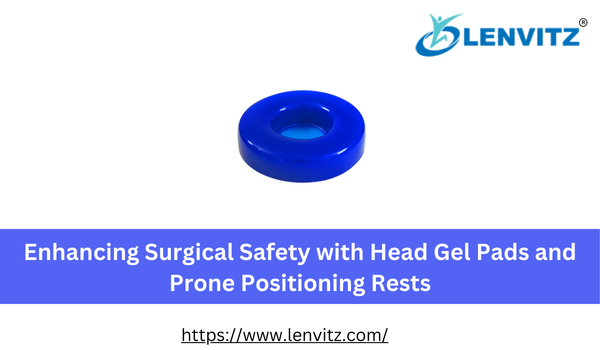
When we think about surgical success, our minds usually go to the precision of the surgeon or the advanced monitoring equipment. However, one of the most vital components of patient safety happens right at the top: head positioning. Whether it’s a short routine procedure or a complex spinal surgery, ensuring the skull is properly cradled is essential to prevent long-term nerve damage and skin breakdown.
In the world of medical positioning, tools like the Head Gel Pad and the silicon head ring are the unsung heroes that keep patients safe when they are at their most vulnerable.
1. Why Specialized Head Support is Critical
During anesthesia, the body loses its natural ability to shift or react to pressure. If a patient's head rests on a hard surface for an extended period, the weight of the skull can compress blood vessels and nerves. This can lead to complications ranging from minor "pressure alopecia" (temporary hair loss) to serious scalp ulcers.
The introduction of the Head Gel Pad has revolutionized this aspect of care. These pads are designed to distribute the weight of the head evenly, mimicking the soft, protective qualities of human tissue.
2. The Versatility of the Head Ring
One of the most common shapes found in the operating room is the head ring. These are used primarily when a patient is in the supine (lying on the back) position.
The Benefits of a Silicon Head Ring
A silicon head ring offers a unique combination of stability and softness. Its "donut" shape serves several purposes:
-
Pressure Redistribution: It protects the occipital bone at the back of the head, which is highly susceptible to pressure sores.
-
Stability: The silicon head ring prevents the head from rolling or shifting during delicate procedures, such as eye or ENT surgeries.
-
Ear Protection: By centering the head, it ensures the ears are not compressed against the table.
Because a silicon head ring is made from high-grade medical silicone, it is non-reactive, hypoallergenic, and incredibly easy to sterilize between uses.
3. Mastering the Face-Down Position: The Prone Head Rest
Not all surgeries allow the patient to lie comfortably on their back. For spinal surgeries or procedures on the posterior of the body, a patient must be placed face-down. This is where the prone head rest becomes an absolute necessity.
Safety Features of a Prone Head Rest
Lying face-down for hours presents risks to the eyes, nose, and airway. A modern prone head rest is specifically engineered to:
-
Protect Vision: It features cutouts to ensure there is zero pressure on the eyeballs, which is critical to preventing post-operative vision loss.
-
Maintain Airway Integrity: The design allows for the secure placement of anesthetic tubes so the patient can breathe without obstruction.
-
Enhanced Comfort: Unlike standard foam blocks, a gel-based prone head rest contours to the unique shape of the patient's face, reducing the risk of bruising or swelling.
4. Why Medical Professionals Choose Gel Over Foam
While foam is often used as a cheaper alternative, gel pads are the superior choice for high-stakes environments. A Head Gel Pad does not "bottom out"—meaning it won't compress until the patient is effectively touching the hard table. Furthermore, the cooling properties of a silicon head ring help regulate the skin's temperature, further preventing tissue breakdown.
Conclusion: Small Tools, Massive Impact
The journey to a successful recovery starts with the right foundation. By utilizing a Head Gel Pad, a stable head ring, and a specialized prone head rest, surgical teams can focus on the procedure knowing the patient’s most vital area is protected. These tools may be small, but their impact on patient outcomes is immeasurable.

 English
 Arabic
 French
 Spanish
 Portuguese
 Deutsch
 Turkish
 Dutch
Dutch
 Italiano
 Russian
 Romaian
 Greek
Greek