


The Science of Surgery: Why a Head Gel Pad is Your Best Friend in the O.R.
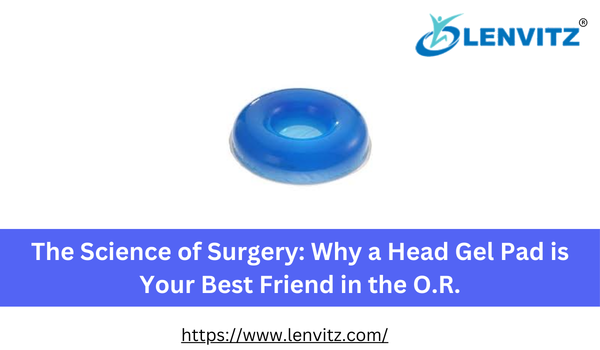
When we prepare for a medical procedure, our minds are usually filled with questions about the surgeon’s experience or the recovery timeline. We rarely stop to think about how our head will be positioned for two, four, or even eight hours while we are under anesthesia. However, in the world of patient safety, the difference between a perfect recovery and a painful complication often comes down to a small, blue, jelly-like circle: the head ring.
From simple ear, nose, and throat (ENT) check-ups to complex spinal surgeries, specialized tools like the Head Gel Pad and the prone head rest are the silent guardians of your neurological and skin health.
Why Your Head Needs Special Protection During Surgery
The human head is heavy and its skin is surprisingly delicate. When a patient is unconscious, they cannot shift their weight to relieve pressure. Without a Head Gel Pad, the constant pressure on the back of the skull can lead to "pressure alopecia" (temporary hair loss) or, more seriously, deep tissue sores.
A medical-grade head ring is designed to cradle the occipital bone. By distributing the weight of the head over a wider surface area, it ensures that blood continues to flow to the scalp and prevents the nerves from being pinched against the hard surgical table.
The Superiority of the Silicon Head Ring
In modern hospitals, the silicon head ring has largely replaced older foam or rubber versions. But why is silicone the gold standard?
-
Fluid-Like Support: A silicon head ring mimics the consistency of human fat cells. This allows the head to "sink" slightly into the ring, providing 360-degree support.
-
Hygiene and Sterility: Unlike foam, which can trap bacteria in its pores, a silicon head ring is non-porous. It can be easily disinfected, ensuring a sterile environment for every patient.
-
Durability: These rings do not "bottom out." Even during a marathon 10-hour surgery, the Head Gel Pad maintains its shape and protective qualities.
Facing Down: The Critical Role of the Prone Head Rest
Some of the most delicate surgeries—such as those on the spine or the back of the legs—require the patient to be placed face-down. This is known as the prone position. This position presents a massive challenge: how do you protect the face while allowing the patient to breathe?
This is where the prone head rest becomes a lifesaver. A high-quality prone head rest features:
-
Eye and Airway Cutouts: It ensures there is absolutely no pressure on the eyeballs (which can cause permanent vision damage) while leaving space for anesthesia tubes.
-
Forehead and Chin Support: It balances the weight across the strongest parts of the face, preventing bruising on the nose or cheeks.
-
Stability: It locks the head in a neutral alignment, protecting the cervical spine from strain.
What the General Public Should Know
If you or a loved one are heading into surgery, it is comforting to know that hospitals prioritize these small details. The use of a Head Gel Pad or a silicon head ring isn't just about "comfort"—it is a sophisticated clinical intervention.
When a surgical team selects a specific prone head rest, they are actively working to prevent nerve damage and skin breakdown. It is this level of detail that allows patients to wake up feeling only the effects of the surgery they needed, rather than the side effects of the table they lay on.
Conclusion: Small Tools, Massive Impact
The next time you see medical equipment, remember that the Head Gel Pad is a masterpiece of engineering. Whether it's a simple head ring for a quick procedure or a complex prone head rest for spinal work, these silicone wonders are essential for a safe, successful medical outcome.

 English
 Arabic
 French
 Spanish
 Portuguese
 Turkish
 Dutch
Dutch
 Italiano
 Russian
 Romaian
 Portuguese (Brazil)
 Greek
Greek