


How Advanced Gel Positioning Keeps You Safe During Surgery
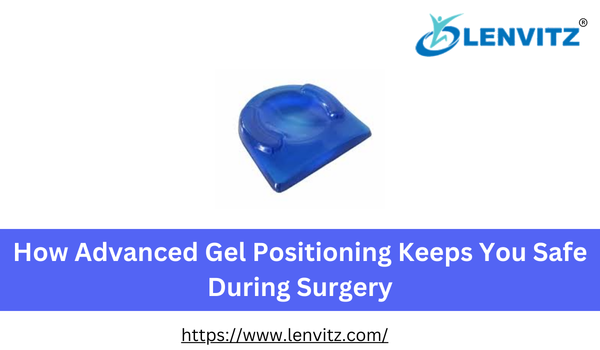
When we prepare for a surgical procedure, we often focus on the "big" things—the surgeon’s expertise, the anesthesia, or the recovery time. However, there is a silent, critical factor happening while you are asleep: your physical positioning.
Whether it is a routine gallbladder removal or a complex orthopedic repair, the way your body is supported on the operating table can dictate how you feel for weeks after the procedure. This is where high-tech medical supports like supine position gel pads and a lateral positioner become the unsung heroes of the operating room.
Understanding Surgical Positions: More Than Just Lying Down
In the medical world, "one size fits all" does not apply to how a patient sits or lies on a table. Different surgeries require different "postures" to give the surgeon the best access to the internal organs or bones. The three most common are:
-
Supine: Lying flat on your back (the most common position).
-
Lithotomy: Lying on the back with legs elevated in stirrups (common for urology or gynecology).
-
Lateral: Lying on your side (common for hip or kidney surgery).
1. The Foundation: Supine Position Gel Pads
Even though lying on your back seems natural, doing so on a firm surgical table for four hours is not. Without supine position gel pads, the back of the head, the shoulder blades, and the heels are under constant, intense pressure. These specialized gel pads redistribute that weight, preventing "pressure sores" and ensuring that blood continues to circulate freely to your skin and muscles.
specialized Support for Complex Procedures
As the surgery becomes more specialized, so does the equipment.
Precision with Lithotomy Position Gel Pads
The lithotomy position puts significant stress on the calves and the popliteal nerve (behind the knee). If a patient is placed in stirrups without lithotomy position gel pads, they risk waking up with numbness or even temporary nerve palsy in their legs. These pads act as a soft interface between the hard stirrup and the patient’s skin, cradling the leg to prevent pinched nerves.
Stability with a Lateral Positioner
When a patient must be turned on their side, gravity becomes a challenge. A lateral positioner is a specialized device—often a vacuum-integrated bean bag or a rigid brace—that keeps the body perfectly aligned. However, because the patient's weight is concentrated on a smaller surface area (the side of the hip and shoulder), lateral position gel pads are tucked into the "axillary" (armpit) and bony areas to prevent deep tissue injury.
Why Quality Matters to the General Public
You might wonder, "Why should I care about lateral position gel pads?" The answer lies in your "Post-Op" comfort. Many patients wake up complaining of a "stiff neck" or "sore hip" and assume it's just a side effect of surgery. In reality, these are often the results of minor positioning strains.
By using high-quality supine position gel pads and anatomical supports, hospitals are ensuring:
-
Reduced Nerve Damage: No tingling or "pins and needles" after the fog of anesthesia clears.
-
Skin Protection: Preventing painful ulcers that can take weeks to heal.
-
Better Outcomes: When the body is supported, the surgical team can work with more precision and less worry about patient shifting.
Conclusion: Safety in Every Layer
The next time you or a family member discusses a surgical plan with a doctor, remember that safety extends beyond the scalpel. The use of a lateral positioner, lithotomy position gel pads, and other protective surfaces is a hallmark of a hospital that prioritizes patient-centered care. These tools ensure that while the surgeon works on the "inside," the gel pads are working hard to protect the "outside."

 English
 Arabic
 French
 Spanish
 Portuguese
 Turkish
 Dutch
Dutch
 Italiano
 Russian
 Romaian
 Portuguese (Brazil)
 Greek
Greek