


Best Powerlifting Book Every Training Student Must Read – FGIIT
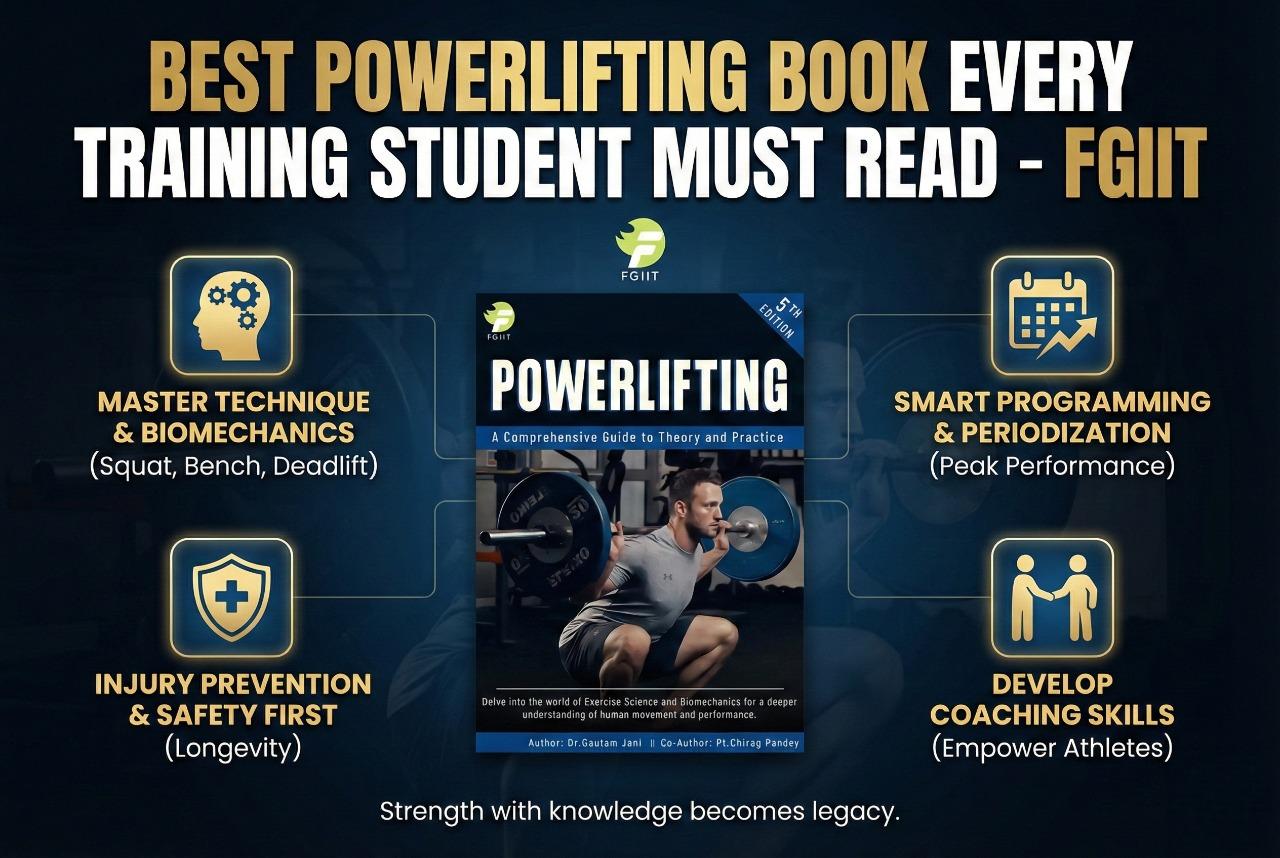
If you are serious about becoming a strength athlete, a professional trainer, or a powerlifting coach, then reading the right book can change your entire journey.
Powerlifting is not just about lifting heavy weights. It’s about mastering technique, understanding biomechanics, programming intelligently, preventing injuries, and peaking at the right time. Most gym-goers focus only on adding plates to the bar. But real powerlifters focus on adding knowledge.
That’s why the FGIIT Powerlifting Comprehensive Guide stands out as one of the best resources every training student must read.
This isn’t just another fitness manual. It’s a structured, practical roadmap for anyone who wants to understand powerlifting from foundation to advanced programming in fitness. Best Powerlifting Book to Read – Buy Online at FGIIT.
Let’s break down why this book is essential for every serious training student.
1. It Builds Strong Foundations – Not Just Big Lifts
Many beginners jump straight into heavy squats and deadlifts without understanding what powerlifting truly is. This book starts from the beginning — the history and evolution of powerlifting.
It explains how powerlifting developed from early strength competitions into a globally recognized sport. Understanding this history gives you context. You realize that you’re part of something bigger — a sport built on discipline, rules, and structured performance.
It also clearly explains:
-
What powerlifting actually is
-
The three competition lifts
-
How athletes are judged
-
Weight categories
-
Competition formats
For training students, this clarity is important. Before coaching others, you must understand the sport deeply.
2. Detailed Biomechanics of Squat, Bench Press & Deadlift
This is where the book becomes extremely valuable.
Instead of simply saying “keep your back straight,” it explains:
-
Proper foot placement
-
Bar positioning (high bar vs low bar squat)
-
Grip width adjustments
-
Core bracing techniques
-
Breathing strategies
-
Hip positioning
-
Bar path efficiency
For example, the squat section breaks down:
-
Descent mechanics
-
Maintaining neutral spine
-
Knee tracking
-
Depth standards (below parallel)
-
Common errors like knee valgus and forward lean
The bench press section teaches:
-
Proper arch setup
-
Leg drive
-
Controlled eccentric phase
-
Competition pause rules
-
Elbow positioning for shoulder safety
The deadlift section explains:
-
Mixed vs hook grip
-
Hip height optimization
-
Avoiding lumbar rounding
-
Lockout technique
-
Bar path efficiency
For a training student, this level of technical breakdown is gold. It helps you not only lift better but also coach better.
3. It Teaches You What NOT to Do
One of the strongest sections of this guide is the correction of common technical mistakes.
Most injuries in powerlifting happen because of:
-
Poor setup
-
Lack of core bracing
-
Improper bar path
-
Ego lifting
-
No warm-up
This book clearly identifies mistakes like:
-
Knee collapse during squats
-
Bouncing the bar in the bench press
-
Jerking the deadlift off the floor
-
Overarching the lower back
-
Failing to lock out
But more importantly, it gives practical corrections.
For a future coach or serious athlete, knowing how to fix mistakes is more important than knowing how to perform the lift.
4. Safety First – A Section Many Books Ignore
What separates professional training material from casual gym advice is its focus on safety.
The book emphasizes:
-
Proper warm-up protocols
-
Progressive overload principles
-
Using safety pins and spotters
-
Hydration importance
-
Controlled eccentric movements
-
Listening to your body
It even discusses recovery practices like:
-
Active recovery
-
Foam rolling
-
Static stretching
-
Mobility drills
Training students must understand that strength without safety is temporary. Longevity matters more than ego.
5. Strength Training Principles Explained Clearly
This section is extremely important for aspiring trainers.
It explains fundamental principles like:
-
Progressive overload
-
Recovery cycles
-
Muscle group targeting
-
Nutrition fundamentals
-
Monitoring progress
-
Consistency
Instead of random workout plans, the book explains why certain methods work.
Understanding the science behind strength training helps trainers design intelligent programs rather than copying routines from social media.
6. Periodization – The Secret to Peak Performance
One of the most powerful parts of this guide is its explanation of periodization.
Most lifters train randomly. Professionals train in phases.
The book breaks down:
-
Macrocycles
-
Mesocycles
-
Microcycles
-
Linear periodization
-
Undulating periodization
-
Block periodization
It explains how to structure:
-
Hypertrophy phase
-
Strength phase
-
Peaking phase
-
Deload weeks
This is the difference between a gym lifter and a competitive athlete.
For students preparing for competitions or planning to coach athletes, this section alone makes the book worth reading.
7. Progression Models for Every Level
The guide also covers progression systems such as:
-
Linear progression
-
Percentage-based training
-
Wave loading
-
Daily undulating periodization
-
Conjugate method
-
Microloading
-
Auto-regulation
These models teach students how to continue progressing even after beginner gains stop.
Most beginners progress easily. But when plateaus hit, only structured progression saves you.
This book prepares you for that stage.
8. Programming and Training Plan Design
This is extremely valuable for fitness students.
The guide teaches how to:
-
Assess an athlete’s 1RM
-
Identify weaknesses
-
Design weekly splits
-
Balance intensity and volume
-
Monitor performance logs
-
Implement deload weeks
It even explains how to adjust programs based on performance feedback.
This makes it not just a powerlifting book, but a coaching manual.
9. Nutrition & Recovery Strategies for Powerlifters
Strength is built in training.
Muscle is built in recovery.
The book covers:
-
Caloric intake calculation
-
Protein requirements
-
Carbohydrate timing
-
Hydration monitoring
-
Creatine supplementation
-
Sleep importance
-
Active recovery
For training students, this reinforces that performance is holistic. It’s not just about lifting — it’s about fueling and repairing the body.
10. Federation Rules & Competition Awareness
If you want to compete or coach competitors, you must understand federation rules.
The book discusses:
-
Different powerlifting federations
-
Drug-tested vs non-tested competitions
-
Raw vs equipped divisions
-
Equipment standards
-
Competition commands
Many lifters fail attempts in competition because they don’t understand commands or rules.
This guide prepares you mentally and technically for the platform.
11. Coaching & Communication Skills
What makes this guide even more valuable is that it touches on coaching aspects.
It talks about:
-
Monitoring progress
-
Communicating with athletes
-
Adjusting training variables
-
Emotional support
-
Individualization
Strength training is not just physical — it’s psychological.
Good coaches build confidence, not just muscle.
Why This Book Is Perfect for FGIIT Students
FGIIT’s Powerlifting Guide is structured like a professional curriculum.
It combines:
-
Theory
-
Practical application
-
Programming
-
Injury prevention
-
Coaching insights
It is written in a way that beginners can understand, yet detailed enough for advanced trainees.
For students enrolled in personal training or strength coaching programs, this book bridges the gap between classroom theory and gym-floor application.
Who Should Read This Book?
-
Aspiring personal trainers
-
Powerlifting beginners
-
Competitive lifters
-
Strength and conditioning students
-
Fitness course students
-
Gym trainers wanting technical depth
If you want to coach athletes, compete seriously, or build a long-term strength career, this guide is essential.
Frequently Asked Questions (FAQs)
1. Why should a training student read a powerlifting book?
A powerlifting book provides structured knowledge about technique, programming, biomechanics, recovery, and competition rules. Training students who understand these fundamentals can coach better, avoid injuries, and design smarter workout plans instead of copying random routines.
2. What makes the FGIIT Powerlifting Guide different from other fitness books?
The FGIIT Powerlifting Guide combines theory and practical application. It covers biomechanics of squat, bench press, and deadlift, programming models, progression systems, injury prevention, competition rules, and coaching strategies — all in one structured format.
3. Is this book suitable for beginners?
Yes. The guide starts with the basics like history, rules, and understanding the three main lifts. It gradually moves into advanced topics such as periodization, programming, and peaking strategies, making it suitable for both beginners and advanced lifters.
4. Does the guide help in preparing for powerlifting competitions?
Yes. It explains competition formats, weight classes, federation rules, commands, and equipment standards. This knowledge helps athletes avoid failed attempts due to technical mistakes during competitions.
Final Thoughts
Powerlifting is simple in appearance — squat, bench, deadlift.
But mastering it requires:
-
Technical precision
-
Structured programming
-
Intelligent progression
-
Injury prevention awareness
-
Recovery discipline
-
Mental strength
The FGIIT Powerlifting Comprehensive Guide brings all of this together in one structured resource.
If you are a training student who wants more than just gym knowledge — if you want professional-level understanding — this is the book you must read.
- Strength without knowledge is temporary.
Strength with knowledge becomes a legacy. - And every serious training student should start here.

 English
 Arabic
 French
 Spanish
 Portuguese
 Deutsch
 Turkish
 Dutch
Dutch
 Italiano
 Russian
 Romaian
 Portuguese (Brazil)