


How Prone Position Gel Pads Protect You During Surgery
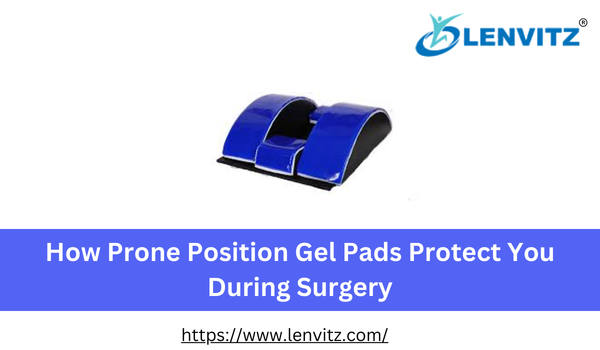
When we think of surgery, we often imagine the patient lying flat on their back. However, many critical procedures—especially those involving the spine, the back of the legs, or the posterior brain—require the patient to be placed face-down. This is known as the Prone Position.
While this position is necessary for the surgeon to access the operative site, it places unique stress on the body. This is where high-tech medical equipment like prone position gel pads and specialized prone head rest systems become the unsung heroes of the operating room.
Understanding the Challenges of the Prone Position
Placing a patient in the Prone Position is a delicate process. Unlike lying on your back, being face-down puts significant pressure on the chest, abdomen, knees, and, most importantly, the face and eyes. Without the right support, patients are at risk for:
-
Pressure Sores: Skin breakdown on bony areas.
-
Nerve Damage: Compression of vital nerves in the arms and legs.
-
Respiratory Issues: Difficulty in chest expansion for breathing.
To mitigate these risks, surgical teams use an ot table mat and specialized cushions designed to mimic the softness of human tissue while providing structural support.
The Critical Role of the Prone Head Rest
Perhaps the most sensitive area during face-down surgery is the head. A prone head rest is not just a pillow; it is a precision-engineered device designed to protect the eyes, nose, and mouth.
One of the greatest risks in long surgeries is "Postoperative Visual Loss" (POVL), which can occur if there is direct pressure on the eyeballs. Modern prone head rest designs are often contoured or "horseshoe" shaped to ensure that the weight is distributed across the forehead and cheekbones, leaving the eyes completely free of pressure. This allows the anesthesiologist to monitor the patient's airway and ensures the patient wakes up without avoidable facial injuries.
Why Prone Position Gel Pads are Essential
During a long operation, the weight of the body needs to be distributed evenly. Prone position gel pads are superior to traditional foam because they do not "bottom out."
Benefits of Gel Over Foam:
-
Shear Reduction: They allow for slight movement, preventing the skin from tearing or stretching (shear).
-
Pressure Distribution: They distribute weight over a wider surface area, which is vital when the body is in the Prone Position.
-
Stability: These pads keep the patient from sliding, ensuring the surgical field remains sterile and stationary.
Enhancing Comfort with the OT Table Mat
The foundation of any surgical setup is the ot table mat. Standard operating tables are quite hard to allow for stability during surgery. Adding a specialized ot table mat made of high-grade silicone or polymer gel transforms that hard surface into a protective environment. This is especially important for the torso and pelvic areas, ensuring that the patient’s circulatory system isn't compromised while they are face-down.
Conclusion: A Commitment to Patient Safety
For anyone undergoing surgery, knowing the level of detail that goes into positioning can be a great comfort. The use of prone position gel pads, a dedicated prone head rest, and a high-quality ot table mat represents a hospital's commitment to the highest standards of safety. These tools ensure that while the surgeon focuses on the "cure," the equipment focuses on the "care," protecting your body throughout the entire Prone Position procedure.

 English
 Arabic
 French
 Portuguese
 Deutsch
 Turkish
 Dutch
Dutch
 Italiano
 Russian
 Romaian
 Portuguese (Brazil)
 Greek
Greek