


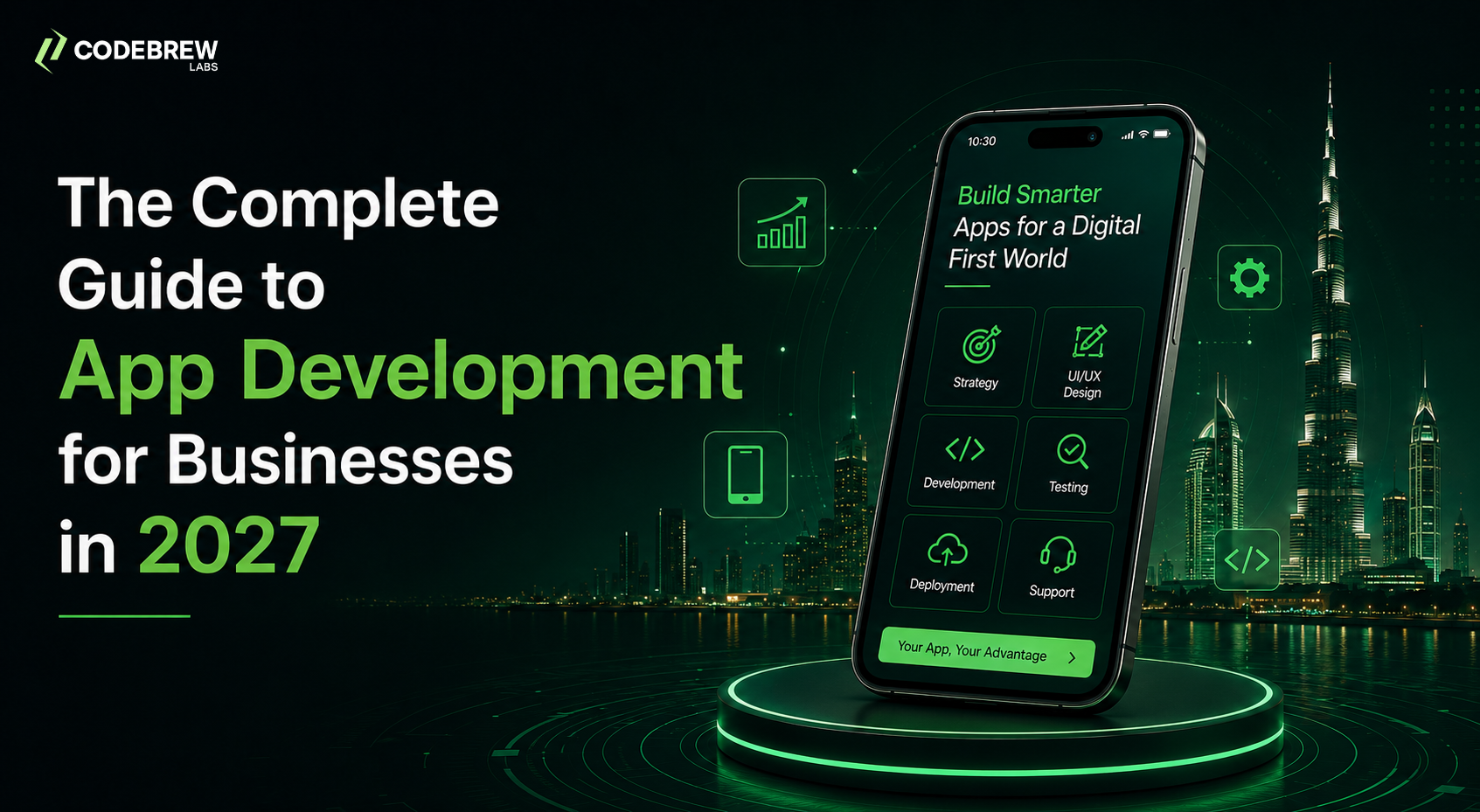
The Complete Guide to App Development for Businesses in 2027
In today's digital-first economy, businesses are no longer asking whether they need a mobile application—they're asking how to build one that delivers measurable business results. As technology continues to evolve, app development has become more intelligent, scalable, and business-centric than ever before.
In 2027, successful applications are powered by AI, cloud computing, automation, real-time analytics, and exceptional user experiences. Whether you're a startup launching your first product or an enterprise modernizing legacy systems, understanding the modern app development process is essential for long-term success.
This comprehensive guide walks you through everything you need to know about app development in 2027—from planning and technology selection to development, security, costs, and future trends.
Why App Development Matters More Than Ever
Mobile applications have become a direct connection between businesses and customers. They simplify operations, improve customer engagement, and create new revenue opportunities across industries.
Businesses invest in app development to:
- Increase customer engagement
- Improve operational efficiency
- Build brand loyalty
- Generate recurring revenue
- Automate business processes
- Deliver personalized customer experiences
- Expand into new markets
From healthcare and fintech to retail and logistics, organizations are leveraging custom applications to stay competitive in an increasingly digital marketplace.
What Is Modern App Development?
Modern app development goes beyond writing code. It involves creating scalable, secure, and user-focused applications that solve real business problems while integrating seamlessly with existing systems.
Today's app development includes:
- Business strategy
- Market research
- User experience design
- Frontend development
- Backend architecture
- API integrations
- Cloud deployment
- AI implementation
- Security testing
- Continuous maintenance
The goal is to build applications that evolve alongside changing customer expectations and business needs.
Types of Mobile Applications
Choosing the right type of application depends on your business objectives, budget, and target audience.
Native Apps
Native applications are built specifically for Android or iOS platforms.
Benefits include:
- High performance
- Better security
- Smooth user experience
- Full access to device features
They are ideal for businesses requiring advanced functionality and premium performance.
Cross-Platform Apps
Cross-platform development allows businesses to create applications for multiple operating systems using a single codebase.
Advantages include:
- Faster development
- Lower costs
- Easier maintenance
- Simultaneous Android and iOS launches
This approach is widely adopted by startups and businesses aiming to reduce time-to-market.
Progressive Web Apps (PWAs)
PWAs combine web technologies with app-like functionality.
Benefits include:
- No mandatory app store downloads
- Faster updates
- Lower development costs
- Improved accessibility
They are particularly effective for businesses seeking broad audience reach.
The App Development Process in 2027
Successful projects follow a structured development lifecycle.
1. Business Discovery
The process begins with understanding:
- Business objectives
- Target audience
- Market opportunities
- Competitor landscape
- Revenue model
A strong discovery phase minimizes risks later in development.
2. Product Strategy
Before coding begins, businesses define:
- Core features
- User journeys
- Technology stack
- Development roadmap
- Success metrics
This ensures the project remains aligned with business goals.
3. UI/UX Design
User experience directly impacts engagement and retention.
Modern design focuses on:
- Simple navigation
- Accessibility
- Fast interactions
- Personalized experiences
- Consistent branding
A well-designed interface helps convert users into loyal customers.
4. Development
The development phase includes:
- Frontend engineering
- Backend development
- API integration
- Database architecture
- Cloud infrastructure
- AI feature implementation
Development teams increasingly adopt Agile methodologies to deliver features incrementally and respond quickly to changing requirements.
5. Testing and Quality Assurance
Before launch, applications undergo comprehensive testing to ensure reliability and performance.
Testing includes:
- Functional testing
- Performance testing
- Security testing
- Device compatibility testing
- Usability testing
- Regression testing
Quality assurance helps reduce bugs and improve user satisfaction.
6. Deployment
Once testing is complete, applications are deployed to app stores or enterprise environments.
Deployment involves:
- Store compliance
- Performance monitoring
- Analytics integration
- Crash reporting
- User onboarding
A successful launch is supported by continuous monitoring and updates.
Technologies Driving App Development in 2027
Modern applications rely on advanced technologies to deliver intelligent and scalable experiences.
Artificial Intelligence
AI powers:
- Smart chatbots
- Predictive analytics
- Recommendation engines
- Voice assistants
- Personalized content
- Automated workflows
Cloud Computing
Cloud infrastructure enables:
- Global scalability
- Reliable performance
- Flexible storage
- Faster deployment
- Disaster recovery
Internet of Things (IoT)
IoT connects applications with:
- Smart devices
- Wearables
- Industrial equipment
- Connected vehicles
- Healthcare devices
Blockchain
Blockchain enhances:
- Secure transactions
- Identity verification
- Supply chain transparency
- Digital asset management
Augmented Reality
AR improves experiences in:
- Retail
- Healthcare
- Education
- Real estate
- Manufacturing
Essential Features Every Business App Should Include
Regardless of industry, successful applications typically include:
- Secure user authentication
- Personalized dashboards
- Push notifications
- Real-time analytics
- Payment gateway integration
- Cloud synchronization
- Search functionality
- In-app messaging
- Offline capabilities
- Data encryption
Feature selection should always align with user needs rather than adding unnecessary complexity.
Security Considerations
Cybersecurity remains one of the most critical aspects of app development.
Businesses should implement:
- Multi-factor authentication
- End-to-end encryption
- Secure APIs
- Regular security audits
- Role-based access control
- Compliance with relevant regulations
- Continuous vulnerability monitoring
Building security into every stage of development helps protect both business data and user trust.
Common Challenges in App Development
Even well-planned projects face challenges such as:
- Scope changes
- Budget constraints
- Integration with legacy systems
- User adoption
- Performance optimization
- Security risks
- Platform compatibility
Working with an experienced development team helps address these challenges proactively.
How to Choose the Right App Development Company
Selecting the right development partner is as important as choosing the right technology.
Consider factors such as:
- Industry experience
- Technical expertise
- Portfolio of successful projects
- Transparent communication
- Agile development practices
- Post-launch support
- Security standards
- Client reviews and testimonials
A reliable partner should understand your business objectives—not just your technical requirements.
App Development Trends Businesses Should Watch
The future of app development will continue to be shaped by:
- Generative AI
- AI-assisted software engineering
- Hyper-personalization
- Super apps
- Cloud-native architecture
- Edge computing
- Low-code platforms
- Sustainable software engineering
- Predictive analytics
- Voice-first interfaces
Businesses that adopt these innovations early will be better positioned for long-term growth.
Best Practices for Successful App Development
To maximize project success:
- Clearly define business goals.
- Prioritize user experience.
- Build with scalability in mind.
- Use secure development practices.
- Test continuously.
- Monitor user feedback after launch.
- Update the application regularly.
- Leverage analytics to guide future improvements.
App development should be viewed as an ongoing process rather than a one-time project.
Conclusion
In 2027, building successful digital products is no longer just about creating a mobile application—it is about delivering intelligent, scalable, and secure solutions that generate real business value. Organizations that invest in strategic planning, future-ready technologies, and exceptional user experiences will be better positioned to meet changing customer expectations and stay competitive in an increasingly digital world.
Whether you're developing a customer-facing platform, an enterprise solution, or an AI-powered product, partnering with an experienced technology company can make all the difference. With over 13 years of industry experience, 2,500+ successfully delivered digital solutions, and a team of 250+ skilled technology experts, Code Brew Labs helps startups and enterprises transform innovative ideas into high-performing digital products. From strategy and design to development and ongoing support, the team focuses on building scalable solutions that drive long-term business growth.

 Arabic
 French
 Spanish
 Portuguese
 Deutsch
 Turkish
 Dutch
Dutch
 Italiano
 Russian
 Romaian
 Portuguese (Brazil)
 Greek
Greek