


A Guide on the Usage of Solar Energy in Industries in Sabarkantha
Industrial solar adoption reduces electricity bills by 50-80%, reducing energy costs for 20-25 years and minimising grid reliance. This transition slashes carbon emissions, unlocks accelerated depreciation tax benefits, and strengthens brand value through robust ESG profiles.
India’s total installed solar capacity has surpassed 154 GW by April 2026. It is due to the industrial sectors. Continue reading the article to understand the importance of solar energy in industrial sectors in Gujarat.
What are the Benefits of Using Solar Energy for Industrial Sectors?
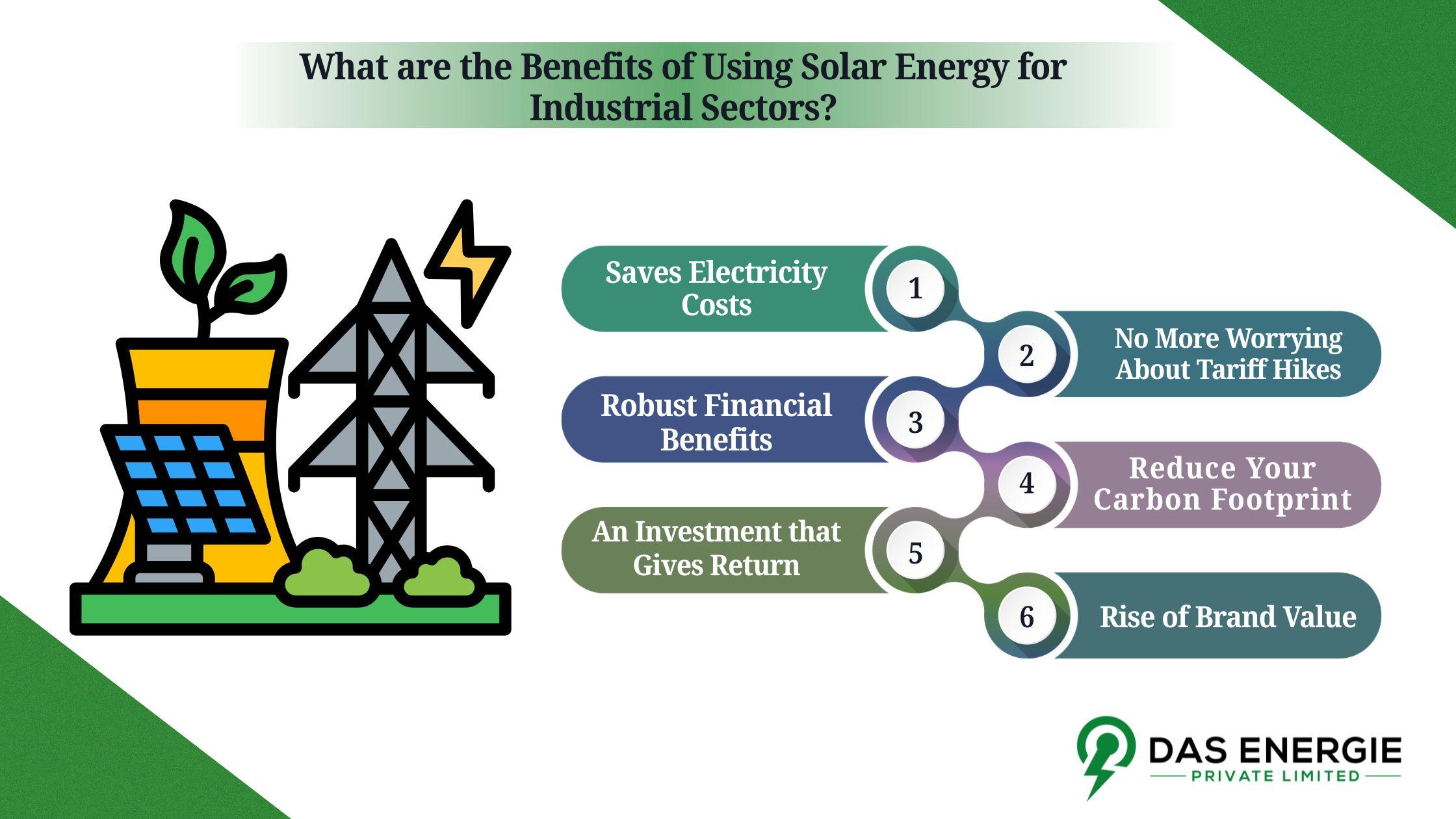
Industrial solar adoption slashes operational costs, stabilises long-term power prices, and ensures uninterrupted energy. By reducing the grid reliance, industries in parts of Gujarat effortlessly achieve ESG targets and get tax benefits. Below are the benefits of using solar energy by partnering with a Solar company in Gujarat:
1. Saves Electricity Costs
For most factory owners, the immediate impact on the bottom line is the biggest selling point. If you are paying Rs. 7–12 per unit, mostly this rate rises every year. Transitioning to solar drops effectively costs a mere Rs. 1.5–3 per unit over the system's lifetime. For a factory utilising 50,000 units monthly, this saves up to Rs. 2.5–5 lakh each month.
Because rooftop solar installs directly onto your existing facility, it uses idle space without requiring extra space. You can get a full return on investment within 4–6 years, followed by roughly two decades of near-free electricity. This shift can slash your first-year energy bills by 50–70%, accumulating over Rs. 5–10 crore in lifetime savings.
2. No More Worrying About Tariff Hikes
Grid tariffs fluctuate every financial year, but solar costs remain completely stable. Once your panels are installed, your power generation cost remains the same over 20 years, shielding your factory from annual DISCOM revisions, sudden fuel surcharges, and rising transmission costs.
For example, Gujarat raised industrial tariffs to Rs. 7.5/unit for FY 2026, while UP is proposing a 15–18% hike for FY 2026-27; these hikes squeeze traditional businesses. Factories that have already shifted to solar barely even notice the announcements.
You can contact reputable solar companies in Gujarat, such as Das Energie Pvt. Ltd to get your solar panel installed.
3. Robust Financial Benefits
The financial incentives for industrial solar go far beyond basic energy savings. You can collaborate with an expert solar company in Surat to leverage the tax and policy advantages available in 2026. Under the Income Tax Act, you can claim 40% Accelerated Depreciation in the first year, reducing taxable profits and lowering costs by 25–30%.
Additionally, Net Metering credits excess generated power against grid consumption. Facilities with loads over 100 kW can access cost-saving Green Open Access options. Businesses can also evaluate GST Input Credits with tax advisors to maximise project returns.
4. Reduce Your Carbon Footprint
According to the IEA’s Global Energy Review 2026, solar energy globally prevented 1.5 billion tonnes of CO2 emissions in 2025, with India playing a major role. Every 1 MW of installed solar offsets roughly 1,400 to 1,600 tonnes of CO2 annually. Even a smaller 500 kW rooftop setup cuts about 700 tonnes each year, which is equivalent to planting 32,000 trees.
While India’s coal-heavy grid emits 0.82 kg of CO2 per kWh, solar operational emissions are zero. This means cutting carbon in 2026 is a smart move.
5. An Investment that Gives Return
Unlike fleeting monthly electricity bills, a solar system functions as a highly valuable, depreciating capital asset. Working with an experienced solar company in Gujarat lets your business maximise these financial returns immediately. You can claim 40% accelerated depreciation in Year 1.
The system continues to generate free power for over 25 years after being written off. Banks even view these installations as excellent loan collateral. For any CFO, there are not many investment plans that offer a 4–6 year payback, a 25-year lifespan, and upfront tax advantages.
6. Rise of Brand Value
In 2026, sustainability is a core business requirement. Investing in a commercial solar system and having documented green credentials gives your company a distinct competitive advantage. It helps you win more commercial tenders where ESG scores directly influence vendor evaluation and positions you to secure better financing.
Furthermore, investing in clean energy prioritises environmental responsibility. It also strengthens your relationships with international buyers, who must source from sustainable suppliers to hit their milestones.
Final Thoughts
The cheapest quote rarely means the cheapest system. A poorly installed solar panel underperforms for its entire 25-year lifespan. Partnering with experienced industrial installers is just as important as choosing quality equipment.
Avoid long-term losses by securing your energy future with trusted companies like Das Energie Pvt. Ltd.

 English
 French
 Spanish
 Portuguese
 Deutsch
 Turkish
 Dutch
 Italiano
 Russian
 Romaian
 Portuguese (Brazil)
 Greek