


Stretch Mark Camouflage: What You Need to Know Before Trying It
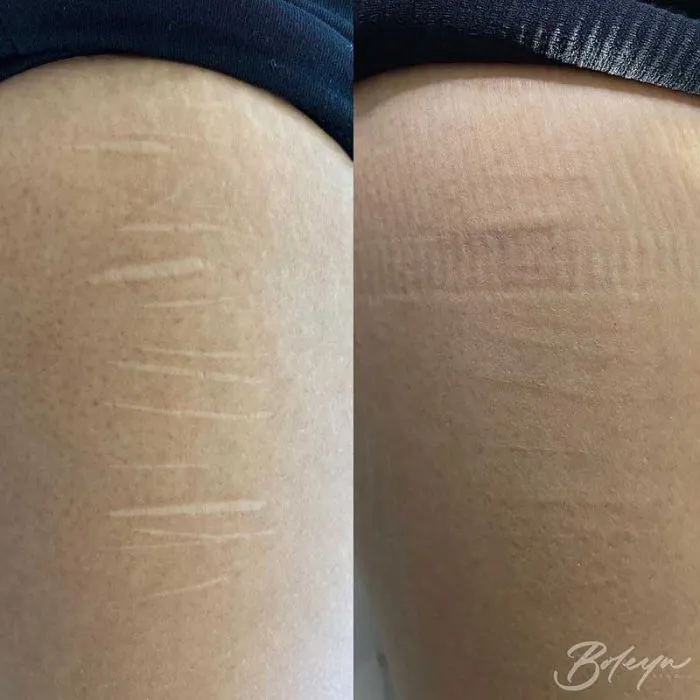
When people talk about “stretch mark camouflage,” they generally refer to a form of medical or paramedical tattooing in which skin‑toned pigments are deposited into the skin to help even out the color and make stretch marks less visible — rather than removing them altogether.
Essentially, the idea is to match pigments to your natural skin tone and implant them into or near the dermis so that areas of lost pigment (or contrast between your regular skin and mark) are visually minimized.
Some providers even call it a “camouflage tattoo,” though it is different from decorative tattoos — the goal isn’t art, but blending and concealment.
There are also slightly different approaches (sometimes called “inkless camouflage” or “scar revision”) that aim to improve skin texture or encourage subtle healing without pigment, but traditional stretch mark camouflage remains pigment-based.
Who Makes a Good Candidate — and When It Works Best
Not all stretch marks are equally suitable for camouflage. Experts typically recommend:
- Waiting until stretch marks are fully healed (i.e., no longer red, purple, or inflamed).
- Treating older stretch marks (often at least 1–2 years old), especially those that have faded to a lighter or more stable color.
- Understanding that this method addresses color/contrast, not skin texture: the grooves, indentations, or texture differences caused by stretch marks remain — camouflage only aims to reduce their visibility by blending color.
As a result, camouflage tends to be more effective when stretch marks are relatively flat and hypopigmented (lighter than surrounding skin), rather than dark, raised, or very fresh marks.
If stretch marks are new, inflamed, or have not yet “settled,” many professionals suggest waiting — or using other treatments (such as skin‑rejuvenating therapies) first.
What the Procedure Involves — Process & Expectations
Here’s a typical path if you choose to go for stretch mark camouflage:
- Consultation & Pigment Matching: A technician analyzes your skin tone and undertones carefully to choose pigments that blend with your natural complexion.
- Micropigmentation / Tattooing: Using a specialized device or tattooing tool, pigment is implanted into the skin at varying depths to account for the uneven texture of stretch marks (grooves, indentations, etc.).
- Healing Phase: Right after treatment, expect redness, swelling, possible mild irritation — typical of a tattoo. Over weeks, pigment settles and true color begins to show. Many providers note that final results emerge between about 4–8 weeks after the procedure.
- Possible Multiple Sessions: Often, more than one session is needed for optimal blending — two or more sessions spaced several weeks apart help achieve a more uniform result.
After full healing, the treated area may look visibly more uniform in tone — in many cases, stretch marks become much less noticeable, especially from a distance or under clothing.
Some providers report results lasting several years (commonly 3–5 years) before a touch-up might be considered — though longevity depends on skin type, sun exposure, aftercare, and how much pigment is retained.
Benefits — Why People Consider It
Many of those who’ve undergone stretch mark camouflage cite the following benefits:
- More uniform skin tone and reduced visibility of stretch marks — especially effective when contrast in color was making them obvious previously.
- Long‑lasting effect, unlike daily creams or makeup, which need repeated application. Once healed, the pigment stays put for years (with occasional touch-ups) depending on your aftercare and lifestyle.
- Improved confidence and comfort — for many people, making stretch marks less noticeable allows them to wear swimwear, sleeveless clothing, or outfits they previously avoided.
- Non-surgical and relatively quick procedure — compared to surgery or invasive treatments, camouflage involves minimal downtime, and discomfort is often likened to tattooing or microneedling.
Risks, Limitations & What to Know Before You Try
Despite the benefits, stretch mark camouflage has important limitations and potential risks — and it’s not a guarantee of “perfect” skin.
- Color matching is tricky: If the pigment chosen doesn’t match your skin tone perfectly, the treated area might still stand out — or even look worse than before.
- It doesn’t fix texture: Stretch marks often involve changes in skin texture, depth, or elasticity — camouflage only addresses pigmentation, not structural or textural irregularities.
- Pigment fading, shifting, or patchiness: Over time, pigments deposited in compromised skin (stretch-marked skin tends to have thinner or altered dermis) may fade unevenly, shift in tone (e.g., grayish, uneven), or even migrate slightly under skin — leading to patchiness or “haloing.”
- Sun exposure complications: Because pigment remains static but your natural skin may tan or change over time, treated skin can end up looking mismatched if exposed heavily to sunlight. Many clinics advise strict aftercare, sun protection, and pigment‑safe maintenance.
- Medical / skin‑health restrictions: Not everyone is a candidate — fresh stretch marks, scars still healing, those with certain skin conditions, or certain health issues (e.g., predisposition to keloids, uncontrolled diabetes, pregnancy, etc.) may be advised against it.
- Not a one‑time magic fix: Stretch mark camouflage doesn’t “remove” stretch marks — it only hides or reduces their visual contrast. For some people with deep, textured, or extensive scars, the result may be only partial improvement.
What to Ask / Decide Before Proceeding
If you’re considering stretch mark camouflage, here are some important questions or decisions to make:
- Are your stretch marks fully healed and stable in color (not red/purple)?
- Is the texture mild (relatively flat) rather than deeply indented or heavily scarred?
- Have you researched and found a skilled, experienced technician — pigment matching and correct technique matter a lot.
- Are you willing to follow strict aftercare, including sun protection, moisturizing, avoiding swimming or friction during healing?
- Do you have realistic expectations — the treatment can reduce visibility, but cannot restore original skin texture or guarantee invisibility.
- Are you comfortable with possible fading, uneven results, or future touch-ups?
Also — always ask the provider whether their pigments are medical-grade (not typical tattoo ink), whether they have case histories with people of your skin tone, and whether they offer a consultation and patch test.
Alternative or Complementary Approaches
Because camouflage addresses pigment — not texture — some people combine it with other skin treatments when the texture is uneven: for example, microneedling, laser resurfacing, or collagen‑stimulating therapies to try to improve skin firmness or smoothness, before or after camouflage.
For those who prefer non‑pigment options, there are also “inkless camouflage” or scar‑revision therapies that rely on serums or regenerative stimulation — though results may be less dramatic, and often require multiple sessions and maintenance.
Lastly, many dermatologists encourage patience and realistic expectations: stretch marks naturally fade over time, and healthy skin habits (hydration, gentle skin care, avoiding rapid weight fluctuations) can help minimize their appearance — even if they never disappear completely.
Final Thoughts: Is It Right for You?
Stretch mark camouflage can be a powerful tool for people seeking to reduce the visibility of older, healed stretch marks — especially those that are flat, lighter in color, and where the main concern is cosmetic appearance (color contrast). For many, it offers a confidence boost and a long-lasting result, which makes it an attractive alternative to daily concealers or invasive procedures.
That said — it’s not a miracle cure. It doesn’t restore original skin texture, and there are real risks: pigment mismatch, uneven fading, possible pigment shift with time, sun‑related color inconsistencies, and need for touch-ups. The quality — and long-term appearance — depends heavily on the technician’s skill, the pigments used, and your skin’s response.

 English
 Arabic
 French
 Portuguese
 Deutsch
 Turkish
 Dutch
Dutch
 Italiano
 Russian
 Romaian
 Portuguese (Brazil)
 Greek
Greek