


Advanced Inventory Management: Connecting Purchasing, Sales, and Stock Control
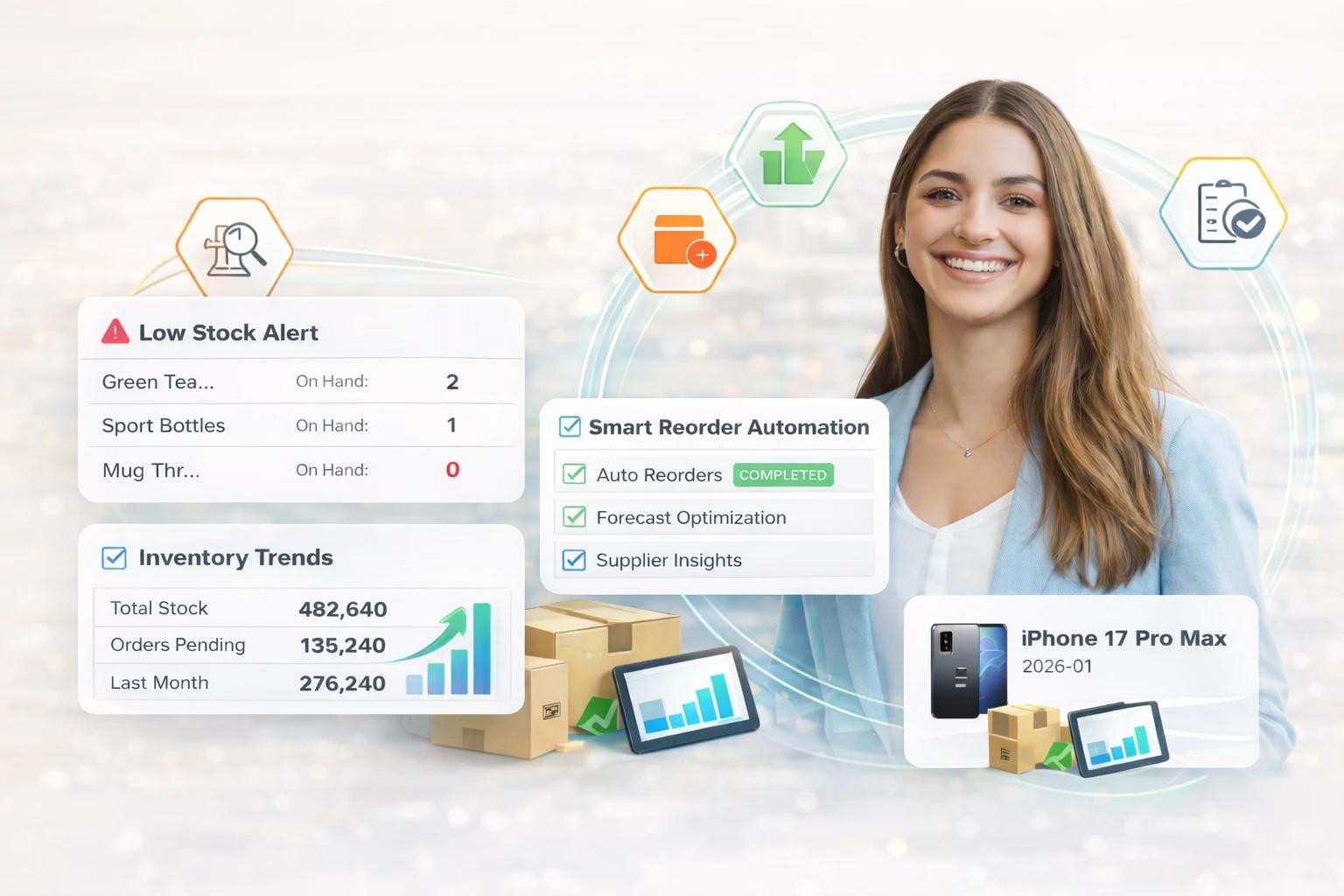
Managing inventory efficiently is essential for businesses that want to maintain smooth operations, satisfy customers, and control operating costs. When purchasing, sales, and stock management work separately, businesses may experience inaccurate stock records, delayed orders, unnecessary purchases, and missed sales opportunities. Advanced Inventory Management provides a more connected approach by bringing these essential business activities together through organised processes and intelligent technology.
For growing retailers, wholesalers, distributors, and manufacturers, having better visibility into inventory movements can make everyday decisions easier and more reliable.
Why Businesses Need Advanced Inventory Management
Traditional inventory methods often depend on spreadsheets, manual updates, and disconnected systems. Although these methods may work for smaller operations, they can become difficult to maintain as product catalogues, customer orders, and purchasing activities increase.
An integrated inventory solution helps businesses monitor stock levels, track incoming purchases, and manage outgoing sales from a centralised platform.
Some important benefits include:
-
Improved stock visibility: Access updated inventory information across products and locations.
-
Better purchasing decisions: Identify replenishment requirements before essential items run out.
-
Reduced manual errors: Automate routine inventory updates and calculations.
-
Faster order processing: Connect sales activities with available stock information.
-
Stronger operational control: Monitor inventory movements and maintain organised records.
These capabilities help businesses create a more consistent inventory process while reducing unnecessary administrative work.
Connecting Purchasing with Inventory Planning
Purchasing decisions directly influence inventory availability and business expenses. Ordering too much stock can increase storage costs, while ordering too little may result in shortages and delayed deliveries.
Advanced Inventory Management connects purchasing activities with actual stock requirements. Businesses can review current quantities, identify fast-moving products, and plan replenishment based on demand and supplier lead times.
For example, when a product approaches its predefined minimum stock level, the system can help purchasing teams identify the need for replenishment. Instead of relying entirely on manual stock checks, employees can use organised inventory information to make more informed purchasing decisions.
Effective purchasing management can support:
-
Purchase order creation and tracking.
-
Supplier information and purchasing history.
-
Minimum and maximum stock level monitoring.
-
Incoming stock updates.
-
Better coordination between purchasing and warehouse teams.
This connection makes it easier to maintain appropriate stock levels without unnecessary purchasing.
Aligning Sales Operations with Stock Availability
Sales teams need accurate inventory information to confirm customer orders and provide reliable delivery expectations. When sales and stock records are disconnected, businesses may accidentally accept orders for unavailable products or overlook items that are ready for dispatch.
A connected inventory platform allows sales teams to check product availability while processing orders. Once an order is confirmed, relevant stock quantities can be updated according to the system's workflow.
This creates several operational advantages:
-
More accurate order processing.
-
Better communication between sales and warehouse departments.
-
Improved visibility into reserved and available stock.
-
Fewer stock-related order delays.
-
More reliable customer service.
For ecommerce and wholesale businesses, connecting sales channels with inventory records is particularly valuable when multiple orders are processed simultaneously.
Maintaining Better Stock Control Across Operations
Effective stock control involves more than knowing how many products are available. Businesses also need to understand where stock is stored, how it moves, and when adjustments occur.
Modern inventory solutions can support barcode scanning, batch tracking, serial number management, stock transfers, and inventory reporting. These capabilities help businesses maintain accurate records and improve traceability throughout their operations.
According to the business's requirements, regular cycle counts and stock audits can further improve inventory accuracy. Comparing physical quantities with recorded figures helps identify discrepancies and supports timely corrections.
Using Inventory Insights for Smarter Decisions
Reliable inventory information gives managers a clearer understanding of business performance. Reports covering stock movement, purchasing trends, sales activity, and product availability can help identify slow-moving items and frequently purchased products.
Businesses can use these insights to adjust purchasing schedules, improve stock allocation, and plan future requirements. Reviewing inventory performance regularly also helps organisations respond more effectively to changing customer demand.
Simplify Inventory Operations with PlanIT
Connecting purchasing, sales, and stock control creates a stronger foundation for efficient business operations. With the right technology, businesses can improve inventory visibility, reduce repetitive tasks, and make more informed operational decisions.
PlanIT helps businesses explore smarter inventory and management solutions designed to support organised workflows and sustainable growth. Take the next step towards better inventory control with PlanIT.
-
Mobile: +91-9958474631
-
Email: sales@plan-it.pro

 English
 Arabic
 Spanish
 Portuguese
 Deutsch
 Turkish
 Dutch
 Italiano
 Russian
 Romaian
 Portuguese (Brazil)
 Greek