


Japanese Skincare Routine: A Step-by-Step Guide for Healthy-Looking Skin
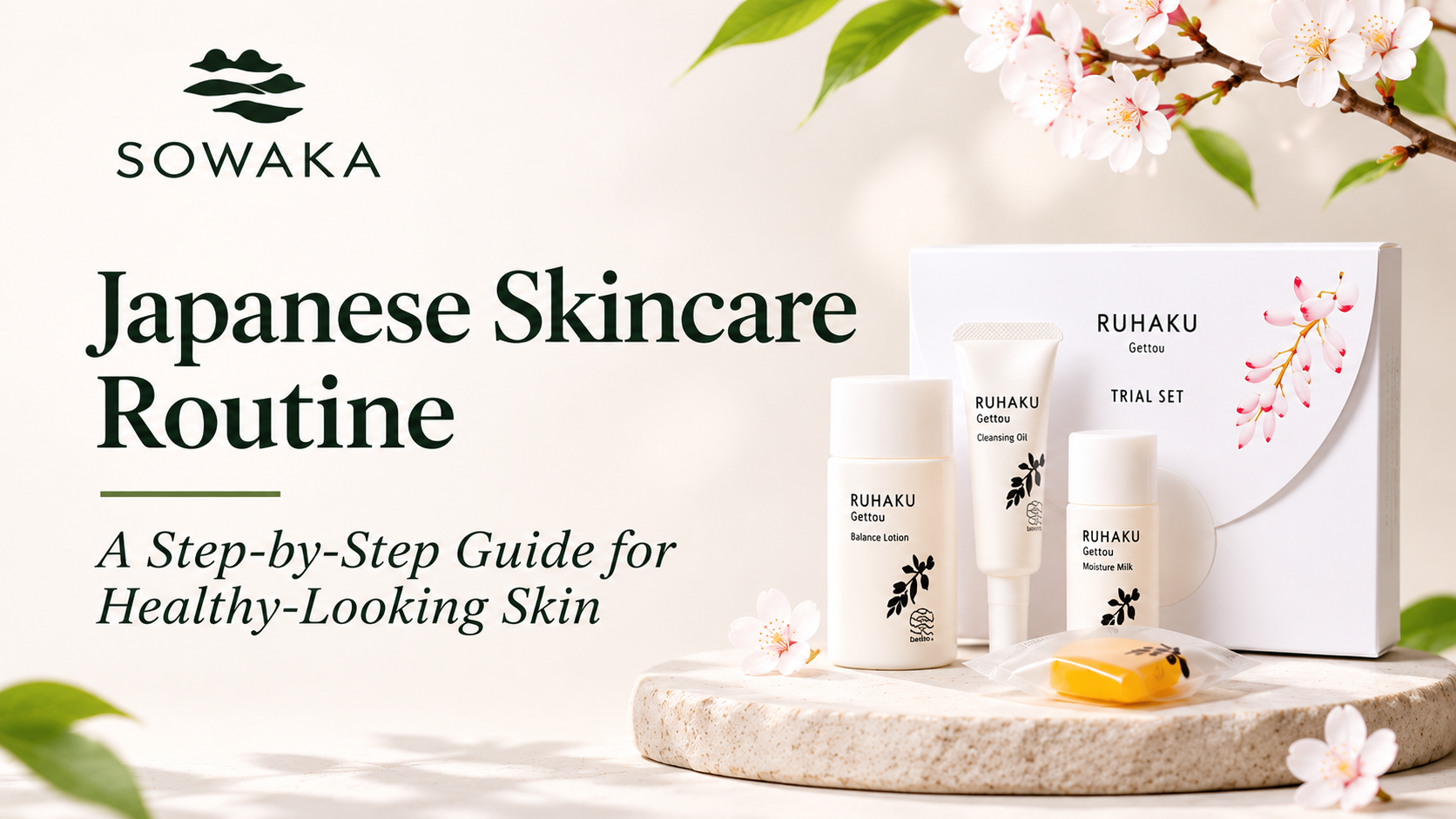
A Japanese skincare routine comes down to four habits: cleanse gently, hydrate in light layers, moisturize to keep that water in, and wear sunscreen every morning. The approach favors consistency over complexity, and it works best when built around your skin’s needs rather than the number of products on your shelf. If you are looking for the best Japanese skin care products, start with the steps below, then match formulas to your skin type.
What Are the Japanese Skincare Steps?
Step 1: Start with a Gentle Cleanser
Cleansing removes sweat, excess oil, dirt and product residue. A gentle facial cleanser should leave skin feeling comfortable, not tight or squeaky. In the evening, a Japanese cleansing oil can dissolve sunscreen and makeup before a water-based cleanser finishes the job, a pairing known as the double cleansing method. It is useful on days you wear makeup or water-resistant sunscreen, and optional on bare-skin days, when one gentle cleanse is enough.
Step 2: Use a Hydrating Lotion or Toner
Japanese facial lotion, or keshosui, is usually a thin, watery hydrating facial lotion. That makes it quite different from the astringent, alcohol-heavy toners common in Western routines. Formulas typically rely on humectants such as glycerin and hyaluronic acid to add water to the skin. Pat it on with clean hands rather than rubbing, and let it settle before the next step.
Step 3: Apply a Facial Essence or Serum
A facial essence offers lightweight hydration, while a serum is typically aimed at a specific concern. Dehydrated skin tends to respond well to hyaluronic acid, while niacinamide or vitamin C are common choices for uneven tone. Introduce one new active at a time and patch test first, so you can tell what your skin tolerates.
Step 4: Moisturize and Support the Skin Barrier
Moisturizer reduces water loss and supports skin barrier protection. Oily or combination skin usually prefers a gel-type or lightweight moisturizer, while dry skin often needs a richer cream.
Step 5: Finish with Sunscreen in the Morning
Daily sunscreen is the step with the strongest evidence for protecting skin. Choose a broad-spectrum formula of SPF 30 or higher, apply it generously, and reapply roughly every two hours when you are outdoors. In the evening, remove sunscreen and makeup, cleanse, hydrate and moisturize.
Which Japanese Skincare Ingredients Are Worth Understanding?
Some ingredients are valued by tradition, while others have stronger scientific backing, and it helps to know which is which.
Fermented rice extract and sake lees skincare ingredients. These come from rice fermentation and sake brewing and contain amino acids and other byproducts. They are prized for how they feel on skin, but human clinical evidence is limited.
Gettou and yomogi. Gettou (shell ginger) and yomogi (Japanese mugwort) are traditional Japanese botanical ingredients. Most research on them is laboratory-based, focused on antioxidant properties, and plant extracts can irritate some skin.
Hyaluronic acid and glycerin. Both are well-established humectants that draw water into the outer skin layer, and they are tolerated by most people.
Ceramides. These lipids occur naturally in the skin barrier, and ceramide-containing moisturizers can help dry or compromised skin feel more comfortable.
How Do You Choose Products for Your Skin Type?
Individual tolerance matters more than where a product was made, and no Japanese formula suits every skin type.
Dry skin benefits from hydrating lotions with glycerin or hyaluronic acid, followed by a cream moisturizer with ceramides.
Oily skin generally does better with watery lotions, gel textures and a lightweight moisturizer. Skipping moisturizer entirely can backfire, since dehydrated skin may still look shiny.
Sensitive skin calls for short ingredient lists. Fragrance and essential oils are common irritants, so fragrance-free options are a sensible starting point, and every new product deserves a patch test.
Combination skin can mix textures, using a gel on the T-zone and something creamier on dry cheeks. When comparing the best Japanese skin care products, read the full ingredient list instead of relying on front-label claims.
How Do You Build a Practical Japanese Skincare Collection?
Start with the essentials: cleanser, hydrating lotion, moisturizer and sunscreen. Add an essence, serum or cleansing oil only when a clear need appears. Piling on products raises the odds of irritation and makes it harder to spot what is working.
A Japanese skincare kit can be a practical shortcut. It suits beginners who want products designed to work together, travelers who need compact sizes, and anyone who wants to test a coordinated routine before committing to full-size bottles. Check the ingredient list of each item, as you would with any product, because a kit is only a good fit if its contents suit your skin.
Sowaka NYC is one resource for exploring selected Japanese beauty brands and curated skincare sets. As a Japanese skincare store focused on products from Japanese brands, it gives shoppers a place to compare formulas and browse authentic selections.
Consistency Matters More Than Complexity
A dependable routine has a few steps: cleanse gently, hydrate, moisturize and apply sunscreen each morning. Results from skincare are gradual and cosmetic, so give a routine several weeks before judging it, and change only one thing at a time. If you have persistent acne, eczema or irritation, a dermatologist can help more than any product. A simple routine you actually follow will usually serve your skin better than an elaborate one you abandon.

 English
 Arabic
 French
 Spanish
 Portuguese
 Turkish
 Dutch
 Italiano
 Russian
 Romaian
 Portuguese (Brazil)
 Greek