


Why Digital Therapy Is the Future of Lazy Eye Cure and Management ?
The world of healthcare is undergoing a remarkable transformation, driven by technology that makes treatments more accessible, engaging, and effective. Vision care, specifically for conditions like amblyopia, is no exception to this digital revolution. For decades, the approach to managing visual development issues was relatively static, relying heavily on analog methods. Today, however, we are witnessing a paradigm shift. The integration of artificial intelligence, virtual reality, and gamified software is creating a new standard of care, offering hope and results that were once thought impossible for many patients.
As we look toward the horizon of vision health, the goal for many families remains finding a lasting lazy eye cure that fits into their modern lives. This pursuit of a permanent solution has led experts to explore how digital platforms can retrain the brain more efficiently than traditional methods alone. By harnessing the power of advanced algorithms, these new therapies go beyond simple eye strengthening; they fundamentally reshape how the visual system processes information.
Moving Beyond the "Patch" Mentality
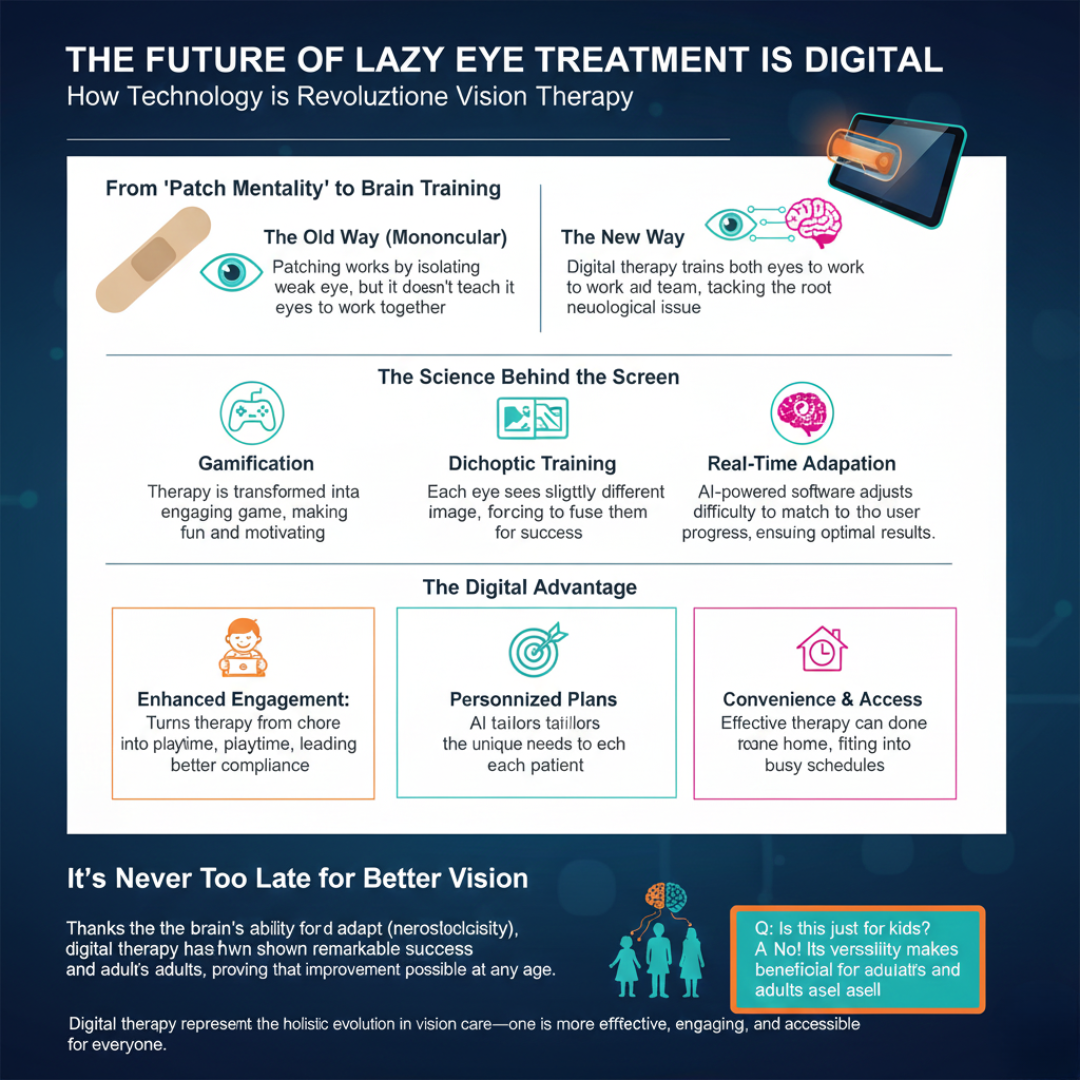
For a long time, the conversation around treating amblyopia focused almost exclusively on "monocular" approaches treating the weak eye in isolation. While occlusion (patching) has a proven track record, it addresses the condition by penalizing the strong eye. The future of vision therapy is "binocular." This means teaching both eyes to work together as a cohesive team.
Digital therapy excels here because it can present simultaneous, yet different, images to each eye. Using specialized screens or headsets, these programs adjust the contrast and brightness of visual elements in real-time. The "lazy" eye receives a stronger, more stimulating image, while the dominant eye sees a softer version. This encourages the brain to fuse the images rather than ignoring the weaker one, tackling the root neurological issue of suppression.
How Digital Therapy Works: A Look Under the Hood
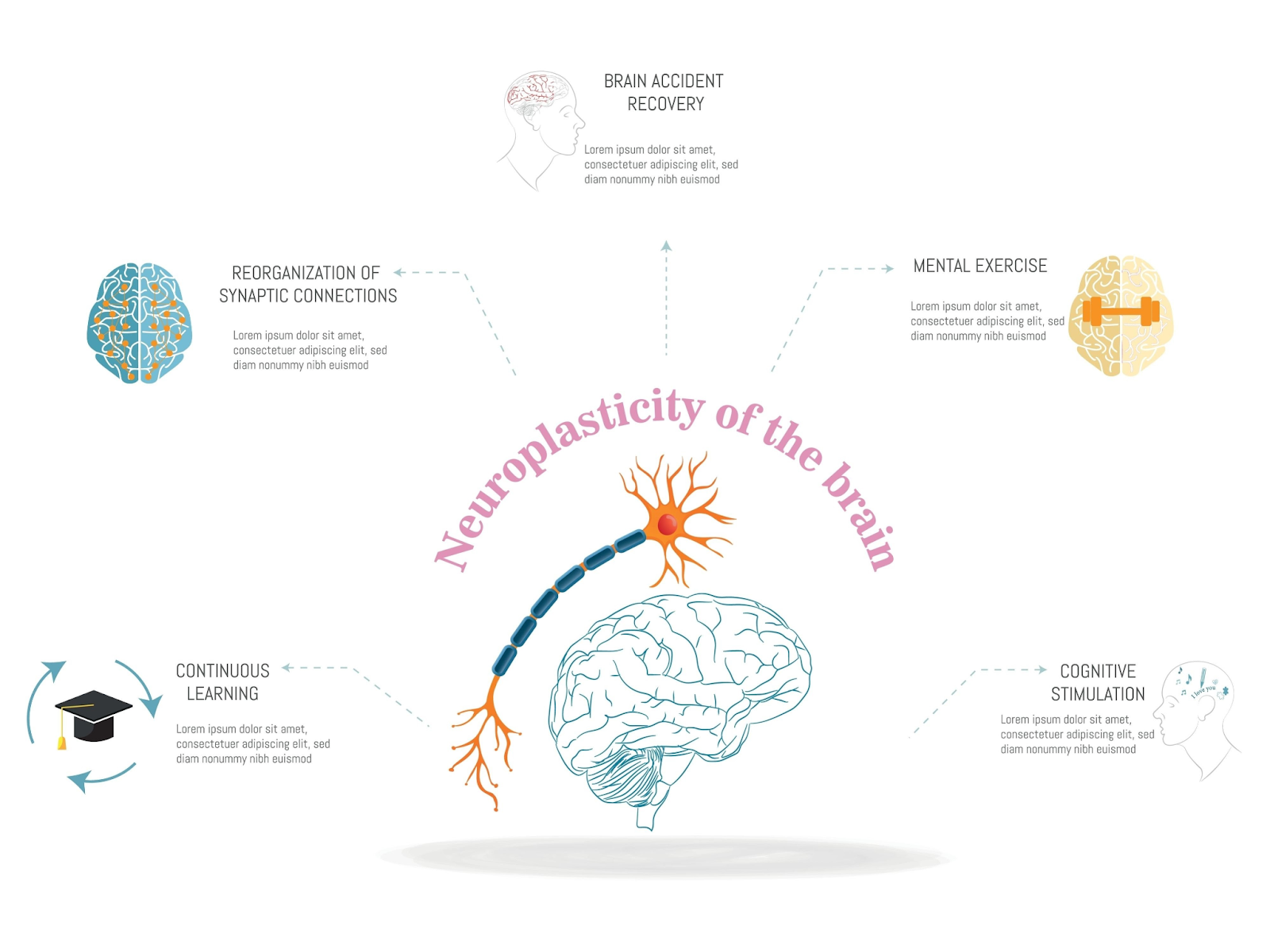
You might wonder how playing a video game can translate to better vision. The secret lies in neuroplasticity the brain's incredible ability to reorganize itself by forming new neural connections.
-
Gamification: Therapy is turned into an engaging activity. Instead of passive exercises, patients play interactive games that require active visual participation.
-
Dichoptic Training: As mentioned, this technique splits the visual input. To win the game, the patient must use both eyes. This constant demand for binocular cooperation builds lasting neural pathways.
-
Real-Time Adaptation: Unlike a static eye patch, digital software adapts to the patient's performance. If the user improves, the game becomes slightly more challenging, ensuring they are always in the optimal zone for learning.
The Advantages of a Digital Approach
The shift toward digital solutions is not just about using fancy technology; it is about delivering tangible benefits that improve the patient experience and outcomes.
1. Enhanced Engagement and Compliance
One of the biggest hurdles in vision therapy is consistency. It can be difficult to motivate a child (or an adult) to perform repetitive eye exercises. Digital therapy transforms this "chore" into "playtime." When a child is navigating a spaceship or solving a puzzle, they are less focused on the therapy aspect and more focused on the fun. This positive association leads to higher compliance rates, which is crucial for those seeking an effective lazy eye cure or long-term management strategy.
2. Personalized Treatment Plans
Every pair of eyes is unique. AI-driven programs analyze performance data after every session. This allows the software to tailor the visual stimuli specifically to the patient's current ability level. If one eye is significantly weaker, the system adjusts the contrast balance precisely to bridge the gap. This level of customization ensures that time spent on therapy is efficient and impactful.
3. Convenience and Accessibility
In our fast-paced world, finding time for frequent clinic visits can be a challenge. Digital therapy often allows for a hybrid model. While professional supervision is essential, many of the daily sessions can be done from the comfort of home on a tablet or computer. This flexibility removes barriers to care, allowing consistent practice that fits into a busy schedule.
Breaking the Age Barrier
Historically, there was a prevailing belief that treating amblyopia was only effective during a "critical period" in early childhood. This often left teenagers and adults feeling that they had missed their window for improvement.
Digital therapeutics are proving that this is not the case. Because these therapies leverage active brain engagement and neuroplasticity, they have shown remarkable success in older children and adults. By engaging the adult brain in complex visual tasks, digital platforms can "wake up" dormant visual pathways. While the process might take longer than in a young child, the potential for significant visual recovery is very real. For adults who have long abandoned hope for a lazy eye cure, these advancements offer a renewed sense of optimism and a viable path forward.
The Role of Data in Tracking Progress
In traditional therapy, progress might be measured only during monthly doctor visits. Digital platforms change this dynamic by providing continuous data tracking. Both the patient and the eye care professional can see exactly how much therapy has been completed and how visual acuity is trending over time.
-
Transparency: Parents can see if their child is actually doing the exercises.
-
Motivation: Seeing a graph go up can be incredibly motivating for patients.
-
Agility: Doctors can tweak the treatment plan remotely based on the data, ensuring no time is wasted on a plateau.
A Bright Future for Vision
The convergence of healthcare and technology is creating a future where vision therapy is more humane, more effective, and more accessible. We are moving away from methods that feel like a burden and toward solutions that empower patients. By focusing on how the brain and eyes collaborate, digital therapy addresses the core of the problem with precision and empathy. It represents a holistic evolution in care one that respects the patient's lifestyle while delivering the clinical rigor necessary for true visual rehabilitation.
Conclusion
Digital therapy is not just a passing trend; it is the natural evolution of optometric care. By combining the science of binocular vision with the engagement of modern technology, we are opening doors to better sight for people of all ages. As these technologies continue to advance, they promise to make the journey toward clear, comfortable vision a positive and rewarding experience for everyone involved.
Frequently Asked Questions (FAQs)
Q: Is digital therapy suitable for all ages? A: Yes, one of the major benefits of digital vision therapy is its versatility. While it is highly effective for children, it has also proven to be very beneficial for teenagers and adults, thanks to its ability to harness neuroplasticity at any age.
Q: Do I need special equipment for these treatments? A: Typically, you will need a device like a tablet, computer, or sometimes a VR headset. Some programs also require special glasses (like red-blue or shutter glasses) to separate the images seen by each eye. Your eye care provider will advise on the specific setup needed.
Q: How long does a daily session usually last? A: Most digital therapy programs are designed to be efficient, with sessions lasting anywhere from 20 to 45 minutes. The key is consistency rather than duration; doing a short session every day is generally more effective than one long session once a week.
Q: Can this replace the need for glasses? A: Digital therapy and glasses serve different purposes. Glasses correct refractive errors (like nearsightedness or astigmatism) to ensure a clear image hits the eye. Therapy retrains the brain to process that image correctly. Most patients will use both together for the best results.
Q: Is this treatment done entirely at home? A: It is usually a hybrid approach. While the daily exercises are done at home for convenience, the overall program is prescribed and monitored by an eye care professional who tracks progress and adjusts settings as needed.

 English
 Arabic
 French
 Spanish
 Portuguese
 Deutsch
 Turkish
 Dutch
Dutch
 Italiano
 Romaian
 Portuguese (Brazil)
 Greek
Greek