


How Can Leiya Power Tools Match Your Workshop Needs?
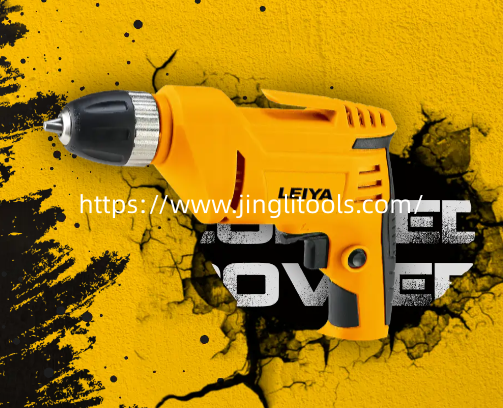
Leiya Power Tools selection should begin with a clear understanding of the tasks, materials, and working environments involved. For importers, distributors, hardware retailers, and professional buyers, choosing suitable equipment means looking beyond product names or advertised specifications. A well-prepared purchasing process considers application requirements, product configuration, manufacturing consistency, and long-term supply arrangements.
Identify the Needs of Your Target Customers
Before requesting a quotation, consider who will use the products and what tasks they need to complete. Construction contractors may require drilling, cutting, grinding, or demolition equipment. Automotive workshops may focus on fastening and maintenance, while hardware retailers often need several categories to serve different customer groups.
Prepare a list of common applications and identify the materials involved, expected workload, operating frequency, and working conditions. This information gives the manufacturer a clearer understanding of your purchasing requirements and helps narrow down suitable models.
The product range displayed by jinglitools includes electric drills, angle grinders, rotary hammers, demolition hammers, cordless screwdrivers, and impact wrenches. Buyers can evaluate these categories according to their market positioning and expected sales demand.
Compare Specifications with Actual Applications
Technical specifications should be reviewed in relation to the intended task. Depending on the product category, important details may include rated voltage, input rating, operating speed, torque, chuck capacity, disc dimensions, and compatible accessories.
Avoid comparing models through a single specification. A drilling machine intended for occasional installation work may have different requirements from one used regularly on hard materials. Similarly, buyers evaluating an angle grinder should consider its disc size, handling arrangement, operating speed, and accessory compatibility.
Request technical documents for the exact models included in the quotation. When different versions have similar appearances, written confirmation can help distinguish their configurations. Accurate information also allows distributors to prepare product descriptions that reflect the actual specifications.
Evaluate Handling and Everyday Maintenance
Product design influences how users operate and maintain equipment. Buyers should examine grip shape, overall weight, switch position, handle arrangement, and body balance. These details are particularly relevant for tasks involving extended operation or limited working space.
Maintenance arrangements deserve attention as well. Ask which parts require regular inspection, whether replacement components are available, and what cleaning and storage practices the manufacturer recommends. For cordless models, confirm battery compatibility, charging arrangements, and replacement battery availability.
Sample testing can provide useful information before a large purchase. Arrange to test selected models under normal working conditions and observe handling, noise, vibration, and operating stability. Record any questions that arise during testing and discuss them with the supplier before approving the order.
Discuss Customization Requirements at an Early Stage
Product preferences can vary across markets. Some distributors may need specific packaging, accessory combinations, appearance options, or electrical configurations. Explaining these requirements early gives the manufacturer more time to review feasibility and prepare the necessary arrangements.
Ask whether the factory can review technical drawings, discuss design adjustments, arrange samples, or develop a configuration for a particular market. Buyers should also prepare reference information, target specifications, packaging artwork, and estimated order quantities.
According to its website, jinglitools offers 3D design and sampling support and states a 25-day customization cycle. The actual schedule should be confirmed for each project because design complexity, sample approval, and requested changes can affect development time.
Review Production and Inspection Procedures
Factory evaluation should cover more than workshop appearance. Buyers need to understand how materials are checked, how production stages are monitored, and what inspections take place before shipment.
Ask the supplier which procedures apply to the selected models. Depending on the destination market, relevant documents may include product specifications, inspection records, and applicable compliance certificates. Confirm regulatory requirements before arranging international orders.
The manufacturer describes integrated operations involving mold development, die-casting, injection molding, machining, motor manufacturing, and assembly. Its website also outlines inspection procedures covering incoming materials and finished goods. Buyers can request further details about the inspection arrangements relevant to their chosen products.
Confirm Commercial and Shipping Details
A clear quotation should explain minimum order quantities, sample costs, unit prices, payment conditions, production schedules, packaging methods, and shipping arrangements. If an order includes several models, confirm whether individual quantity requirements apply to each item.
International buyers should also check carton dimensions, gross weight, shipping marks, spare parts, and customs documentation. These details can influence freight planning and warehouse preparation. It is helpful to agree on how specification changes, production updates, and delivery adjustments will be communicated.
Keep the approved sample, written quotation, and confirmed specifications as purchasing references. Both parties can use these records to reduce misunderstandings during production and shipment.
Prepare Questions Before Contacting the Manufacturer
A structured supplier assessment makes purchasing discussions more productive. Prepare questions covering application suitability, technical documentation, sample testing, customization, inspection procedures, and delivery arrangements. Compare potential suppliers using the same criteria rather than relying on product descriptions alone.
For distributors and importers planning ongoing cooperation, explain your target market, preferred product categories, estimated order volume, and expected purchasing schedule. This allows the manufacturer to discuss suitable arrangements based on your actual business requirements. To review available models and discuss an order, visit https://www.jinglitools.com/product/ and contact jinglitools with your project details.

 Arabic
 French
 Spanish
 Portuguese
 Deutsch
 Turkish
 Dutch
 Italiano
 Russian
 Romaian
 Portuguese (Brazil)
 Greek