


Before You Expect ₹500 From Diwa Bonus, Check These Conditions
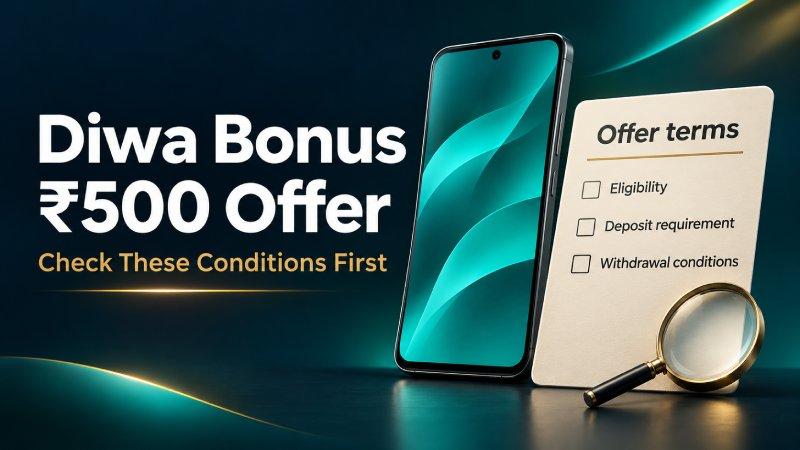
The ₹500 figure is easy to remember. You see it in a Diwa Bonus headline, open the page, and expect to find out how the offer works. Yet the amount alone leaves several questions unanswered. Does every eligible account receive it? Is a deposit required? Does the figure represent one reward or the combined value of several promotions?
Start by finding the conditions attached to the exact offer you are viewing. The advertised amount, qualifying action, and rules for using the credit need to be read together. A screenshot showing ₹500 gives you only one part of that information.
This guide explains how to assess the claim. The examples below illustrate possible promotional arrangements. They do not confirm that a particular Diwa Bonus campaign currently provides those benefits.
1. Read the complete offer wording
Before comparing amounts or looking for a claim button, copy the sentence containing the ₹500 figure.
“₹500 welcome credit,” “up to ₹500 bonus,” and “₹500 cashback” require different explanations. Small words matter here. “Up to” describes a maximum, while “first deposit” identifies a transaction that may be part of the qualification.
Diwa Games Official’s explanation of the Diwa Bonus ₹500 offer discusses welcome credit, deposit-linked promotions, and cashback as separate possibilities. That distinction provides a starting point for interpreting a headline before expecting a particular reward.
Check the app name beside the claim as well. A catalog may display several Diwa titles together, and a related-app card can have its own promotional wording. Keep the amount attached to the entry where you found it.
If someone sends you a cropped image, ask for the full promotion. The missing area may contain the eligibility note, deadline, or phrase explaining how the maximum is calculated.
2. Establish whether the offer applies to your account
An offer can be visible to a broad audience while applying to a narrower group.
Read who qualifies. Look for conditions concerning new registrations, existing accounts, previous participation, account verification, age, and location. The relevant campaign should explain which requirements apply.
Pay particular attention to the definition of a new user. You might consider yourself new because you have never claimed a promotion. The operator may define eligibility by whether you have previously registered an account.
A returning user offer could use another definition entirely, such as an account meeting a stated condition during a specified period. Read that wording directly instead of borrowing an explanation from a welcome promotion.
If your circumstances are unclear, ask a specific question before continuing. For example, explain that you already have an account and ask whether the named campaign includes existing users. Keep the answer with the offer details so you can refer to it later.
3. Find out what triggers the credit
“Welcome bonus” can sound automatic, but you still need to identify the qualifying action.
Read the instructions in the order someone would follow them. They should explain whether registration is sufficient, whether verification is required, and whether there is a separate claim step.
If a code or invitation is mentioned, check when it must be entered. A campaign could require a selection during registration or before another action. Missing that timing could affect eligibility under the stated rules.
Also separate downloading an app from joining a promotion. Installing a file tells you that installation took place. Qualification for an advertised reward needs its own explanation.
A useful test is to complete this sentence using only the written terms. “The reward is issued after an eligible account completes ______.” If you cannot fill in the blank, the trigger remains unclear.
That is the question to resolve before deciding whether the offer interests you.
4. Check whether a deposit is required
Look for an explicit statement about payment. A promotion described as a welcome offer may still have a deposit condition.
If a deposit is required, record the minimum qualifying amount, relevant deadline, and any restrictions on payment methods. Check whether the offer concerns the first deposit or another specifically defined transaction.
Read whether the reward is fixed or calculated as a percentage. A percentage promotion also needs a cap and a clear explanation of the amount to which the percentage applies.
For illustration, a hypothetical offer could match part of a qualifying deposit up to a maximum reward. Someone making a smaller payment might receive less than the headline maximum. The calculation would need to explain that result.
Consider the payment independently. Work out what you would commit and what the terms say about deposited funds if you decide to stop using the account. The advertised reward should not substitute for understanding that transaction.
5. Understand how the ₹500 figure is calculated
The headline could describe a single allocation, a maximum, or the total value of several benefits.
Look for a breakdown. If the promotion combines registration credit, a deposit reward, and a referral benefit, find the conditions for each component. Check whether the same person can receive all of them.
For example, an illustrative advertisement might present several conditional rewards under one total. A user who completes only the registration requirement would need to know which portion, if any, that action qualifies them to receive.
Check whether the reward arrives at once or in stages. If later portions depend on additional actions, those requirements belong in your assessment of the total.
Avoid adding figures from separate pages without confirmation. One page may describe an earlier campaign, while another covers a referral reward. Matching the app name is only the beginning. The campaign, recipient, and dates need to match too.
6. Separate welcome credit from cashback
The reason a reward is issued helps explain how it should be assessed.
Welcome credit is associated with an introductory promotion and its qualification requirements. Cashback is calculated from the activity defined by the offer. A cashback percentage needs a stated calculation basis before you can work out an amount.
Read what the percentage applies to, which transactions qualify, and whether there is a maximum. Check when the calculation takes place and when the resulting credit is issued.
An illustrative “10% cashback” claim remains incomplete without those details. Ten per cent of which amount? Over what period? Are any activities excluded? Does the reward enter a promotional balance?
Likewise, a welcome-credit headline needs an explanation of eligibility and use. The label gives you a category to investigate. The conditions explain the actual arrangement.
When two websites describe the same ₹500 figure differently, keep both descriptions unresolved until you can trace them to applicable campaign terms.
7. Read the wallet definitions
A figure displayed in an account can represent different kinds of balances.
Look for definitions of deposited funds, promotional credit, cashback, and any amount described as available for withdrawal. Use the terms’ own labels when recording what you find.
If the screen displays a combined total, look for its breakdown. For illustration, an account showing ₹500 could include a payment made by the user and a separate promotional allocation. You would need to identify each component before assessing how the balance can be used.
Check the transaction history for an entry naming the promotion. A dated reward record can help connect a credited amount with the relevant offer.
If there is a rule governing which balance is used first, read it alongside the promotion conditions. That information may affect how someone understands the account after participating.
Where the labels remain unclear, ask support which balance receives the reward and where its restrictions are explained.
8. Check usage and withdrawal conditions
Once you know what is credited, find out what can be done with it.
Read any restrictions concerning eligible activities, expiry, conversion, or withdrawal. If the terms mention an activity requirement, check the calculation basis and which activities count toward it.
A multiplier needs a defined starting amount. In a hypothetical example, ten times a ₹50 promotional allocation would equal ₹500 of qualifying activity. That calculation explains the requirement described in the example. It cannot predict the balance remaining afterward.
Read the withdrawal policy separately as well. Look for eligible balance categories, minimum requests, limits, fees, and verification requirements.
A minimum withdrawal figure answers a threshold question. It leaves open whether promotional funds qualify for the request.
If a condition is unclear, ask for an explanation using the amount and campaign relevant to your account. A general answer about bonuses may leave the specific restriction unresolved.
9. Record the deadlines for each action
A promotion can involve several deadlines, each governing a different step.
There may be a period for joining, another window for claiming the reward, and an expiry date for using the credit. Completing one step within its deadline does not explain whether later steps were completed in time.
Write the action beside each date. If the terms give an exact cutoff, check the time zone. If the expiry period begins when credit reaches the account, look for that timestamp in the reward history.
A screenshot can remain online after a campaign ends. An article can also receive an update while retaining an older promotional image.
Look for a date tied to the offer information itself. If two descriptions conflict, compare campaign names and dates before assuming the amount has changed.
Keep a complete record of the conditions you read, particularly if timing affects your decision.
10. Identify the organisation responsible for the promotion
The website describing an app may have a different role from the organisation operating accounts or issuing rewards.
Look for an identifiable operator in the applicable terms and account information. Check which support channel handles promotion enquiries.
An editorial contact may be able to correct a listing while having no access to account records. Sending a precise question to the relevant support team gives it a better chance of being answered.
Before providing identity documents, read the operator’s published verification and privacy instructions. Find out what information is requested, why it is needed, and where it should be submitted.
If a support message directs you elsewhere, check the connection against the operator’s published information. Keep the enquiry focused on the named campaign and the condition you need clarified.
11. If the expected credit is missing, trace the steps
Begin with the offer terms and compare them with the account record.
Check eligibility first. Then review the qualifying action and any separate claim instruction. Look for a confirmation, reference number, or dated reward entry.
Next, read the stated crediting period. If that period has passed, prepare a short enquiry identifying the campaign, action completed, date, and current status.
You could ask whether the issue concerns eligibility, claim completion, or crediting after confirmation. Those are separate points that support may need to investigate.
Avoid relying on another user’s credited amount as proof of what your account should receive. Their promotion or eligibility may differ.
If the explanation introduces a requirement you have not seen before, ask where it appears in the applicable terms before making another decision.
Questions worth resolving before you continue
Does every new Diwa Bonus account receive ₹500?
The advertised figure alone leaves that unresolved. Read whether the promotion gives a fixed amount, describes a maximum, or combines several conditional rewards. Eligibility also needs to be established for the account concerned.
Does “welcome bonus” mean no deposit is required?
Look for the sentence explaining what triggers the credit. The promotion should state whether registration, verification, a payment, or another action is required. The label by itself gives an incomplete answer.
Can a bonus shown in rupees have withdrawal restrictions?
Read how the reward is classified and which conditions govern that balance. A rupee-denominated figure still needs usage, expiry, and withdrawal terms.
What if two listings advertise different amounts?
Compare the exact wording, campaign names, recipients, dates, and calculations. The pages may describe different arrangements or information from different periods. Leave the applicable amount unresolved until the conditions explain it.
What should I ask when the terms are unclear?
Name the promotion and ask about the specific gap. For example, request confirmation of whether an existing account qualifies or whether the ₹500 figure is a maximum linked to a payment. Save the question and reply together.

 English
 Arabic
 French
 Portuguese
 Deutsch
 Turkish
 Dutch
 Italiano
 Russian
 Romaian
 Portuguese (Brazil)
 Greek