


What Is Soundproof Foam and Why Do Modern Industries Depend on It?
Noise has become one of the most underestimated challenges in modern infrastructure. From industrial machinery and power equipment to commercial buildings and public venues, uncontrolled sound affects safety, productivity, comfort, and regulatory compliance. As industries push toward higher efficiency and better human-centric design, soundproof foam has emerged as a critical material in managing noise at its source.
Understanding what soundproof foam actually is, how it works, and why industries depend on it explains why acoustic materials are no longer considered auxiliary installations, but rather vital performance components.
Understanding what soundproof foam actually is
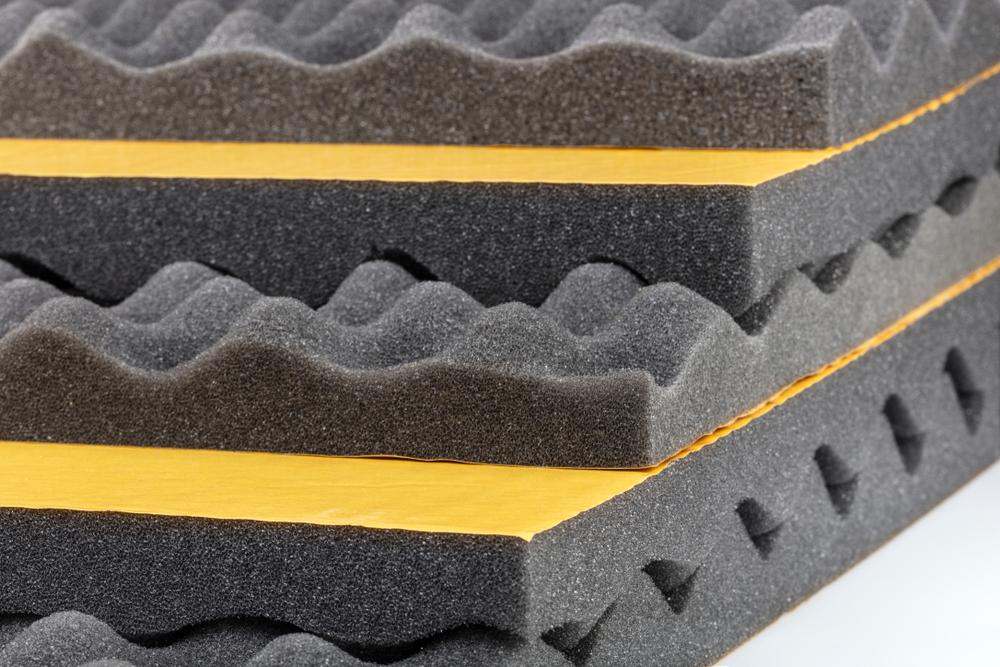
Soundproof foam is a specialized polyurethane (PU) foam engineered that absorbs and dissipates sound energy at low, mid, and high frequencies. Unlike solid barriers that reflect noise, soundproof foam traps sound waves within its internal cell structure, reducing reverberation, vibration, and airborne noise.
The efficiency of soundproof foam is based on carefully controlled material parameters such as density, cell morphology, thickness, and surface profiling. Advanced acoustic foams often include convoluted or profiled shapes that increase surface area, allowing sound energy to be absorbed more efficiently. High-performance variants can reach a Noise Reduction Coefficient (NRC) of up to 0.96, making them suitable for demanding acoustic environments.
Equally important is safety. Industrial-grade soundproof foam is engineered to meet self-extinguishing fire rating requirements like UL-94, ensuring that acoustic performance does not come at the expense of fire safety.
How soundproof foam works across different environments
Sound behaves differently depending on the space. In confined spaces, it reflects and accumulates. In industrial environments, it coexists with vibration and heat. Soundproof foam adapts to these conditions by converting acoustic energy into low-level heat through friction within its open-cell structure.
Soundproof foam is frequently utilized in power generation and industrial equipment:
-
Generator housings
-
DG set canopies and air compressor enclosures
-
Pump and blower enclosures
-
Industrial silencers and control rooms
Here, the foam must withstand heat, oil exposure, and continuous vibration while maintaining acoustic performance over long operating cycles.
In commercial and public buildings, soundproof foam helps control echo, reduce sound transmission between rooms, and improve speech clarity. Applications include wall and ceiling panels, acoustic duct lining, and noise barriers for HVAC systems.
In studios, theaters, and auditoriums, soundproof foam is used more specifically. Instead of just reducing noise, it controls reverberation and frequency balance, ensuring the sound is clear and controlled. Voice-over booths, mixing rooms, and recording studios rely on acoustic foams shaped specifically for sound diffusion and absorption.
Expanding the role of sound insulation foam
Soundproof foam focuses on absorbing sound within a space, whereas sound insulation foam limits sound transmission between areas. Sound insulation foam is often bonded with materials such as non-woven fabric, glass fiber, solar mica, or gypsum sheets to form composite panels that block and reduce sound transmission.
These systems are widely used in:
-
Control panels and electrical enclosures
-
Server racks and IT infrastructure
-
HVAC units and duct systems
-
Equipment cabinets and testing chambers
Industries produce a layered acoustic solution by combining soundproof foam with sound insulation foam, which absorbs noise at the source while preventing it from spreading into surrounding areas. This dual approach is essential in environments where multiple noise sources operate simultaneously.
Why modern industries depend on engineered acoustic foams
Industries today demand more than basic noise reduction. Acoustic materials must be durable, fire-safe, lightweight, and adaptable to changing layouts. Soundproof foam meets these expectations by offering high performance without adding excessive structural load.
Customization is another key advantage. Acoustic foams come in profiled sheets, different densities, and application-specific forms, and engineers are able to develop solutions to everything, including generator enclosures and electronic server cabinets, among others.
This flexibility explains why soundproof foam is now integral across sectors such as power generation, automotive manufacturing, electronics, broadcasting, and public infrastructure.
Foam engineering beyond acoustics
The same material technology that allows soundproof foam to absorb vibration and pressure is used in other comfort-related industries. Foam systems are used in car interiors to control noise, vibration, and seating comfort. High-performance automotive seat foam is based on similar density control and long-term resilience concepts.
In footwear, memory foam insoles for shoes showcase how foam adapts to pressure points, absorbs impact, and recovers shape over time. While the application differs from acoustics, the technical foundations remain the same: precise control over foam behavior under repetitive stress.
Conclusion
Soundproof foam has established itself as part of modern acoustic engineering and has been helpful in supporting quiet, safer, and more efficient environments in industries. In fact, whether it comes to industrial equipment and power systems, studios, offices, and public spaces, its sound-absorbing qualities, vibration control capabilities, and fire safety requirements are essential.
This is where the leadership of Sheela Foam in engineered foam solutions is outstanding. Having sophisticated material research, high-quality manufacturing, and approved acoustic foams in a real-life industrial environment, we offer high-performance soundproof foam and sound insulation foam that is reliable in industry. With the same level of engineering expertise applied in the automotive seating and memory foam insoles for shoes, Sheela Foam is still able to provide industries with consistent foam solutions that are always reliable and versatile in areas where performance and durability count.
FAQs
1. What is soundproof foam used for?
In industrial, commercial, and acoustic-sensitive spaces, soundproof foam is used to absorb sound energy, minimize reverberation, and control noise.
2. How is sound insulation foam different from soundproof foam?
Sound insulation foam helps limit sound transmission between spaces, while soundproof foam focuses on absorbing noise within a room or enclosure.
3. Where is soundproof foam commonly installed?
Soundproof foam is used in generator enclosures, machinery rooms, studios, auditoriums, HVAC systems, and commercial buildings to manage noise and vibration.

 English
 Arabic
 French
 Spanish
 Portuguese
 Deutsch
 Dutch
Dutch
 Italiano
 Russian
 Romaian
 Portuguese (Brazil)
 Greek
Greek